

Yes, radial tires require specialized patch pads. Their special design provides multiple layers of coverage, combining strength and flexibility. Using the correct patch ensures pedestrian safety and helps maintain tire performance. In the United States, approximately 11,000 tire-related accidents occur each year, resulting in over 600 deaths. Choosing reliable tire repair products like SUNSOUL ensures safe repairs and gives you peace of mind.
Key Takeaways
- Due to the special structure of radial tires, they require specialized tire patch pads. The right patch ensures your safety and helps maintain tire performance.
- Radial tires can only be repaired on the tread area. Repairing damage to the sidewall or shoulder is unsafe.
- Always choose patch pads specifically designed for radial tires. This prevents leaks and maintains tire strength.
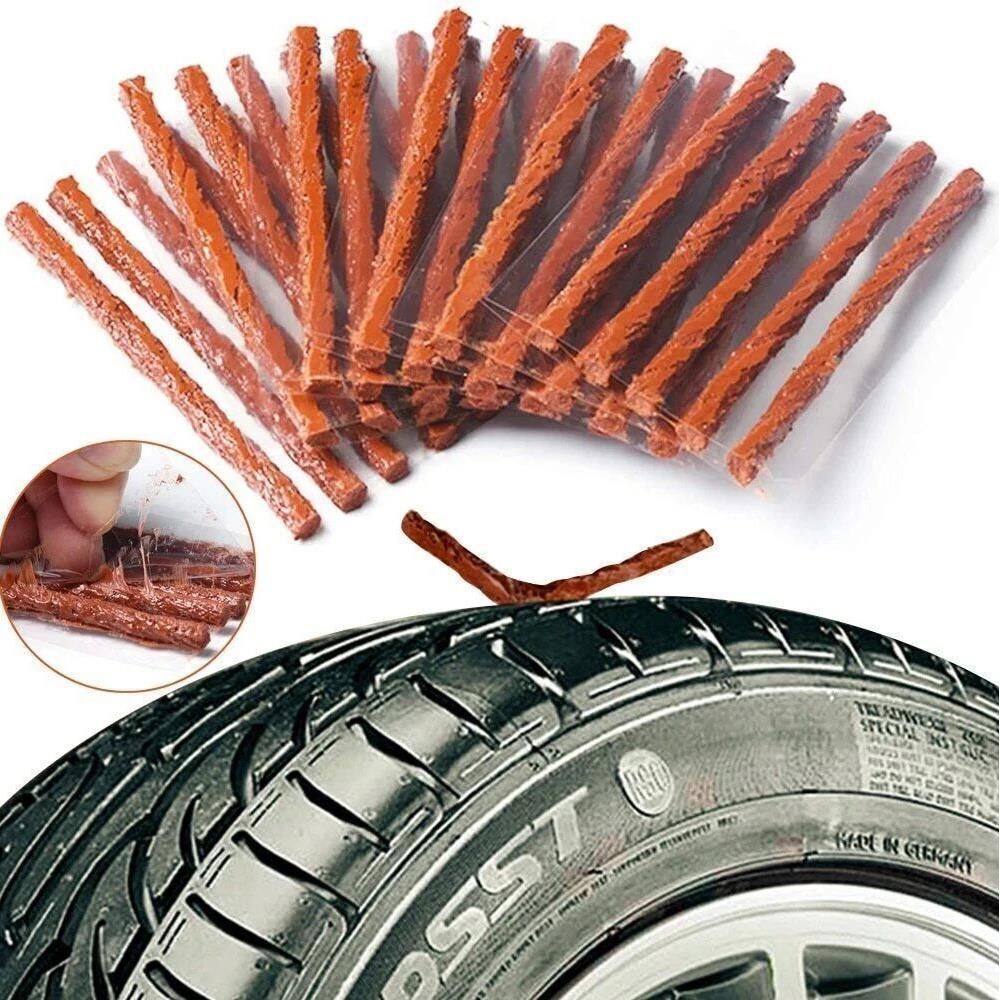
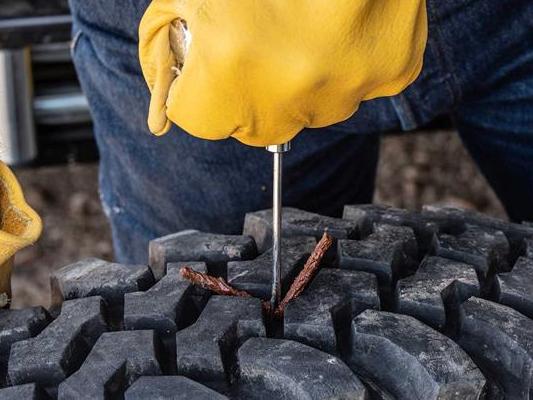
- Regular tire patch pads or tire plugs are not suitable for radial tires. They can cause serious safety problems such as tire blowouts or loss of vehicle control.
- Have your tires repaired by a trained professional mechanic. They adhere to strict rules to ensure safe and effective repairs.
Why Radial Tires Need Special Patches
Radial Tire Construction
The structure of radial tires differs from other tires, primarily in the arrangement of the ply layers. In radial tires, the ply layers run at a 90-degree angle throughout the tire, extending from one side to the other. This structure makes the tire both strong and flexible. The sidewall can move without altering the tread, thus helping to improve tire grip and extend its lifespan.
To help you understand the differences between radial and bias-ply tires, the following table compares radial and bias-ply tires:
| Feature | Radial Tires | Bias-Ply Tires |
|---|---|---|
| Ply Cords | Run radially (90° to direction of travel) | Crisscross in a diagonal pattern (30-45° angle) |
| Stabilizing Belts | Steel or fabric belts running circumferentially | No stabilizing belts; simpler construction |
| Functional Independence | Sidewall flexes independently from tread area | Sidewall flexing affects tread area directly |
Due to this unique structure, tire repairs must conform to its design. Ordinary patches or plugs are ineffective and cannot handle the independent movement of the sidewall and tread. For example, repairing the sidewall of a radial tire is not a wise move. Experts say that only specific parts of the tire can be safely repaired. The tire damage must be small and away from the tread edge.
Risks of Using the Wrong Patch
Using the wrong patch on a radial tire can have serious consequences. Bias-ply patches or simple plugs are incompatible with the structure of radial tires and may not completely seal the puncture. This allows air and water to enter the tire, weakening the steel belt layers and making the tire unsafe.
The following real-life examples illustrate the potential consequences of incorrect repairs:
- In 2006, a child in Florida was injured by a tire blowout. A rope plug was used instead of a patch, causing the tire to burst.
- In 1996, a man was quadriplegic due to a tire blowout, and a jury awarded him $12.65 million in damages. Tire blowouts are often linked to the use of rope plugs for repairs.
- Experts warn that using rope plugs for repairs allows air and water to enter the tire, causing internal rust and tread separation.
Using the wrong tire patch can lead to the following common problems:
| Type of Failure | Description |
|---|---|
| Tread Separations | The tread can come off the tire if the patch does not match the tire’s design. |
| Blowouts | The tire can burst, which can make you lose control and crash. |
| Loss of Control | If the tread and belts come apart, the driver can lose control of the car. |
Tip: Always use patches made for radial tires. This keeps the tire strong and safe for driving.
Due to the special design of radial tires, they require the use of specialized tire patches. Using the correct tire patch helps maintain good tire performance and ensures road safety.
Radial Tire Patch Features
Materials and Design
Radial tire patches are made with special materials. These materials are perfectly suited to the unique structure of radial tires. Manufacturers typically use nylon or polyester cords to make the patches. The cords are arranged in the same direction with a small bend angle. This design gives the patch both flexibility and strength.
The table below lists the differences between radial and bias-ply patches:
| Tire Type | Materials Used | Key Features |
|---|---|---|
| Radial Patches | Single-ply or multi-ply nylon or polyester cords | Designed for flexibility and conformance |
| Radial Patches | Reinforced with cords laid at a low-degree angle | Thinner, feathered edges to minimize stress |
| Bias Patches | Multiple layers of fabric plies (nylon or polyester) | Designed for structural rigidity and stability |
| Bias Patches | Cords layered at opposing angles (30°-45°) | Thicker and more robust overall |
Radial tire patches also use advanced materials. These materials help extend the patch’s lifespan and withstand the pressure inside the tire. Some patches have steel belt layers or additional reinforcement layers. These characteristics enable patches to withstand a variety of repairs.
How Radial Patches Work
Radial patches restore tire strength, ensuring driving safety. The patch bends with the tire’s movement. This flexibility prevents the patch from detaching and avoids weak points. The cords inside the patch are parallel to the tire’s cords.
The table below explains the working principles of radial and bias-ply patches:
| Characteristic | Radial Tire Patches | Bias Tire Patches |
|---|---|---|
| Core Design Goal | Flexibility; must stretch with the tire’s movements. | Rigidity; designed to replace lost structural strength. |
| Internal Construction | Cords run in a single direction for maximum flexibility. | Fabric layers are placed in a crisscross pattern for stiffness. |
| Reinforcement Angle | Cords are parallel to mimic the tire casing’s properties. | Cords are layered at opposing angles (e.g., 45 degrees). |
| Edge Design | Thinner, feathered edges prevent separation during flexing. | Edges can be thicker since the tire casing is stiffer. |
Tests show that radial tire patches perform well on both dry and wet roads. Engineers examine the patch’s grip on the road surface and its ability to withstand stress. They also observe the patch’s adhesion to the tire and its movement during cornering or parking. These tests demonstrate that high-quality patches help extend tire life and ensure driver safety.
Note: Radial tire patches use flexible materials and smart designs. These features help the patch work with the tire, not against it.
Repair Guidelines for Radial Tires
Approved Repair Areas
Tire manufacturers and industry experts have established clear rules for radial tire repair. Their goal is to ensure driver safety and tire strength. Most guidelines state that repairs are only safe to be performed on the tread area. The tread is the part that contacts the road surface. The sidewall and shoulder areas are not suitable for repairs. These areas are frequently in motion and bear the weight of the vehicle.
The following are the main points regarding permitted repair areas:
- Repairs can only be performed on the tread area.
- The width of a hole or perforation must be less than 1/4 inch (approximately 6 mm).
- The damage must be located in the crown area, away from the tread edge.
- The holes on the tire should not be too close together.
- The tire must be removed from the rim for a full inspection. This helps to identify any hidden damage.
- Each repair point must be done individually and must not overlap.
The hole must be filled with a rubber plug or cap, and the interior sealed with a patch. Using only a rubber plug or cap cannot guarantee a safe repair.
Tip: Always use a patch made for radial tires. This keeps the tire strong and safe for driving.
When Not to Repair
Some damage means a tire is beyond repair. Safety first. Tires should not be repaired if there are cuts or leaks on the sidewall or shoulder. Radial patches are ineffective on the sidewall. Large cuts, deep cracks, or exposed steel wires all indicate a tire is unsafe. These problems reduce tire strength, creating safety hazards.
Tires should not be repaired in the following situations:
- Damage located on the sidewall or shoulder.
- Bottlenecks larger than 1/4 inch (approximately 6 mm) on passenger car tires.
- Exposed or damaged steel wires.
- Deep cracks or large cuts.
- Multiple punctures clustered together.
If a tire has any of the above problems, it should be replaced. Driving with damaged tires can lead to traffic accidents.
Step-by-Step Radial Tire Repair
Inspection and Assessment
Safe repairs begin with a thorough tire inspection. A technician will inspect and assess tire damage using the following steps:
- They will check the tire sidewall for cuts, bulges, or missing rubber.
- They will measure the tread depth. For safety, the tread depth must be greater than 2/32 inch (approximately 1.6 mm).
- They will check the tire pressure. The tire pressure must match the manufacturer’s recommended value.
If the tire passes these checks, it can be repaired. If the tire has deep cracks, sidewall damage, or exposed steel wires, it should not be repaired. These problems will make the tire unsafe.
Tip: Never repair a tire that has run flat or has a zipper rupture. These issues can cause sudden failure.
Patch Selection and Application
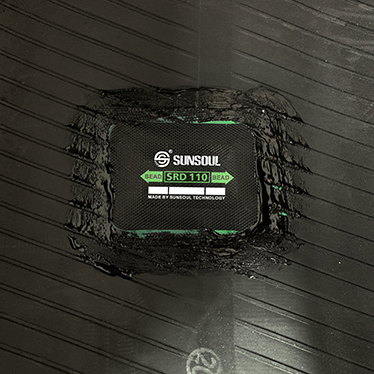
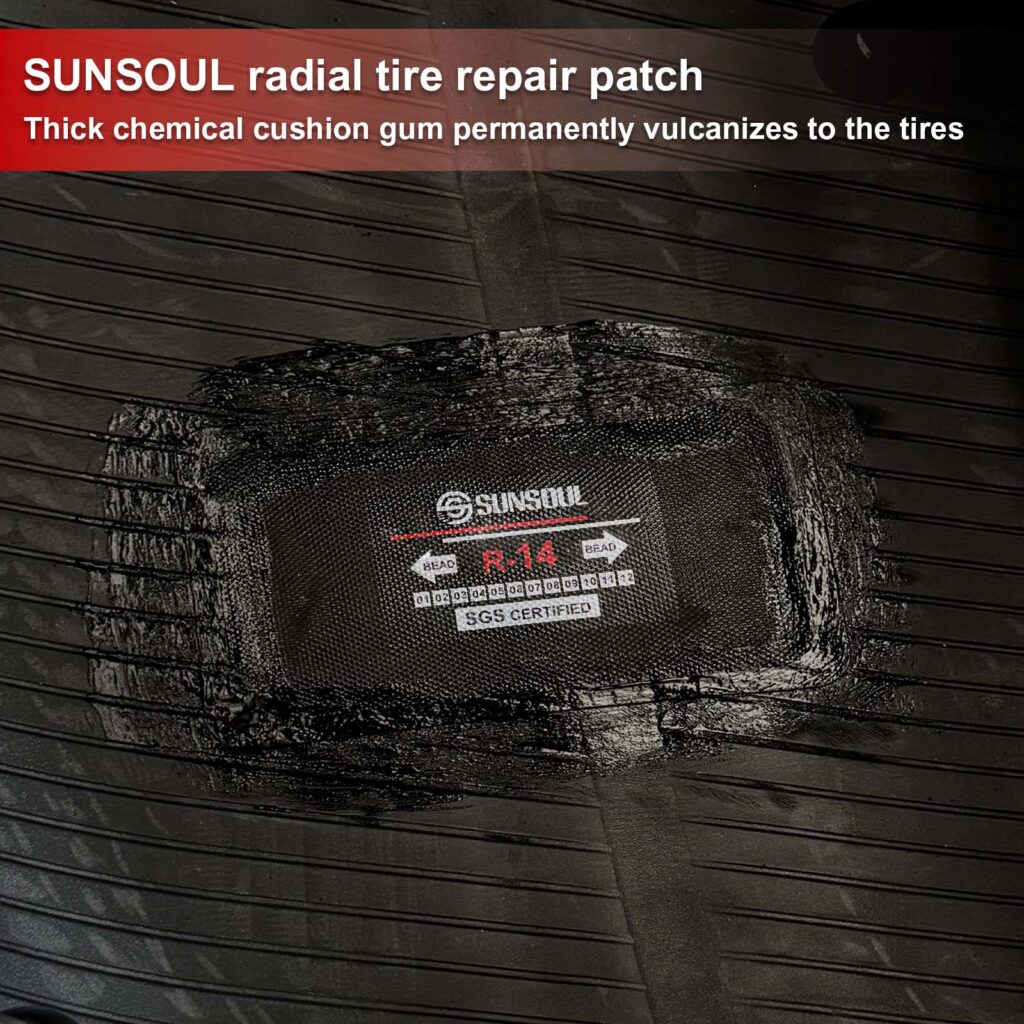
Choosing the right patch is crucial for a secure repair. SUNSOUL tire patches are trusted by many repair shops and car owners. They fit punctures of all sizes and remain secure in both hot and cold weather. SUNSOUL patches use a special adhesive that provides excellent sealing, effectively preventing tire leaks.
| Feature | Description |
|---|---|
| Strong Adhesion | Bonds tightly for a lasting seal |
| Durability | Handles extreme heat and cold |
| Tear Resistance | 20% more tear resistance than many competitors |
| Certification | DOT and ECE R109 certified |
| Warranty | 1-year warranty for peace of mind |
Here are the main steps for installing a patch on a radial tire:
- Identify and mark the damaged area.
- Thoroughly clean the area, removing any dirt or debris.
- Apply vulcanizing adhesive evenly to the repair area.
- Select the appropriate SUNSOUL patch based on the size and location of the damage.
- Press the patch firmly into the prepared area.
- Follow the instructions to allow the patch to cure.
- Check the repair to ensure it is secure.
Following these steps helps keep your tire safe and extends its life. A good repair prevents leaks and ensures your tire maintains good performance while driving.
Note: Always follow the correct steps and use a high-quality product. This not only ensures driving safety but also helps radial tires perform at their best.
Specialized patches for radial tires ensure driving safety and extend tire life. Regular patches are not suitable for these tires because they do not match the tire’s flexing and movement characteristics. Experts recommend removing the tire from the rim, carefully inspecting the damage, and cleaning the damaged area before repairing. This helps save materials and reduce waste. Always follow repair guidelines and choose a reputable brand. If you are unsure how to proceed, consult a professional.
Safety standards established by the U.S. Tire Manufacturers Association (USTMA) and the Tire Industry Association (TIA) help ensure that repaired tires remain safe.
FAQ
What makes tire patches “dedicated to radial tires”?
Radial tire patches use special cords and flexible materials. These materials are matched to the bending and movement of radial tires. The patch integrates perfectly with the tire structure, helping to maintain the strength and safety of the repair.
Can someone use a tire patch strip instead of a tire patch to repair a radial tire?
Experts do not recommend using tire patch strips alone to repair radial tires. Tire patch strips may not seal the puncture well, allowing air and water to seep in, leading to rust and a tire blowout.
How long do radial tire patches last?
If installed correctly, high-quality radial tire patches, such as SUNSOUL patches, can last as long as the tire itself. The patch must be fitted to the puncture and repair guidelines must be followed.
Are all tire patches the same size?
No, tire patches come in various sizes. The size depends on the extent of the damage and the tire type. SUNSOUL offers tire patches for punctures of all sizes.
Who should repair radial tires?
Radial tires should be repaired by trained mechanics. They know how to inspect tire damage and use appropriate repair materials. This ensures safe driving.