

radial tire patch
A radial tire patch is a durable repair patch designed to fix punctures in modern radial tires. Also known as a radial tyre patch, it creates a strong bond with the tire to restore air retention, improve sealing performance, and extend tire service life. Radial tire repair patches are widely used by professional tire repair shops and service centers.
SUNSOUL is a professional manufacturer specializing in tire repair solutions. We offer a complete range of radial tire patches, radial tire patch kits, and repair accessories, providing reliable OEM, wholesale, and distribution solutions for partners worldwide.
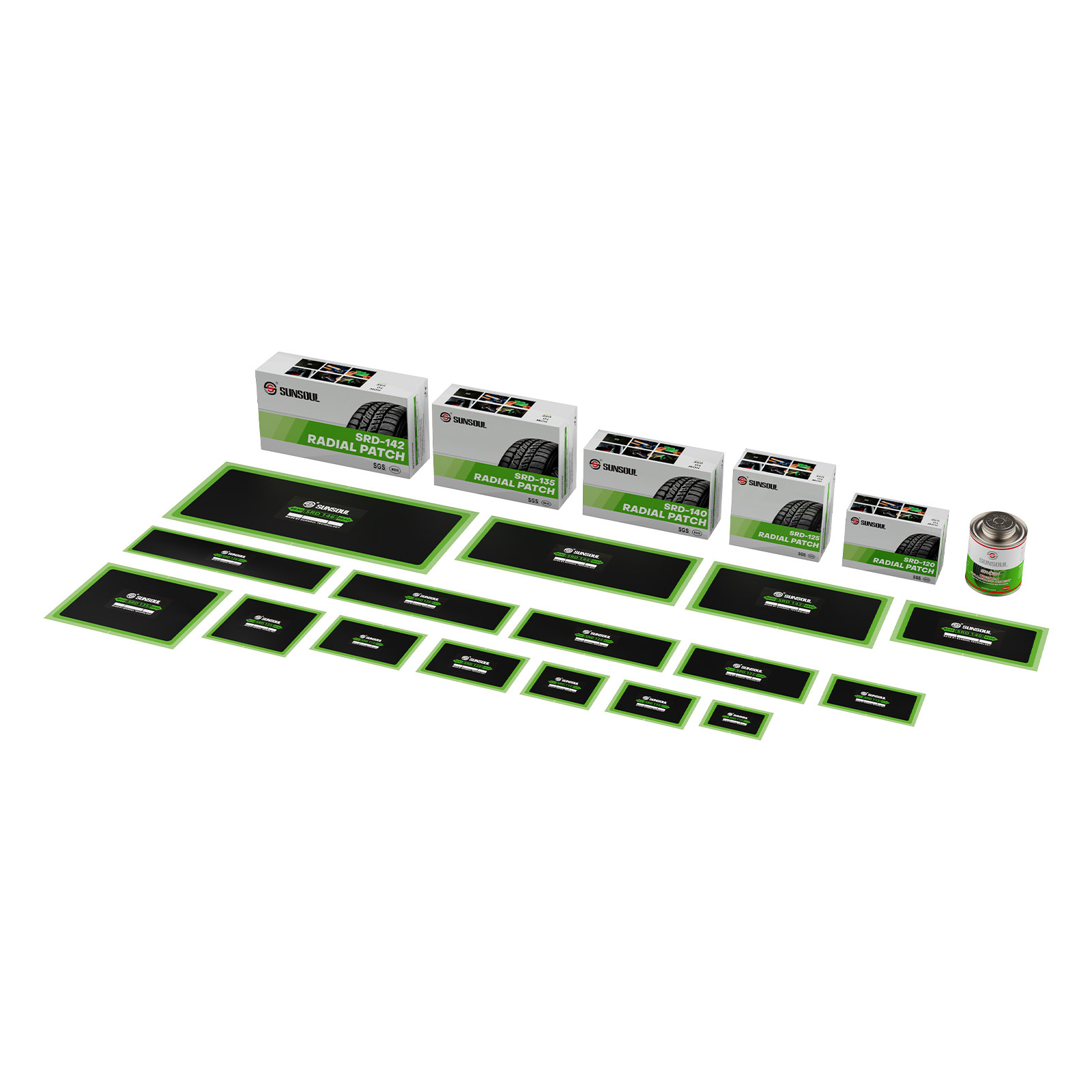
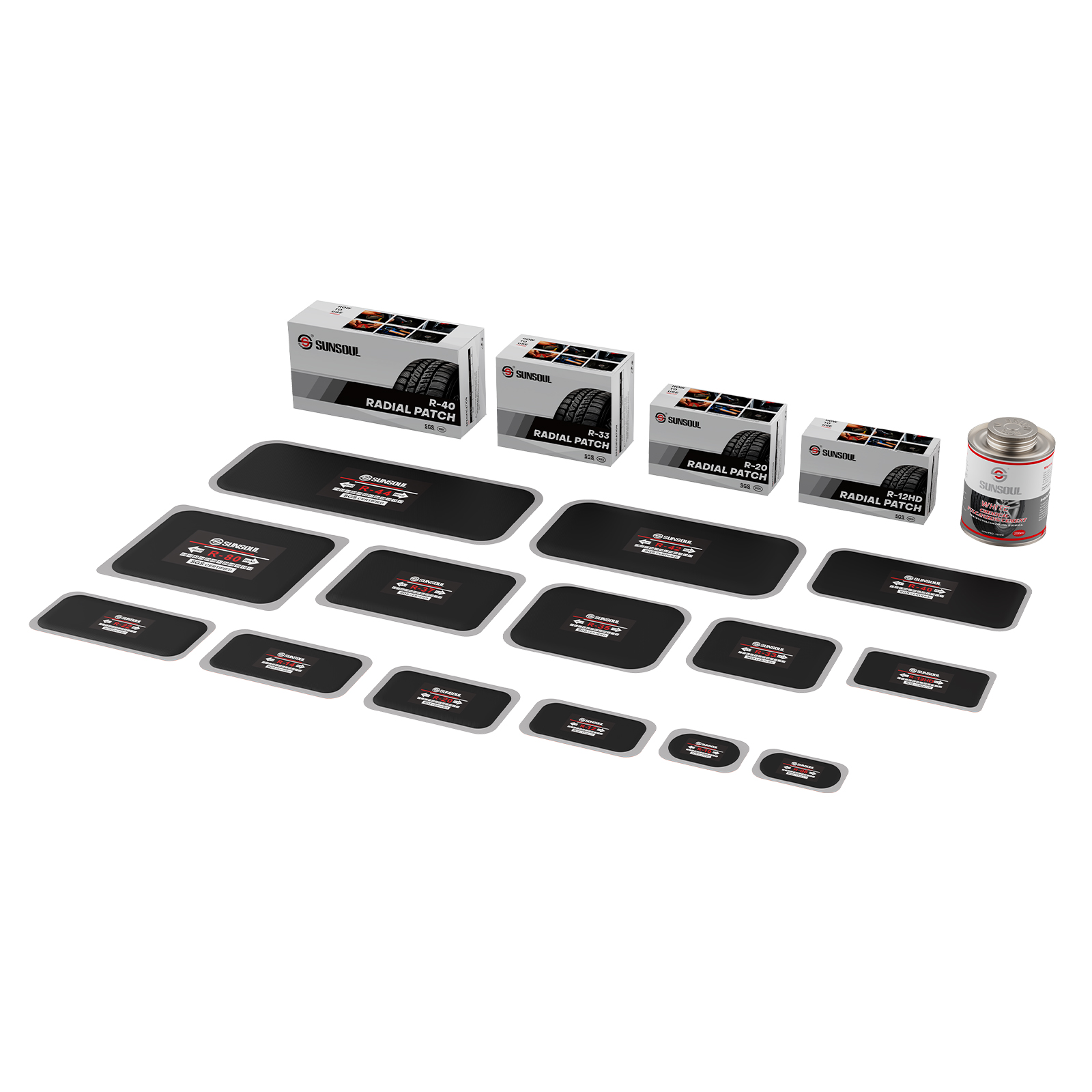
radial tire patch types
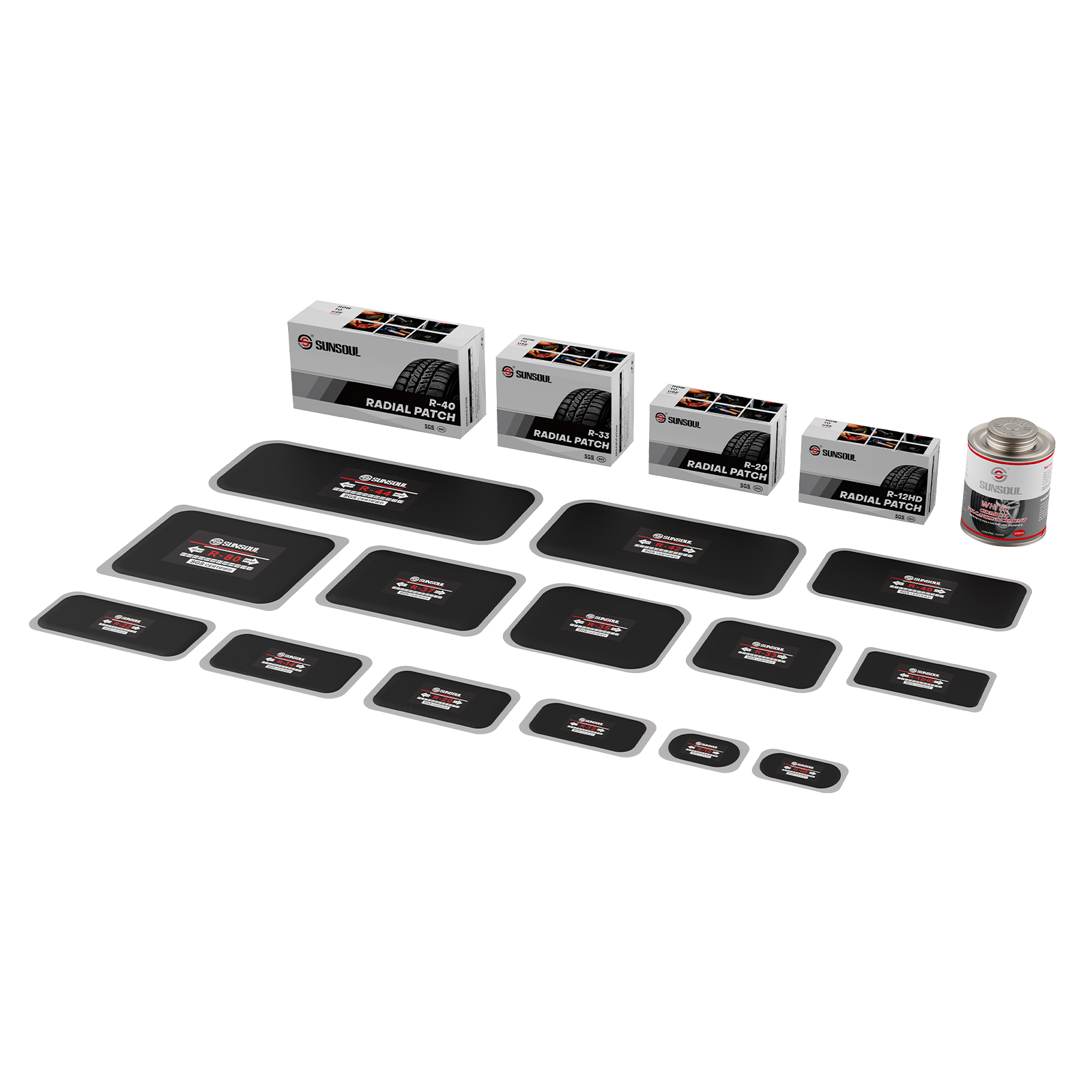
A rubber tire patch is the most widely used solution for repairing punctures in radial tires. Applied to the inner liner, it forms a durable seal that restores air retention and extends tire service life. It is suitable for most tread-area repairs and is commonly included in a radial tire patch kit.
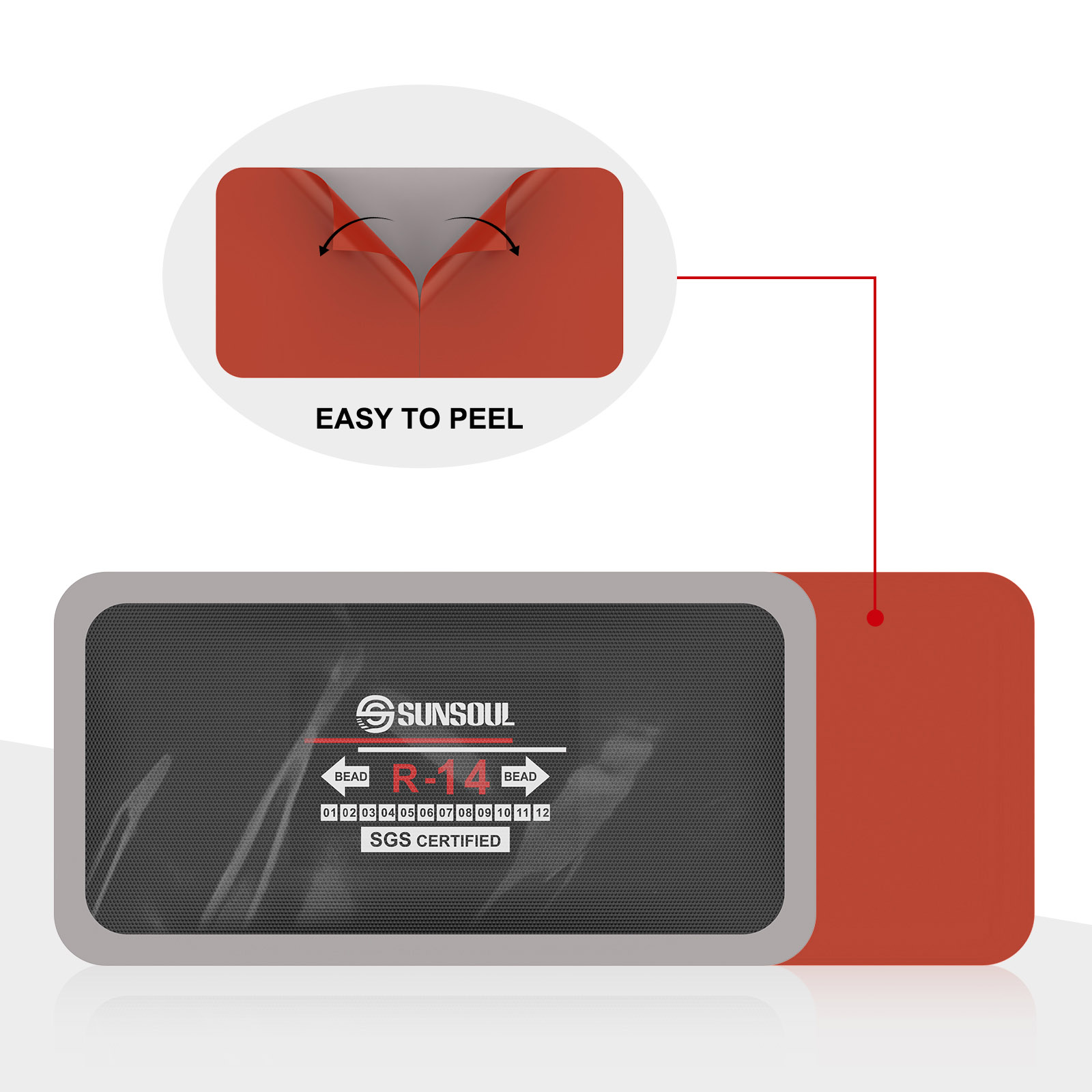
Self-adhesive Patches
Self-adhesive patches feature a pre-coated adhesive layer, allowing quick installation without additional cement. They are ideal for repairing small tread punctures and are widely used for light-duty maintenance where fast and convenient repairs are required.
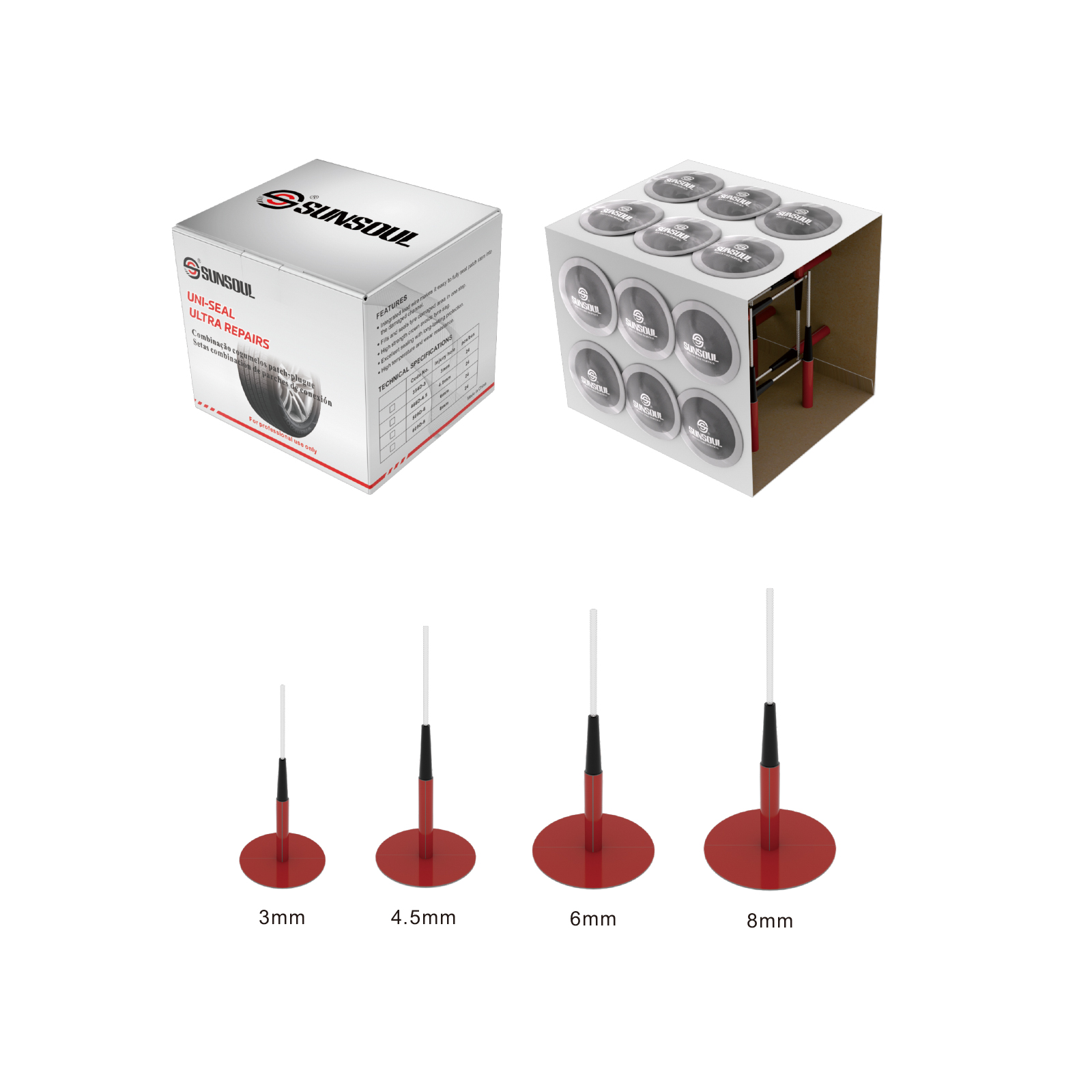
A radial tire patch plug combines a repair stem with an internal patch, sealing both the puncture channel and the tire liner. This patch plug tire repair method provides a stronger and more reliable repair for larger tread punctures than a standard plug alone.
Steel Belt Patches
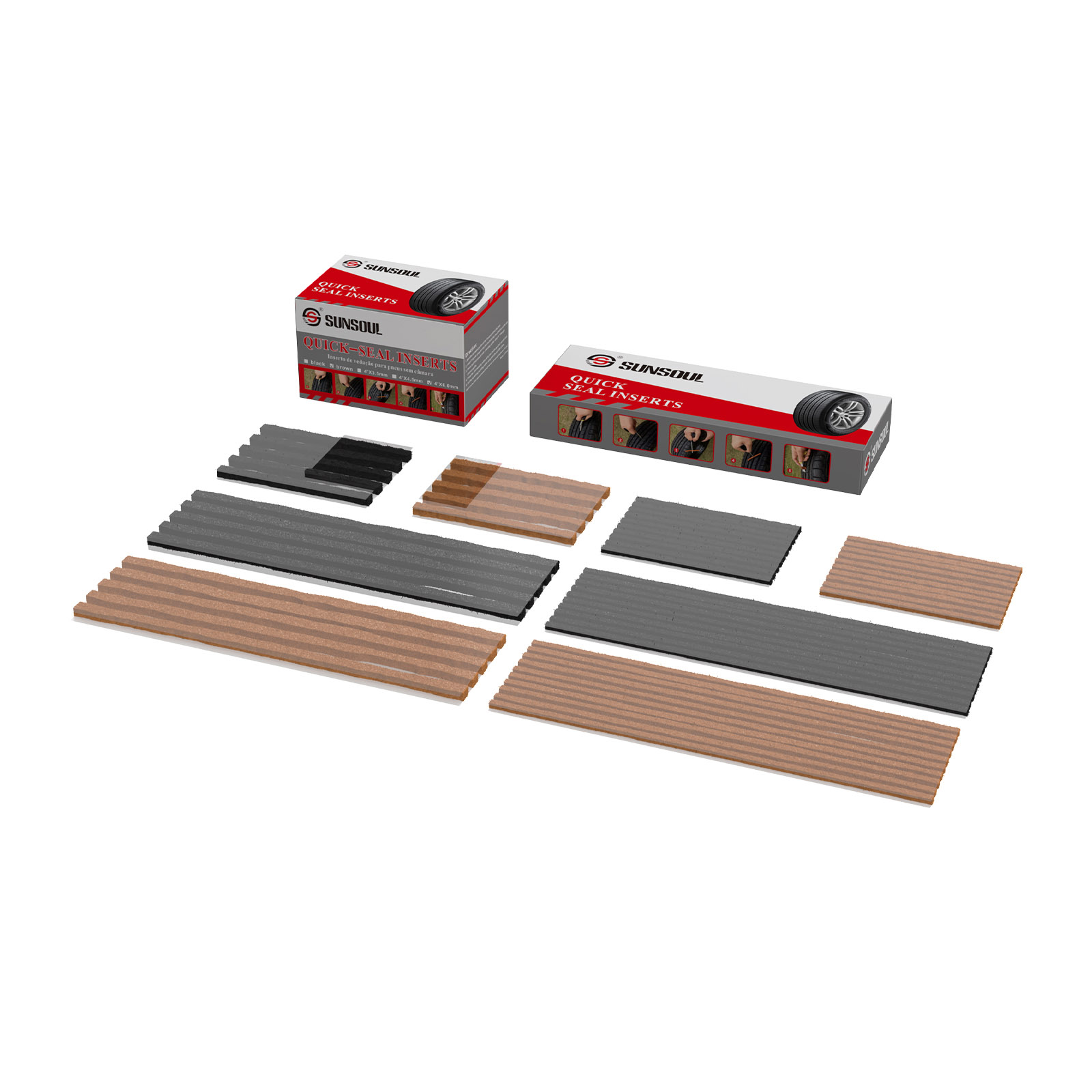
Steel belt patches are reinforced radial tire repair patches designed for steel-belted radial tires. Their high-strength construction helps withstand heavy loads and demanding operating conditions, making them suitable for commercial trucks and other heavy-duty vehicles.
Tread Patches
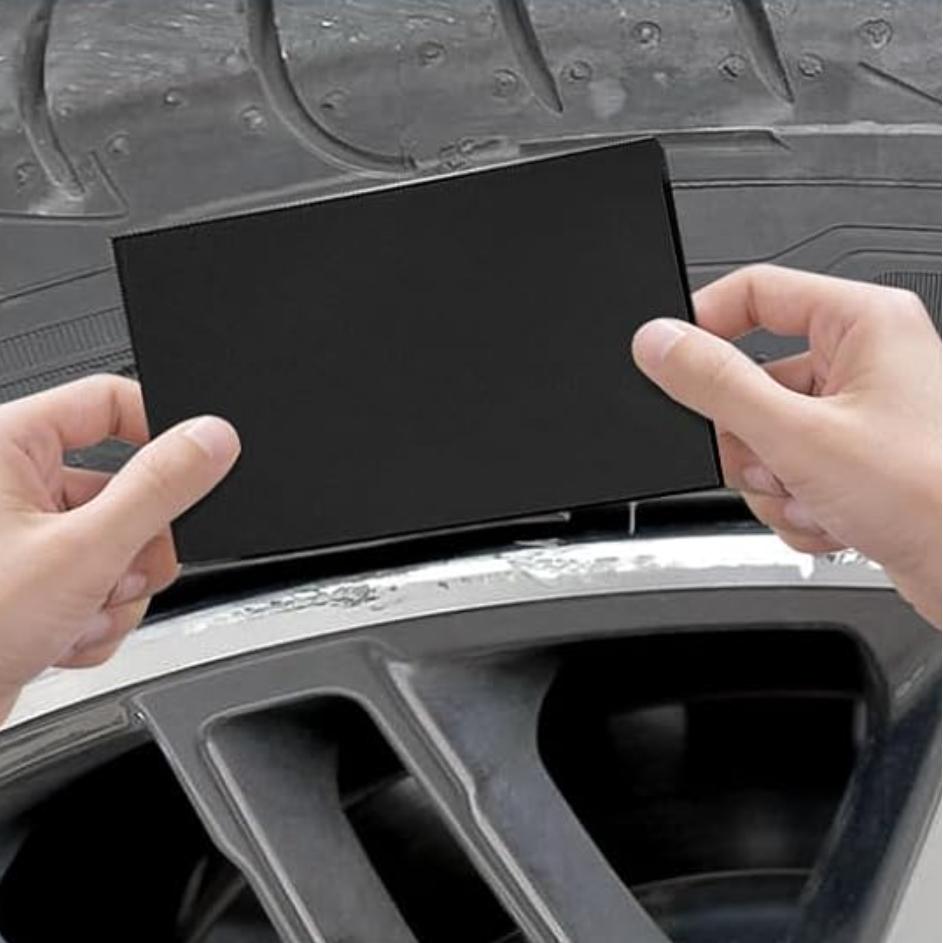
Tread patches are larger repair patches developed for repairing extensive punctures or cuts within the tread area. They provide excellent coverage and durability, making them a preferred choice for professional tire repair shops handling larger tire damage.
Radial Tire Patch Sidewall
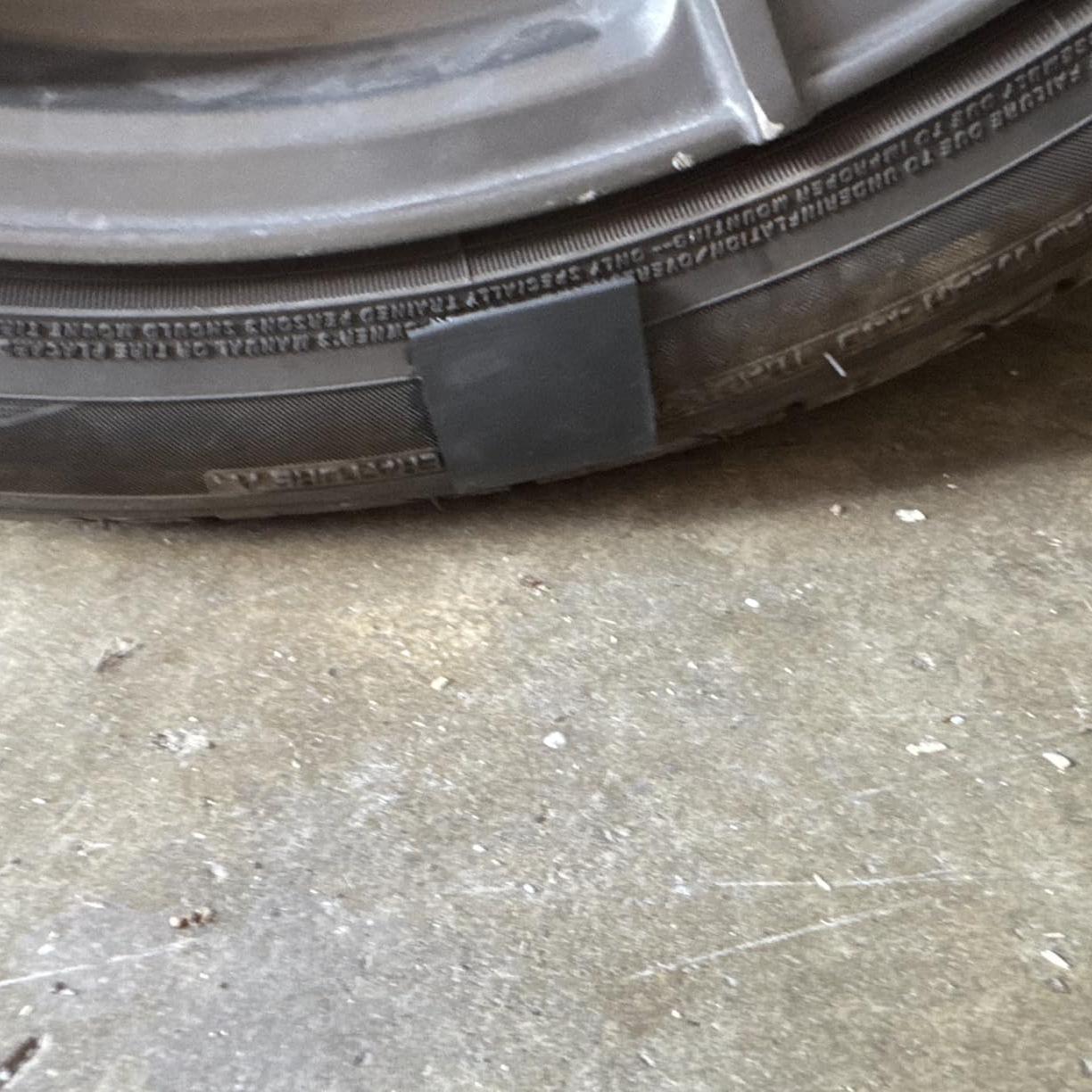
A radial tire patch sidewall is intended only for limited repair situations approved by the tire manufacturer. Because sidewall damage can affect the tire’s structural integrity, significant cuts or impact damage generally require tire replacement rather than repair.
how to choose the right radial tire patch
Size of the Damage
The size of the puncture is one of the most important factors when selecting a radial tire patch. Small tread punctures can usually be repaired with standard radial tire repair patches, while larger injuries may require a radial tire patch plug for improved sealing and structural support. Choosing the correct patch size helps ensure a safe, durable, and long-lasting repair.
Tire Construction
Different tire constructions require different repair solutions. Passenger vehicles typically use radial tires, while heavy-duty commercial tires may have reinforced steel belts. Selecting the appropriate radial tyre patch or radial patch kit according to the tire structure helps maintain repair reliability and extends tire service life.
Operating Conditions
Tires operating under heavy loads, high speeds, or harsh environments require repair materials with excellent durability and heat resistance. High-quality radial repair patches are suitable for highways, logistics fleets, construction sites, and agricultural applications where reliable tire performance is essential.
Repair Standards
Professional tire repairs should follow recognized industry guidelines and use certified repair materials. A premium radial tire patch kit should provide consistent bonding strength, reliable sealing performance, and meet the repair requirements for modern radial tires used in commercial and passenger vehicles.
applications of radial tire patches
Agricultural Equipment
Passenger Cars
Commercial Trucks
Construction Machinery
Radial Tire Patch VS Alternative Solution
When comparing radial repair patches to alternative solutions for tire repair, it’s important to consider the effectiveness, safety, and suitability of each method.
Radial Tire Patch
advantage:
Cost-Effective: Patching a tire is usually cheaper than replacing it, so it is an affordable option for minor repairs.
Quick fixes: Patches can usually be completed quickly, allowing services to be restored more quickly.
Sustainability: Repairing tires extends their life and reduces waste, which is better for the environment.
shortcoming:
Limited Repair Coverage: Not all damage can be repaired, especially if there is sidewall damage or the tire has severe wear or structural issues.
Safety Issue: Improperly repaired tires may cause blowouts or other failures, especially if the repair is improper or the damage is severe.

Alternative Solutions
Tire Replacement
advantage:
Ensure safety and reliability, especially in case of severe tire damage.
New tires come with a warranty and are designed to meet current safety standards.
shortcoming:
More expensive than repairing.
If old tires are not recycled properly, they go to waste.
advantage:
Temporary repair of small punctures without removing the tire.
Easy to use, driver can apply it.
shortcoming:
Generally considered a temporary solution; may not be effective for larger punctures or sidewall damage.
May complicate future repairs as sealant may interfere with patching.
Professional Repair Services
advantage:
Professional services can provide comprehensive assessments and repairs, including patching, plugging and even renovations.
shortcoming:
May be more expensive than DIY methods.
Radial Tire Plug VS Radial Tire Patch
Radial tire plug
A radial tire plug is a rubber or synthetic material that is inserted into the puncture from the outside of the tire. It is usually used to repair small punctures in the tread area.
advantage:
Quick Application: Tire plugs can be quickly applied without removing the tire from the wheel, making roadside repairs easy.
Cost-Effective: Usually cheaper than a full patching process, especially for minor punctures.
Immediate Use: After inserting the plug, the tire can usually be used immediately, depending on the manufacturer’s recommendations.
shortcoming:
Limited Repair Coverage: Plugs are generally only suitable for small punctures in the tread area and are not recommended for sidewall damage.
Temporary Solution: While plugs can provide a quick fix, they may not be as durable as patches, especially under high-speed conditions or heavy loads.
Possibility of Leakage: If not installed correctly, the plug may cause air leaks over time.
Radial tire patch
It is often used for repairs that require a safer, more permanent solution.
advantage:
Stronger Repairs: Patches provide a more robust and durable repair, especially for larger punctures or when used in conjunction with plugs.
Long-term Solution: When used properly, patching can extend the life of your tire and is generally considered a more permanent repair.
Full Coverage: The patch can cover a larger area of damage and is suitable for all types of punctures.
shortcoming:
More Time Consuming: Patching requires removing the tire from the wheel and may take longer than simply inserting a plug.
Skills Required: Using the patch correctly requires a certain amount of skill and knowledge, so it is not suitable for DIY repairs if you don’t have experience.
Cost: Patching can be more expensive than plugging, especially if done by a professional.
radial tire patch kit We Provide
Radial tire repair kit is tools and materials designed specifically for repairing punctured radial tires. These kits typically include everything needed to perform a tire repair, making them easy for professional tire technicians and DIY enthusiasts to use.
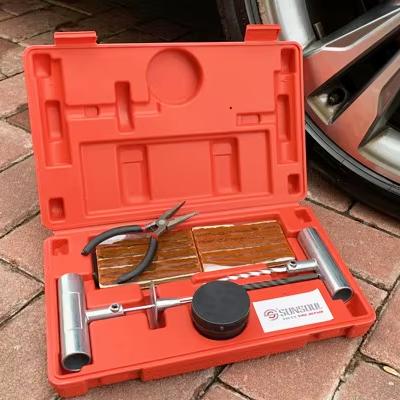
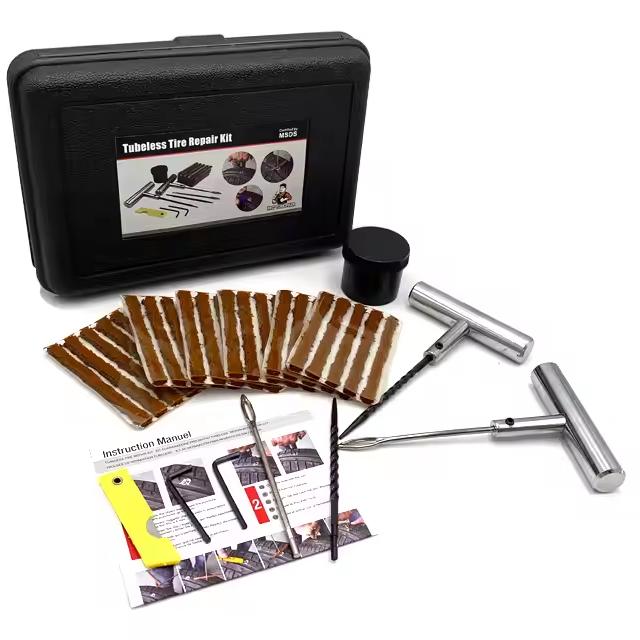
Components of a Radial Tire Repair Kit
Radial Tire Repair Patches:
Various sizes and types of rubber patches designed for radial tires. These may include self-adhesive patches or patches that require the use of an adhesive.
Adhesive:
A strong rubber glue or adhesive used to bond the patch to the tire. Some kits may include a specific type of adhesive recommended for tire repair.
File:
Tool used to roughen the surface around a tyre puncture to ensure better adhesion of the repair.
Insert tool:
If a radial tire plug is included in the kit, use the insertion tool to insert the plug into the puncture from the outside of the tire.
Cleaning tools:
Use an item such as a brush or rag to clean the area around the puncture before applying the patch.
Description:
Step-by-step instructions on how to properly use the kit for an effective tire repair.
Types of Radial Tire Repair Kit
Basic Repair Kit:
These kits usually include some patches, adhesives, and basic tools for simple repairs.
Comprehensive Kit:
A more extensive kit may include various patch sizes, multiple tools, and additional materials for more complex repairs.
Emergency Kit:
These kits are designed for roadside repairs and may include quick-fix solutions like tire sealant or plugs, as well as basic patching materials.
Professional Kit:
These kits used by tire shops usually contain a wider range of patches and tools to perform a wider range of repairs.
Why choose SUNSOUL radial tire patch?
We deliver solutions across numerous customer through our advanced rubber tire patch technology.
Innovation-driven R&D
Advanced laboratories and experienced engineering teams continuously improve products to meet changing industry standards and environmental regulations.
Global market penetration
Our products are strategically distributed in South America, Europe, North America, Australia and Southeast Asia, and enjoy a reliable reputation in more than 60 countries.
Customer-centric service
Provide 24-hour pre-sales and after-sales service. Promise to quickly resolve problems within 72 hours, supported by a global service network.
Strong production capacity
SUNSOUL produces more than 2 million tire patches per month, with a 99% repurchase rate. Mainly used for bicycles, motorcycles, automobiles and agricultural machinery.
Rich industry experience
SUNSOUL has more than 20 years of experience and can help customers expand their markets and increase sales.
Dealer support
They establish long-term win-win strategic partnerships with regional and national dealers, providing stable product supply, competitive pricing structure and regional cooperation support.
radial tire patch Q&A
What certifications should a quality radial tire patch manufacturer provide?
When sourcing radial tire patches, buyers should look for manufacturers with consistent quality control and internationally recognized certifications where applicable. Product testing, material consistency, and production traceability are important factors that help distributors maintain customer confidence and reduce after-sales issues.
Can radial tire patches be customized for private label brands?
Many manufacturers offer OEM and private label services for radial tire patches, including customized packaging, logos, product labels, and instruction manuals. This allows distributors to develop their own brand while relying on an experienced manufacturing partner.