
Flat tires cause nearly one in five roadside incidents. You can handle many punctures with the right tire repair patches. First, you must identify your tire type, which is either radial or bias-ply. Next, inspect the damage. A successful repair is possible for punctures under 1/4 inch in the tire tread. Finally, you will match the patch to the tire. Choosing the correct patches for your tire ensures a safe, lasting repair.
Safety Tip: Always measure punctures carefully. The right patches and a proper repair keep your tire reliable.
Step 1: Assess Your Tire and Puncture Damage
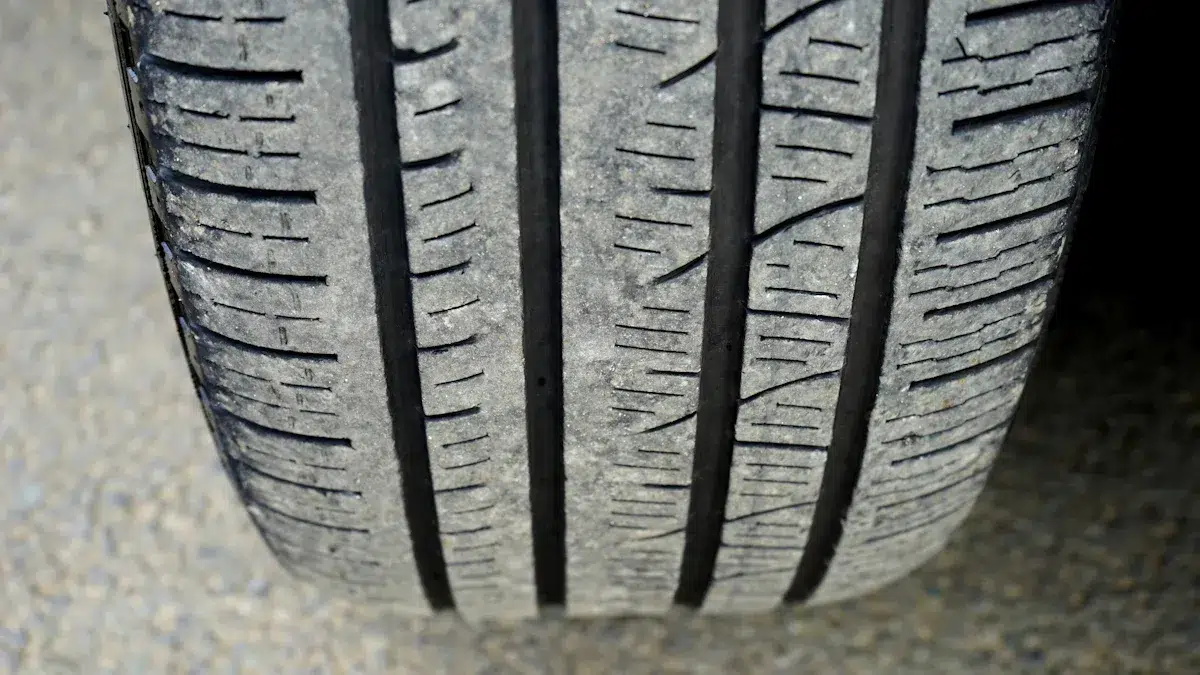
Before you can choose a patch, you must carefully inspect your tire. A successful repair depends on understanding the tire’s construction and the damage’s location and size. This first step ensures you can perform a safe and effective repair.
Identify Your Tire Type
First, you need to know if you have a radial or bias-ply tire. You can find this information on the tire’s sidewall. The word “RADIAL” will be present if it is a radial tire. If you see no designation, it is likely a bias-ply tire, which is common on trailers and agricultural equipment. These two types have very different constructions.
- Radial tires have steel belts that run at a 90-degree angle from the direction of travel. This design allows the sidewall and tread to function separately.
- Bias-ply tires use overlapping rubber plies in a crisscross pattern, usually at a 30 to 45-degree angle. This makes the sidewall and tread interdependent.
Knowing your tire type is essential because each requires a specific kind of patch.
Locate the Puncture
Next, find where the damage occurred on the tire. A safe repair is only possible for punctures in the tread area, also known as the tire’s “crown.” Industry standards define this as the central part of the tread, roughly 1 to 1.5 inches away from each shoulder. You should never attempt to repair punctures in the shoulder or sidewall of the tire. These areas flex too much, and a patch will not hold securely, creating a major safety risk.
Measure the Puncture Size
Finally, you must measure the puncture. According to the U.S. Tire Manufacturers Association (USTMA), the maximum size for repairable punctures is 1/4 inch (6mm) in diameter. Use a small ruler or a puncture measurement tool to check the size accurately. If the hole is larger than 1/4 inch, the tire is considered non-repairable and must be replaced. Attempting to fix larger punctures compromises the tire’s structural integrity.
Important Safety Check: Always confirm the puncture is under 1/4 inch and located only in the central tread area. This rule protects you on the road.
Step 2: Understanding the Different Types of Tire Patches
After you assess the damage, you need to select the right patch. There are several types of tire patches, and each one serves a specific purpose. Choosing the correct one from the different types of tire patches is essential for a safe and durable repair. Let’s explore the main options available.
Universal and Radial Patches
Radial patches are specifically designed for radial tires. Their construction allows them to flex with the tire’s steel belts, ensuring the repair holds strong as the tire moves. Universal patches are more versatile and can work on various tire types. However, for a radial tire, a dedicated radial patch is always the best choice for a lasting repair. These patches create a reliable seal from the inside. Understanding these types of tire patches helps you make a safer choice.
Pro Tip: Always match the patch to your tire’s construction. A radial patch on a radial tire maintains the tire’s flexibility and strength.
Bias-Ply Patches
Bias-ply tires require special bias-ply patches. These patches are built to be stronger and less flexible than radial patches. This design matches the crisscross construction of a bias-ply tire. Using the wrong patch on this type of tire can cause the repair to fail because it cannot handle the unique stresses. These are one of the most specific types of tire patches. You will find these patches are essential for equipment and trailer tires.
Combination (Plug-Patch) Units
Combination units, or plug-patches, offer the most complete tire repair. These are advanced types of tire patches that combine a plug and a patch into a single unit.
- The plug component fills the puncture hole completely.
- The patch component seals the inner liner of the tire.
This dual-action design provides a superior, airtight seal. A ‘patch plug’ that integrates both techniques can offer an enhanced level of security for certain puncture configurations. Many professionals prefer these all-in-one patches because they address the entire injury path, making them one of the most reliable types of tire patches available.
Chemical vs. Dual Cure Patches
When you select a patch, you also need to consider how it bonds to the tire. This bonding process is called curing. The two main types are chemical cure and dual cure. Your choice between these patches affects the repair’s final strength and longevity. Understanding the difference helps you select the best patches for a reliable fix.
Chemical cure patches are the traditional option. They use a chemical vulcanizing fluid to create a bond at room temperature. This process is often called a “cold cure.” The quality of the repair heavily depends on the technician’s skill in applying the right amount of pressure and fluid. These patches work well for many standard repairs.
Dual cure patches offer a more advanced solution. These patches combine a chemical cure with a heat cure process. This dual-action method creates a stronger, more consistent bond across the entire repair area. Because the process is more standardized, it reduces the chance of human error. The result is a highly durable repair. Many professionals prefer these advanced patches for their superior reliability.
Pro Tip: For a repair you can count on, dual cure patches provide enhanced strength and durability, ensuring a safer and longer-lasting seal.
Here is a simple breakdown of how these two types of patches compare:
| Feature/Performance Aspect | Chemical Cure Patches (Traditional) | Dual Cure Patches |
|---|---|---|
| Curing Process | Relies on chemical vulcanization/cold cure. | Combines chemical and heat curing. |
| Quality Consistency | Inconsistent due to reliance on technician skill. | Standardized curing process ensures consistent quality. |
| Durability & Strength | Limited durability; bonds can be weaker. | Enhanced durability and strength from combined curing. |
| Longevity | Limited longevity due to inconsistent curing. | Improved longevity from a superior bond. |
| Bonding Versatility | Primarily for ambient temperature repairs. | Works for both ambient and hot vulcanization repairs. |
Ultimately, the best patches ensure your tire is safe to drive on. While chemical cure patches are effective, dual cure patches provide an extra layer of security and performance.
Step 3: Match the Patch to Your Repair Needs
You have assessed your tire and understand the different patch types. Now you can connect that knowledge to your specific situation. Matching the correct patch to the damage is the most important step for a safe and lasting repair. This ensures your tire performs reliably after the fix.
Small Tread Punctures in Radial Tires
Most drivers will face small, simple punctures in their radial tires. These are typically caused by nails or screws. For these common punctures, you have a clear solution. The U.S. Tire Manufacturers Association advises that you can repair punctures measuring 1/4 inch or less with a radial tire patch kit. These kits are specifically engineered for repairing punctures in the tread area.
You can use a standard radial patch or a combination plug-patch unit. A radial patch seals the inner liner of the tire effectively. A combination unit fills the puncture channel and seals the liner, offering a complete repair. Both are excellent choices for these straightforward punctures. The key is using patches designed for radial tire construction.
Pro Tip: Always use a radial patch for a radial tire. Its flexible design works with your tire’s steel belts, which prevents the repair from failing as the tire flexes on the road.
Larger or Irregular Tread Punctures
Sometimes, a puncture is not a clean, round hole. You might find a small slit or an irregularly shaped injury. These punctures are more challenging to seal completely. A simple, flat patch may not be enough to stop moisture from seeping into the tire’s structure. This moisture can rust the steel belts and weaken the entire tire over time.
For these types of punctures, a combination (plug-patch) unit is the best choice. The plug part of the unit fills the entire puncture path, while the patch seals the inside. This two-in-one approach creates a permanent, airtight seal from the inside out. It is the most reliable method for complex punctures.
| Repair Method | Best For | Benefit |
|---|---|---|
| Simple Radial Patch | Clean, round punctures | Seals the inner liner effectively. |
| Combination Unit | Irregular or large punctures | Fills the injury path and seals the liner. |
Bias-Ply Tires on Specialty Vehicles
You will not find bias-ply tires on most modern cars. You will see them on agricultural equipment, trailers, and some off-road vehicles. Repairing punctures in these tires requires a different type of patch. Their stiff, crisscross construction means a flexible radial patch will fail.
You must use patches made specifically for bias-ply tires. Bias Ply (BP) tire repairs are designed for these agricultural and off-road applications. They are much more rigid to match the tire’s structure. These specialized patches come in several styles to suit different needs:
- Chemical cure patches use a soft gum for cold applications.
- Thermacure patches use a special gum for heat-cured repairs.
- Cloth-back style patches offer extra reinforcement.
Using the correct bias-ply patch ensures the repair can handle the heavy loads and unique stresses these tires experience. It is the only way to guarantee a safe and durable fix for specialty equipment.
Emergency Roadside Fixes
You might get a flat tire when you are far from a service station. In these moments, an emergency tire repair kit can be a lifesaver. These kits are designed to help you temporarily fix a flat tire so you can drive to a safe location. The most common type of kit includes string plugs and tools to insert them. While this kit can get you back on the road, you must understand its limitations.
String plugs are a popular tool in many kits, but the tire industry considers them an improper repair. You should only use them to get your vehicle to a professional mechanic. Here is why they are not a permanent solution:
- No Internal Inspection: A string plug is inserted from the outside. This means you cannot see if there is more serious damage inside the tire.
- Structural Damage: The plug may not fully seal the puncture. This allows air and moisture to seep into the tire’s steel belts, causing them to rust and weaken over time. This increases the risk of the tread separating from the tire.
- Warranty Issues: Using a string plug can void your tire’s warranty. Many tire shops will refuse to perform a permanent repair on a tire that has been plugged because it is not a safe, long-term fix.
Safety First: A string plug can give you a false sense of security. Even if it holds air, the tire’s internal structure could be slowly deteriorating, making it unsafe for future impacts.
Other emergency options, like tire sealants, also come with strict limitations. This type of kit is not a permanent fix. You must use these products only as directed for short-term safety.
- Temporary Use Only: Sealants and plugs are designed to be a temporary fix to get you off the road.
- Reduced Speed and Distance: After you fix a flat tire with a sealant, you should drive at a reduced speed. Most sealants are only rated to last for 50 to 100 miles.
- Professional Follow-Up Required: You must have the tire professionally inspected and repaired as soon as possible.
An emergency tire repair kit is an essential tool for your vehicle’s trunk. It provides a way out of a difficult situation. However, its purpose is to provide a temporary solution, not a permanent repair. After using a kit, your top priority should be to visit a qualified tire technician for a proper assessment and a safe, lasting repair.
Why Quality Tire Repair Patches Matter
When you perform a tire repair, the quality of your materials is just as important as your technique. Not all patches are created equal. Using high-quality tire repair patches ensures your fix is both safe and long-lasting, giving you confidence every time you drive.
Superior Adhesion and Flexibility
A quality patch creates a powerful bond with your tire’s inner liner. This superior adhesion is your first line of defense against air leaks. Beyond just sticking well, the best patches offer excellent flexibility.
Your tire’s inner tube constantly expands and contracts due to changes in pressure and temperature. Flexible patches are specifically engineered to accommodate these movements. This ensures the repair holds strong without cracking or peeling, leading to a much more durable and long-lasting fix. Patches made from premium rubber compounds provide this essential flexibility and performance.
Comprehensive Range for All Tire Types
Different vehicles have different needs, and a one-size-fits-all approach to tire repair is unsafe. Leading manufacturers understand this. They offer a comprehensive range of patches designed for nearly every application. This ensures you can find the perfect match for your specific tire. For example, you can find specialized kits for various needs, such as:
- Kits for passenger vehicles
- Solutions for large trucks and commercial tires
- Specific patches for bicycle tubes
- All-in-one cabinets for professional automotive repair shops
This variety means you can always select the correct patches for a safe and effective repair, from the smallest tire to the largest heavy equipment.
Designed for Durability and Safety
Ultimately, choosing quality tire repair patches comes down to safety. These products are not just simple pieces of rubber. They are engineered components designed to restore the integrity of your tire. A well-made patch maintains the tire’s structure and ensures it can handle the stresses of the road. This commitment to quality means the repair is reliable, protecting you and your passengers. Investing in better patches is a direct investment in your safety.
Common Mistakes When Selecting Tire Repair Patches
Choosing the right materials is crucial for a safe tire fix. You can avoid dangerous situations by learning about common mistakes people make when selecting patches. A proper repair keeps your tire dependable on the road.
Using the Wrong Patch for Your Tire
One of the biggest errors is using the wrong type of patch for your tire. Radial and bias-ply tires have different constructions. You must match the patch to the tire’s design. Using a flexible radial patch on a stiff bias-ply tire will cause the repair to fail. The same is true if you use rigid bias-ply patches on a flexible radial tire. The wrong patch cannot handle the tire’s specific movements, leading to a weak bond that will not last. An emergency kit is not a substitute for the correct patches.
Repairing Non-Repairable Damage
Not all tire damage is fixable. You should never attempt to repair certain types of punctures. Trying to fix a non-repairable tire creates a major safety hazard. Industry guidelines are very clear on what makes a tire unsafe to repair.
Safety Alert: A failed repair can be catastrophic at high speeds. Always replace a tire with non-repairable damage.
You must replace your tire if it has any of the following issues:
- Punctures located in the sidewall or shoulder area.
- Damage larger than 1/4 inch in diameter.
- Any signs of dry rot, which makes the tire brittle.
- Damage from driving on a flat tire.
- Visible steel cords showing through the rubber.
Using a Temporary Plug Permanently
Many drivers carry an emergency tire repair kit. This kit often contains string plugs that you insert from the outside. You should only use this type of kit to get your vehicle to a repair shop. A string plug is not a permanent solution. It does not seal the tire’s inner liner, which can allow air and moisture to leak into the tire’s structure. For a permanent fix, a technician must inspect the tire from the inside and apply the correct tire repair patches. A proper patch seals the liner and restores the tire’s integrity.
Ignoring Manufacturer Cure Times
You must follow the manufacturer’s instructions for cure times. This is one of the most overlooked yet critical steps in tire repair. The cure time is not a suggestion; it is a required waiting period for the chemical bonding process to complete. Think of it like baking a cake. You cannot pull the cake out of the oven early and expect it to be solid. Similarly, a tire patch needs its full cure time to create a permanent, airtight seal.
The curing process, known as vulcanization, transforms the patch and the tire’s inner liner into a single, unified piece of rubber. This chemical reaction ensures the patch can withstand the constant pressure, heat, and flexing of a tire in motion. Rushing this step leads to serious problems.
- Weak Adhesion: If you inflate the tire too soon, the patch will not have fully bonded. This creates a weak spot that is likely to fail.
- Slow Leaks: An incomplete bond allows air to seep out from the edges of the patch, causing a slow leak that can be difficult to detect.
- Complete Failure: The patch can detach completely while you are driving. A sudden loss of air pressure at high speed is extremely dangerous.
Pro Tip: Always read the product label. Cure times can vary significantly between different types of patches, such as chemical cure and dual cure. A chemical cure patch might need 3-5 minutes at room temperature, while other types may have different requirements. Following the specific instructions for your patch is the only way to guarantee a safe and reliable repair.
DIY Tire Repair Kit vs. Professional Service

You have a flat tire. Now you must decide between a quick fix and a professional service. A DIY tire repair kit can be a great help, but you need to know its limits. Understanding when to use a kit and when to see a pro is key to your safety.
When a DIY Kit is Sufficient
A tire repair kit is perfect for roadside emergencies. It provides a temporary solution to get your vehicle to a safe place. The best tire repair kit will get you off the shoulder and on your way to a proper repair shop. A good tire repair kit is an essential tool for any driver. The best tire repair kit contains everything you need for a temporary fix. This tire repair kit is not for a permanent repair. A comprehensive tire repair kit, often sold as a tire plug kit, typically includes:
- A reamer to clean the puncture
- A plug insertion tool
- Tire plugs (strings)
- Rubber cement
- A tire pressure gauge
- A jack and lug wrench
This type of kit allows you to plug the tire from the outside. Remember, this is only a short-term fix. The best tire repair kit is a temporary one. You should only use this tire repair kit to drive a short distance at a reduced speed. This tire plug kit is a lifesaver, but the tire repair kit has its limits.
When to See a Professional
You should always see a professional for a permanent repair. A temporary plug from a tire repair kit does not seal the tire’s inner liner. This can let moisture damage the steel belts inside the tire. A professional technician will dismount the tire from the wheel for a full inspection. This is the only way to find hidden damage.
Safety Note: Never rely on a temporary plug for long-term driving. A professional must inspect the tire to ensure it is safe for a permanent repair.
Professionals have the training to do the job right. Many technicians hold certifications from the Tire Industry Association (TIA). These credentials, like the Automotive Tire Service (ATS) certification, prove they have advanced knowledge. They know how to properly patch a tire from the inside, creating a permanent, airtight seal. If you have any doubt about the damage to your tire, seeking professional help is the safest choice.
Choosing the correct patch is critical for a safe, permanent repair. You must match the patch type to your tire and its specific punctures. For guaranteed reliability, use high-quality tire repair patches. SUNSOUL offers durable patches known for strong adhesion, and these patches ensure a proper permanent repair for your tire. Always prioritize safety with every tire repair.
Final Safety Check: Never attempt to repair punctures in the tire sidewall. If you are ever unsure about the damage to your tire, consult a professional to ensure the repair is safe.
FAQ
How long does a tire patch last?
A professionally installed patch is a permanent repair. It should last for the remaining life of the tire. The key is using the correct patch and proper installation techniques. This ensures the repair is safe and durable for thousands of miles.
Is it safe to drive on a patched tire?
Yes, it is safe to drive on a properly patched tire. A professional technician repairs the tire from the inside, restoring its airtight liner. This makes the tire safe for normal driving, including on the highway.
Important: A temporary plug is not a permanent repair. You should always have a professional inspect and patch the tire for long-term safety.
How much does a professional tire patch cost?
The cost for a professional tire patch service typically ranges from $25 to $50. This price usually includes dismounting the tire, inspecting it for internal damage, applying the patch correctly, and remounting and balancing the tire.
Can you patch a tire more than once?
Yes, you can patch a tire multiple times. However, there are rules for safety. New repairs must be at least 16 inches away from any previous patch. A professional can tell you if another repair is safe for your tire.