
For most tire punctures caused by nails, using a tire patch offers greater safety and durability compared to using a plug. Many repair shops prefer patches because they provide a longer service life and create a more secure seal from the inside of the tire. Patches are more effective for repairing larger holes and help prevent air leaks from developing over time. Although tire plugs may appear easier to install, they are prone to dislodging and may not offer the same level of protection for the tire as patches do. Using a patch helps ensure driver safety and extends the lifespan of the tire.
Key Takeaways
- Patches are more durable and safer than plugs. This is why most people choose patches when repairing their tires.
- For quick, emergency repairs involving smaller holes, plugs can be used. However, plugs do not have a long lifespan and are not a permanent repair solution.
- If the hole is large, a patch should be used for the repair. This ensures a stronger and more lasting result.
- Combining both a plug and a patch is the safest method for repairing a tire, resulting in a more reliable repair.
- Inspect your tires regularly. If you discover severe damage, seek professional assistance. This helps ensure your safety while driving.
Quick Plug vs Patch Overview
Key Differences Table
| Feature | Tire Plug | Tire Patch |
|---|---|---|
| Application | Best for minor tread area punctures | Suitable for larger tread area punctures |
| Installation Time | Quick and can be done roadside | More time-consuming, requires tire removal |
| Cost | Generally cheaper | Typically more expensive due to labor |
| Durability | Considered a temporary fix | More durable and long-lasting |
| Professional Preference | Less favored by professionals | Preferred method for reliable repairs |
| Limitations | Not suitable for sidewall damage | Cannot fix sidewall damage or large punctures |
Tire plugs are ideal for repairing small punctures in the tire tread. Even if you find yourself stranded on the roadside, you can quickly use a tire plug to perform a repair. In contrast, using a tire patch is a more time-consuming process, as you must first remove the tire from the wheel rim. This method of repair requires specialized tools and demands meticulous execution. Tire patches create a robust internal seal within the tire, thereby helping to extend the tire’s overall lifespan—a benefit that tire plugs simply cannot match. Given the critical importance of safety and structural integrity, most experts prioritize the use of tire patches when performing tire repairs.
Which Is Better for Most Drivers
- Many people experience flat tires caused by punctures from nails or other sharp objects.
- Whether to use a tire plug or a patch depends on the location and size of the puncture hole.
- Tire manufacturers indicate that, for most repair scenarios, using a patch is the superior choice, as it offers greater safety and durability.
- Patches are best suited for repairing larger punctures, ensuring that the tire remains safe and secure over an extended period.
- In contrast, while using a tire plug allows for a quicker and more cost-effective repair, it lacks the durability of a patch.
- Most experts agree that using a patch is the optimal method for repairing a tire.
Tip: For the safest fix, use a patch if you can, especially if you want your tire to last longer.
Understanding the Basics of Tire Plug Repairs
How Plugs Work
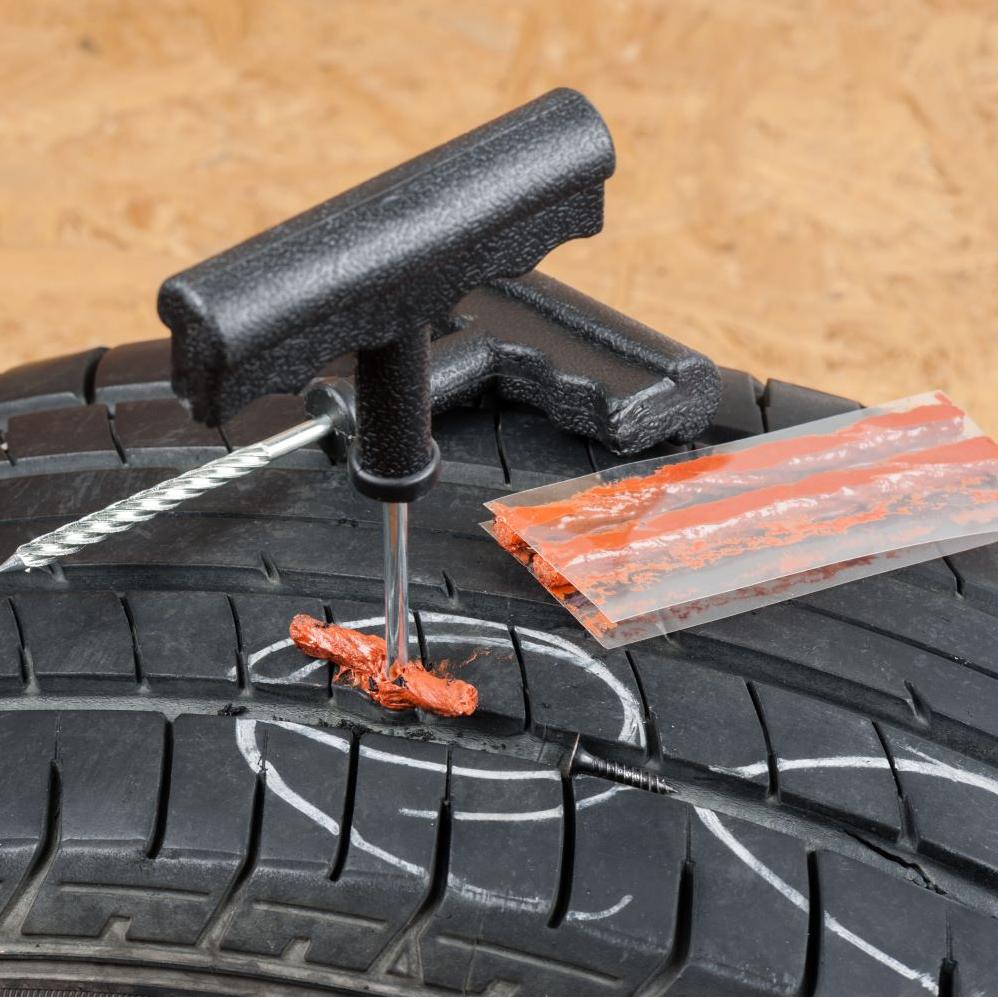
Tire plugs serve as a quick repair solution for small punctures located in the tire tread area. When a nail or sharp object pierces a tire, air begins to leak out. Tire plugs fill the puncture hole and stop the air leak. Many drivers choose tire plugs because they allow for rapid repairs without the need for specialized equipment. The tire plug repair process typically involves the following steps:
- Locate the leak by applying soapy water to observe for bubbles, or by listening carefully for a distinct “hissing” sound of escaping air.
- Use pliers to remove the object (such as a nail) that has pierced the tire.
- Use a reamer (or spiral probe) to clean out the puncture hole and slightly enlarge it.
- Prepare the tire plug and load it into the specialized insertion tool.
- Forcefully push the tire plug into the puncture hole, ensuring it is firmly seated in place.
- Reinflate the tire, then check again to confirm that the air leak has stopped.
This repair method allows drivers to quickly get back on the road. Furthermore, the repair can be performed without removing the tire from the wheel rim.
When to Use a Plug
Tire plugs are most effective for specific types of tire punctures. The table below outlines several scenarios where using a tire plug is appropriate:
| Type of Puncture | Description |
|---|---|
| Minor Tread Area Punctures | Small holes (less than 6 mm or ¼ inch) in the main tread area |
| Emergency Roadside Repairs | Quick solution for getting moving (especially after a flat) |
| Off-Road and Remote Operations | Useful for fast fixes far from repair shops |
| Temporary Measure Prior to Replacement | Good as a stopgap until a new tire is available |
| Specific Industrial Applications | Helps reduce downtime in construction or agriculture |
A plug does not work for sidewall damage or large holes. For those, a tire patch or another repair method is safer.
Pros and Cons
Tire plugs offer several advantages but also have drawbacks. Drivers should fully understand these pros and cons before choosing this repair method.
Advantages:
- Quick and easy to use for small punctures.
- Drivers can be back on the road in just 5 to 10 minutes.
- Suitable for almost any situation, even on the roadside.
- More cost-effective than many other repair options.
Disadvantages:
- Only a temporary solution for most tires.
- Safety risks when used to repair large punctures or sidewall damage.
- Prolonged repair time may allow air, moisture, or dirt to seep into the tire.
Many experts recommend using tire patches for more durable repairs. The debate over whether tire plugs or tire patches are superior ultimately boils down to safety considerations and the need for a long-lasting repair.
Tire Patch Repairs: How They Work and When to Use Them
How Patches Work
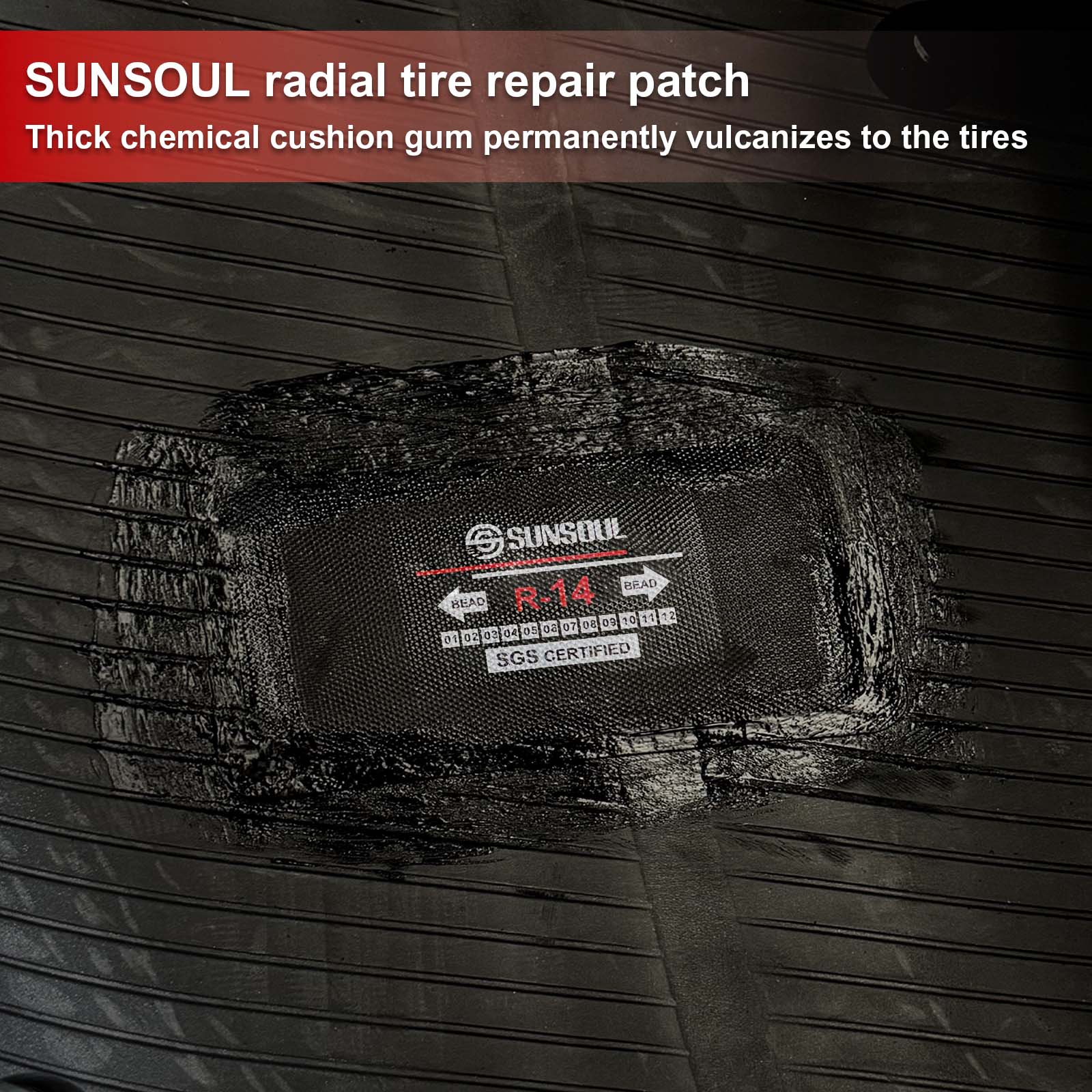
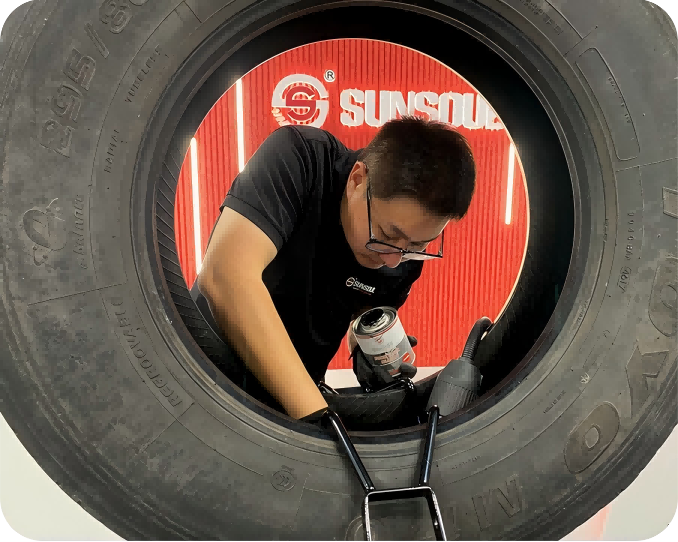
Tire patch repair repairs fix puncture damage by forming a strong seal inside the tire. The repair process begins with a technician removing the tire from the rim. The technician then cleans the area around the puncture and applies a specialized tire patch adhesive. This adhesive firmly bonds the patch to the tire’s inner wall, ensuring a perfect seal. High-quality tire patches (such as SUNSOUL patches) typically use thick rubber material combined with a strong adhesive. These superior materials effectively prevent leaks and ensure the tire remains safe and reliable for an extended period.
Many tire patch products utilize “chemical curing” or “double curing” technologies. Chemically curing patches cure at room temperature; while double curing patches cure using heat or a chemical reaction. Both curing methods provide reliable repair results. SUNSOUL tire patches offer both of these technological options, making them a favorite among both DIY enthusiasts and professional repair technicians.
- Tire repair cement helps firmly bond the patch to the inner wall of the tire.
- This type of cement is suitable for use with both chemical-cure and heat-cure processes.
- Thanks to their exceptional adhesive strength, these patches remain securely in place, thereby completely eliminating any air leaks.
When to Use a Patch
A patch works best for certain types of tire damage. Tire manufacturers recommend a patch for larger punctures in the tread area. They also suggest using a patch for permanent repairs that last the life of the tire. A patch gives a more secure and lasting solution than a plug.
- Use a patch for larger holes in the tread.
- Choose a patch for a flat tire that needs a permanent fix.
- Select a patch when you want the repair to last as long as the tire.
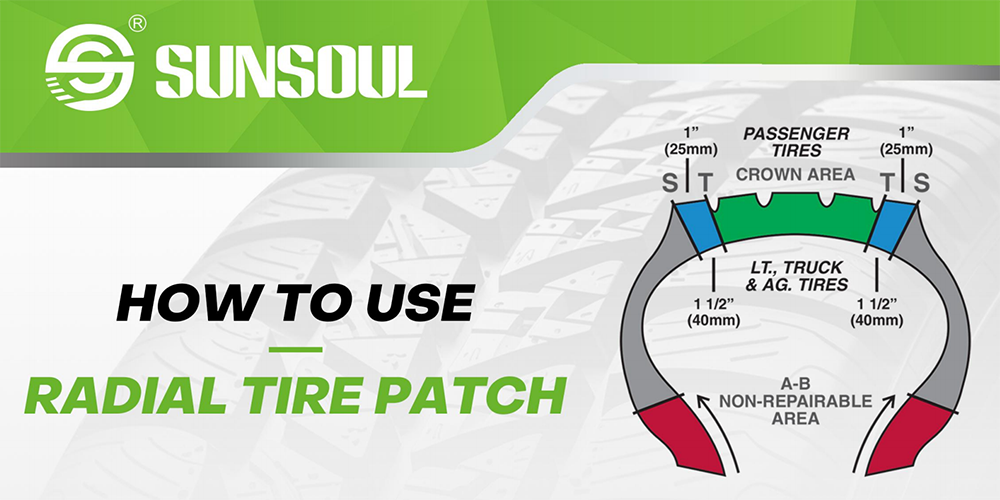
A tire patch repair is not for sidewall damage or very large holes. For those, a new tire may be the safest choice.
Pros and Cons
A patch has many benefits for tire repair. It gives a strong seal and lasts longer than a plug. The SUNSOUL Tire Patch is trusted worldwide for its durability and easy use. Many people include it in their tire repair kit.
Pros:
- Strong and long-lasting sealing effect
- Suitable for larger puncture holes
- Trusted by both professionals and DIY enthusiasts
Cons:
- Installation takes relatively longer
- The tire must be removed from the wheel rim prior to repair
A patch helps drivers fix a punctured tire and get back on the road with confidence.
Plug vs Patch: Safety, Durability, and Cost Comparison
Safety and Reliability
When repairing tires, safety is the primary consideration. Many drivers wonder whether using a “plug” or a “patch” is the more reliable method for ensuring driving safety. While a plug can quickly stop an air leak, it may fail to completely seal the interior surface of the tire. If air seeps into the tire’s internal structural layers, it can lead to tire failure or even a blowout.
In 1996, a Chicago jury awarded $12.65 million in damages to a college student named Peterson. Peterson was left quadriplegic following a traffic accident caused by a tire failure. Investigations revealed that, five months prior to the accident, the tire in question had been repaired using only a plug.
An expert testified that the tire failed after striking a road hazard. The repair method used at the time—known as the “rope plug” method—allowed air to infiltrate the tire’s internal casing structure.
In contrast, a patch seals the interior of the tire, thereby effectively preventing air leakage. The National Highway Traffic Safety Administration (NHTSA) recommends that the optimal method for tire repair is the “combination repair” technique—that is, using both a plug and a patch. For most punctures caused by nails, this combination method provides the safest and most effective repair.
Durability and Longevity
Drivers want their tires to last a long time. A plug can work for a short while, but it may not last as long as the tire. Plugs can start to leak or fail if the tire hits more hazards.
- Tire plug repairs are not permanent and may leak later.
- Patch repairs, especially with plugs, are permanent and meet standards.
- Plug-only repairs fail more often (15-25%) than patch-plug repairs (below 2%).
Tire plugs might last thousands of miles or fail suddenly. A patch is made to last as long as the tire, but water can still hurt the tire over time.
A patch, especially with a plug, gives a long-lasting fix. This helps the tire stay safe and work well for many miles.
Cost and Convenience
Many drivers prioritize cost and ease of use when choosing a repair method. Plug repairs are quick and economical. They are very practical as a quick emergency fix—especially if you live in a remote area far from a professional repair shop. In contrast, patch repairs are more time-consuming and expensive because they require removing the tire from the rim.
| Factor | Description |
|---|---|
| Repair Method | External plugs are usually cheaper but do not last as long as patches. |
| Location | Cities often charge more than small towns for repairs. |
| Competition | Fewer shops in a town can mean higher prices. |
- Plugging is faster and costs less, so many drivers like it.
- But plugs are only temporary and may not fix all tire problems.
- Patch repairs seal the tire from the inside and let you check for more damage.
A patch costs more, but it gives a lasting fix and peace of mind.
Professional Recommendations
Experts and tire groups give clear advice for fixing nail holes. The USTMA says to use both a plug and patch for most repairs. Repairs should only be done in the tread, not on the sidewall. If the hole is bigger than 1/4 inch, the tire should be replaced.
- The USTMA says to use both a plug and patch for repairs.
- Only fix tires in the tread area, not the sidewall.
- Do not repair holes bigger than 1/4 inch.
- Using both a patch and plug is safest for nail punctures.
- Experts say to use both for bigger holes to make the repair stronger.
A kit with both a plug and patch helps fix many types of holes. For small tread holes, a plug is a quick fix. For a long-term fix, use a patch or both together. If the hole is too big or on the side, replace the tire.
Choosing the Right Tire Repair Method
Common Scenarios for Plugs
Drivers typically opt for tire plugs when they require a quick, emergency repair. Tire plugs prove particularly useful when a vehicle is stranded in a remote area, far removed from any repair shops. Many drivers utilize tire plugs to seal small punctures located on the tire tread. Off-road driving enthusiasts, in particular, favor tire plugs for their ability to facilitate rapid repairs in the event of a flat tire. As these scenarios demonstrate, when you are in a hurry to get back on the road, a tire plug is undoubtedly the optimal repair solution.
- Performing quick, emergency repairs in remote areas
- Small puncture holes located on the tread
- Repairing tires in off-road conditions where no repair shops are nearby
Common Scenarios for Patches
Repairs performed using a tire patch result in a stronger, more durable, and longer-lasting fix. Many professional auto repair shops typically opt for tire patches when dealing with larger punctures on the tread. Drivers who prioritize a durable and secure repair are also often inclined to choose patches. If circumstances permit—specifically, if the tire can be removed from the wheel rim for the procedure—using a tire patch is an ideal choice. For drivers who want their tires to remain safe and reliable after traveling thousands of miles, the tire patch is undoubtedly the superior repair solution.
- Large Punctures in the Tread Area
- Permanent Repairs Performed at Professional Shops
- Drivers Prioritizing Long-Term Durability
Decision Tips
Picking a plug or patch depends on a few things. The table below shows what to think about:
| Feature | Tire Plug | Tire Patch | Plug-Patch Combo |
|---|---|---|---|
| Installation | Outside-in | Inside-out | Both methods |
| Tire removal | Not required | Yes, required | Yes, required |
| Time to perform | 5-10 minutes | 20-30 minutes | 25-35 minutes |
| Durability | Short-term | Not recommended | Longest lasting |
| Safety | Low | Low-moderate | Highest |
| Cost | $10-$20 | $20-$40 | $25-$60 |
Experts say you should check the damage before fixing a tire. Small holes in the tread can be fixed, but sidewall damage means you need a new tire. If your tire is old or worn, it is safer to get a new one. Checking your tires often helps stop flats. Many experts say using both a plug and patch is best for safety.
Tip: Always look at your tire before picking a repair. If you are not sure, ask a pro for help.
Tire Repair: DIY vs Professional
DIY Risks
Many people attempt to repair their tires themselves at home, but this often leads to a variety of complications. Common risks include:
- Improper sealing of the tire, resulting in air leaks that can subsequently lead to further trouble.
- The use of makeshift or unsuitable tools, which may damage the tire’s internal structure, rendering it fragile and more susceptible to failure.
- Inaccurate tire pressure settings following the repair, thereby compromising the vehicle’s handling performance and braking effectiveness.
- Failure to perform dynamic balancing on the tire, which can lead to wheel alignment issues, resulting in uneven tire wear and reduced vehicle handling stability.
- If a DIY repair fails and leads to a traffic accident, it may also result in legal disputes.
The aforementioned risks clearly demonstrate that one must exercise the utmost caution and concentration whenever performing any work on tires.
When to See a Pro
In certain situations, tire issues must be entrusted to professionals. If the damage to a tire has compromised its internal structure, or if the tire has already undergone multiple repairs, seeking professional repair services is undoubtedly the safest and most prudent option. Attempting to force a repair without the necessary specialized tools makes operational errors highly likely; improper repairs can not only inflict long-term, latent damage upon the tire but also create hidden hazards that jeopardize driving safety. In these critical moments, safety should always take precedence over cost savings.
A professional repair at a qualified shop is always a better and safer choice than relying on a plug. The technician will dismount the tire from the wheel, which means they can inspect the internal condition.
Steps to decide if a professional is needed:
- Check how bad the damage is.
- See if the tire has been repaired before.
- Ask a professional if a replacement is the only safe option.
Safe Repair Tips
Tire makers give important advice for anyone fixing a tire at home:
- Use the right tools and follow correct methods to keep the tire safe.
- Make sure the seal is tight to prevent air leaks.
- Balance and align the tire after any repair to avoid uneven wear.
- Watch the repaired tire for signs of trouble, like loss of air or odd noises.
- Remember, a properly repaired tire helps keep everyone safe on the road.
Most car experts say a patch or patch-plug is the safest fix for a nail in a tire. The table below shows how each repair works:
| Method | Effectiveness | Notes |
|---|---|---|
| Patch | Superior | Holds air well, but you must take off the tire to check it. |
| Plug | Effective | Easy to use, but might not show hidden tire problems. |
| Patch Plug | Best of both | Needs tire removal, but gives the safest repair. |
Drivers should listen to experts about tire safety. A patch can fix small holes in the tread for good. Plugs are fast and easy, but they do not last as long. If the hole is bigger than 1/4 inch or near the side, get a new tire. When you find a nail, use sealant, put on a spare, or go to a shop. Checking your tires often helps keep them safe.
FAQ
Can tire plugs or patches repair punctures in the sidewall?
No. Neither plugs nor patches can safely repair a puncture in the tire’s sidewall. Tire experts recommend that if the sidewall is damaged, the entire tire should be replaced immediately.
How long can a tire repaired with a plug be driven?
Plugs are intended only as a temporary repair solution. Most experts advise limiting driving to short distances after such a repair. Drivers should visit a repair shop as soon as possible to seek a permanent solution.
Is it safe to use a patch to repair larger nail holes?
For most punctures in the tread area with a diameter of less than 1/4 inch, patches work effectively. However, if the hole is larger, the tire should be replaced. Safety always comes first.
Why are SUNSOUL tire patches the ideal choice for you?
SUNSOUL tire patches are manufactured using high-quality rubber and advanced adhesives. Thanks to their exceptional durability and ease of use, they have earned the trust of countless drivers. This product is suitable for a wide range of vehicles, including passenger cars and trucks.