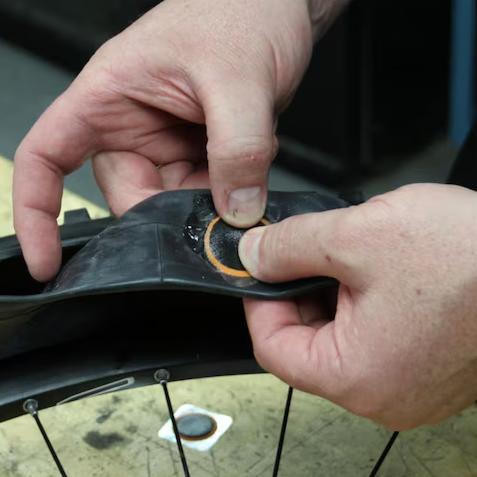


You can trust a radial tyre patch for tire repair when you select the right product and use it properly. Safety always depends on the quality of the patch and how you apply it. High-quality patches protect your tire and keep you safe on the road. SUNSOUL stands out for reliable, certified repair solutions. Many drivers around the world choose SUNSOUL products because they want strong results and dependable performance.
Radial Tyre Patch Safety in Tire Repair
Why Radial Tyre Patch Matters for Tire Repair
You need to understand why a radial tyre patch is important for tire repair. When you fix a tire, you want the repair to last and keep you safe. Experts say you should always follow safety standards from groups like the US Tire Manufacturers Association and the Tire Industry Association. These rules help you avoid problems that can lead to tire failure or accidents.
You should always remove the tire from the rim before you start any repair. This step lets you check for hidden damage. You must never let repairs overlap, and you should use both a plug and a patch to seal the hole. Using only a plug does not give you enough protection.
- Radial patches work better than plugs for long-term tire repair.
- You get better safety because you inspect the tire closely when you install a radial tyre patch.
- Plugs might help for a short time, but they do not offer the same level of safety as a radial tyre patch.
Scientific studies show why radial tyre patches work so well. Look at this table to see how they help your tire:
| Aspect | Description |
|---|---|
| Chemical Bonding | Creates a permanent molecular bond with the tire, restoring integrity and performance. |
| Vulcanization Process | Involves heat and pressure activation, curing agents, and superior strength integration into tire. |
| Durability and Safety | Ensures the patch stays in place, preventing air loss and maintaining tire pressure and load capacity. |
Tread separations are the most common mode of failure for steel-belted radial tires, often resulting from design and manufacturing defects. These failures can lead to catastrophic outcomes, including tire blowouts and loss of vehicle control.
You want to avoid these risks by choosing the right repair method. A radial tyre patch gives you the best chance to keep your tire strong and safe.
SUNSOUL’s Commitment to Safe Tire Repair Solutions
You can trust SUNSOUL to help you with tire repair. SUNSOUL makes over two million tire patches every month and supplies them to more than sixty countries. You get products that meet strict safety standards and work for many types of vehicles.
SUNSOUL builds strong partnerships with dealers. You get technical training, fast logistics, and support in many languages. SUNSOUL patches have thick material, strong adhesion, and a round shape that prevents peeling. You can use them for any tire size or model, and they seal leaks to keep your tire safe.
SUNSOUL offers end-to-end solutions. You get help from research and development to after-sales service. If you have a problem, SUNSOUL resolves it within seventy-two hours and provides lifetime maintenance advice. You can rely on SUNSOUL for safe, effective tire repair every time.
Key Features of a Safe Radial Tyre Patch
Materials and Construction for Reliable Tire Repair
You want your tire repair to last. The materials inside a radial tyre patch make a big difference. Manufacturers use high-quality rubber compounds and special adhesives. These materials help the patch bond tightly to the tire and keep you safe on the road. Tech Tire Supply and other leading companies design patches with strong reinforcement layers. These layers add strength and help the patch handle tough conditions.
RADIAL OTR Patches use extra reinforcement for heavy-duty tires. You see these patches on construction and industrial vehicles. They restore tire strength and keep workers safe in demanding environments. Some patches, like TECH’s Uni-Seal Ultra, give you a fast and permanent fix. You get reliability and safety every time you use them.
SUNSOUL uses advanced rubber compounds with special polymers. These polymers resist heat and friction. You get a patch that stays strong even when your tire gets hot. SUNSOUL also tests every patch for pressure resistance, water leaks, and peel strength. You know your tire patch will last because it passes strict tests.
Tip: Always choose patches made for radial tires. These patches use materials that match the tire’s structure and keep you safe.
You should also think about the environment. Tire manufacturing can cause pollution and waste. Some companies now use recycled rubber and bio-based materials. These choices help protect nature and reduce pollution.
Design Differences: Radial Tyre Patch vs. Other Patch Types
You might wonder how a radial tyre patch is different from other patches. The design matters for safety and performance. Radial patches have special reinforcement that supports the tire’s structure. This reinforcement helps the patch flex with the tire as you drive. You get better durability and fewer failures.
Here is a table that shows how construction affects performance:
| Feature | Benefit |
|---|---|
| Structural Reinforcement | Supports the tire, making repairs last longer. |
| Flexibility | Lets the patch move with the tire, lowering the risk of damage. |
| Versatility | Works for many repair areas, like the crown, shoulder, and sidewall. |
Radial patches also reduce the effects of flexing during tire use. You can use one type of patch for many repairs, so you need less inventory. When you use the right curing method, you get a strong and lasting repair.
- Radial patches adapt to tire movement.
- You need fewer patch types for different repairs.
- Proper curing boosts repair strength.
Other patches, like bias patches, do not offer the same flexibility or support. You get better results with a radial patch, especially for modern tires.
Certifications and Standards for Tire Repair Safety
You want to know your tire patch meets safety standards. Certified patches follow strict rules set by groups like ISO, DOT, and CE. SUNSOUL’s patches meet these standards and pass tough quality checks. You get products that are safe and reliable.
Here is a table showing SUNSOUL’s quality assurance:
| Quality Assurance Aspect | Description |
|---|---|
| Material Technology | Uses high-quality rubber and polymers for heat and friction resistance. |
| Adhesion Properties | Strong bonding prevents patch separation under heavy loads. |
| Product Testing | Includes pressure, water, peel strength, and durability tests. |
| Environmental Compliance | Meets RoHS and REACH standards, free from hazardous chemicals. |
| Industry Standards | ISO 9001 certified, DOT compliant, CE marked, with strict batch testing. |
Certified patches protect you and your vehicle. You get peace of mind knowing your repair meets global safety standards.
You also want to consider cost and quality. High-quality patches may cost more, but they last longer and keep you safer. Look at this chart to compare prices for different tire patch products:

You see that top-rated patches offer better value over time. You spend less on replacements and avoid unsafe repairs.
SUNSOUL’s Quality Assurance in Patch Manufacturing
You want to know your tire repair is safe. SUNSOUL makes sure every patch meets strict quality standards. The company uses advanced technology and careful checks at every step. You get a product that works well and keeps you safe on the road.
SUNSOUL starts with high-quality raw materials. The company selects rubber and adhesives that resist heat, pressure, and wear. You can trust these materials to last a long time. Every batch goes through tests for strength and flexibility. If a material does not pass, SUNSOUL does not use it.
The manufacturing process uses modern machines. These machines shape and cure each patch with precision. You get a product that fits your tire perfectly. SUNSOUL checks the thickness, shape, and adhesion of every patch. The round shape helps prevent peeling. The strong adhesive keeps the patch in place, even under heavy loads.
SUNSOUL follows international standards like ISO 9001, DOT, and CE. The company tests each product for air leaks, water resistance, and peel strength. You can see the results in this table:
| Quality Test | What It Checks For | Why It Matters |
|---|---|---|
| Pressure Resistance | Holds air under pressure | Prevents sudden air loss |
| Water Leak Test | Seals against moisture | Stops rust and corrosion |
| Peel Strength | Adhesion to tire surface | Keeps patch from lifting |
| Durability Test | Long-term performance | Ensures safety over time |
You also get support after you buy. SUNSOUL offers technical training and fast help if you have questions. The company solves most issues within 72 hours. You can ask for advice any time, even years after your purchase.
Note: SUNSOUL supplies over two million patches every month to more than sixty countries. Many dealers trust SUNSOUL because of stable supply, strong support, and reliable products.
You can feel confident when you choose SUNSOUL. The company’s quality assurance means you get a safe, dependable repair every time.
How to Identify a Safe Radial Tyre Patch for Tire Repair
Signs of High-Quality Patch for Tire Repair
You can spot a high-quality tire patch by looking for certain features. A good radial tyre patch uses a single direction ply and locking wedge construction. This design gives the patch both strength and flexibility. You will notice that top patches use a special rubber compound mixed with polyester fibers. These materials help the patch handle stress and movement inside the tire.
Look for these signs when you check a patch:
- Strong, flexible feel when you bend it.
- Fabric reinforced with high-quality cushion gum.
- Smooth, round shape that covers the puncture area well.
- Designed to repair sidewall, crown, and shoulder injuries.
- Can be used with a TECH repair stem for extra sealing.
A patch with these features will last longer and protect your tire from further damage.
Ensuring Compatibility with Your Tire
You need to make sure the patch matches your tire type and the kind of damage you want to fix. Radial patches work best for modern radial tires. Always check the patch label for size and application details. The patch should fit the area of the puncture without overlapping old repairs.
Follow these steps for compatibility:
- Check your tire’s size and type.
- Match the patch to the injury location—sidewall, crown, or shoulder.
- Make sure the patch covers the damage fully.
- Review the repair procedures recommended by the patch manufacturer.
If you use the right patch, your tire repairs will be safer and more effective.
Recognizing Trusted Brands Like SUNSOUL for Tire Repair
Choosing a trusted brand helps you avoid problems. SUNSOUL stands out because it offers patches with strong adhesion, reliable sealing, and easy application. You get products that pass strict quality tests and meet global safety standards. SUNSOUL also provides support and training for proper repair procedures.
When you pick a brand like SUNSOUL, you know your tire patch will handle tough conditions and keep your tire safe after a repair.
Correct Tire Repair Process Using Radial Tyre Patch
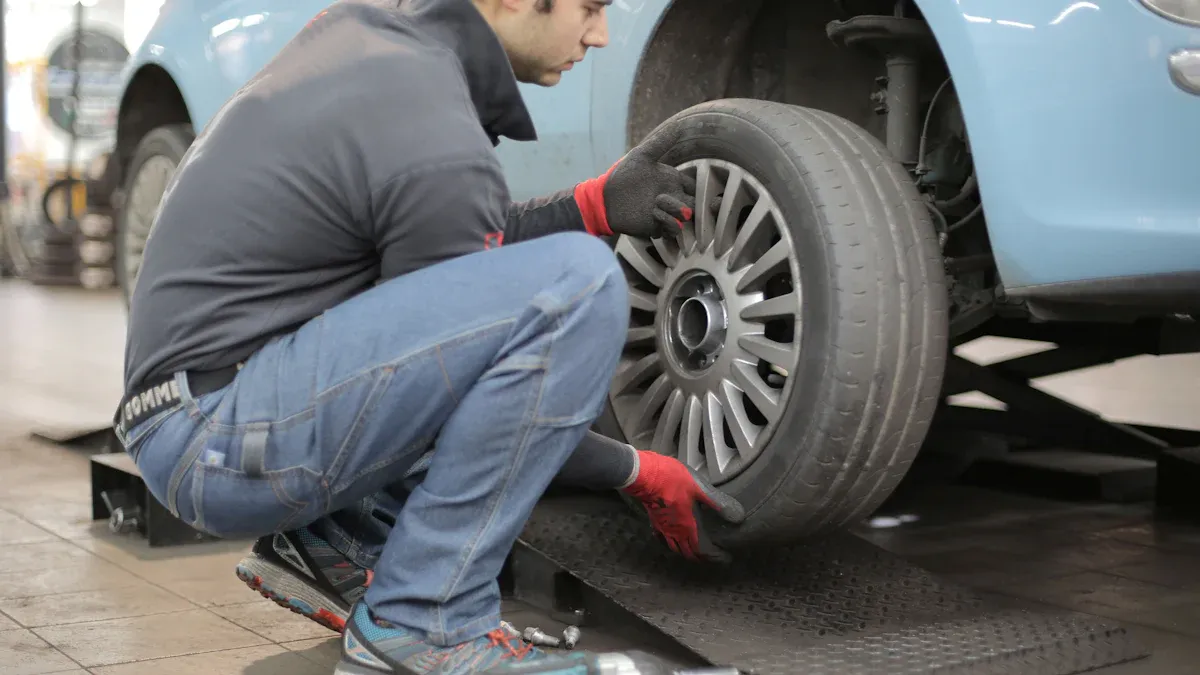
Step-by-Step Tire Repair with Radial Tyre Patch
You want your tire repair to last and keep you safe. Follow these steps to apply a radial tyre patch correctly:
- Mark the spot where you find the puncture using a tire marker.
- Use a scuffer tool to roughen the area around the puncture. Make sure you cover at least half an inch around the spot.
- Apply rubber cement to the roughened surface. Spread it evenly and wait until it feels tacky.
- Remove the backing from the patch. Avoid touching the sticky side.
- Place the patch directly over the puncture. Press it down firmly.
- Use a buffer tool to stitch the patch onto the tire. Push out any trapped air.
- Wait for the patch to dry completely. Remount the tire and inflate it.
Tip: Always check the tire for hidden damage before you start the repair. If you see any sidewall or structural problems, ask a trained technician for help.
Common Tire Repair Mistakes to Avoid
You want to avoid mistakes that can make your repair fail. Here are some common errors people make:
- Ignoring manufacturer guidelines. Always read and follow the instructions for your patch.
- Overlooking damage in the sidewall or other areas. Check the whole tire before you repair.
- Improper cleaning. Dirt or debris can stop the patch from sticking.
- Skipping professional help. If the repair looks complex, call a trained technician.
Note: A clean and well-prepared surface helps the patch bond better and keeps your tire safe.
SUNSOUL’s Support for Proper Tire Repair Application
SUNSOUL gives you many tools and resources for successful tire repair. You get patches in different sizes, strong adhesives, files for roughening surfaces, and cleaning tools. SUNSOUL also provides step-by-step instructions so you can follow the correct process.
| Component | Description |
|---|---|
| Radial Tire Repair Patches | Many sizes and types for different tires |
| Adhesive | Strong rubber glue for bonding |
| File | Tool for roughening the puncture area |
| Insert tool | Helps place a plug into the puncture |
| Cleaning tools | Brushes and rags for cleaning |
| Instructions | Clear steps for effective repair |
You can watch SUNSOUL’s tire repair training videos or read their training materials online. These resources help you learn the best way to fix your tire and avoid mistakes.
Risks of Unsafe Tire Repair with Incorrect Patch

What Can Go Wrong with Unsafe Tire Repair
You face serious risks when you use the wrong patch for tire repair. Many people do not realize that plug-only repairs can give a false sense of security. Problems may not show up right away. Sometimes, improper repairs take years to fail, making it hard to link the repair to an accident. The rise of DIY repairs means more people try to fix tires without proper training. This increases the chance of unsafe practices.
- Many drivers trust plug-only repairs, but these do not meet repair standards.
- Delayed failures can cause accidents long after the initial repair.
- DIY repairs often skip important safety steps.
- A couple received $13.64 million after a crash caused by a faulty string plug repair.
- A dealership was found responsible for a fatal accident due to not following repair standards.
- A child suffered injuries from a blowout after a string plug was used on a punctured tire.
Industry experts agree that plug repairs are unsafe and can lead to serious accidents. You must understand the risks before choosing a repair method.
Warning Signs After Tire Repair
You should watch for warning signs after fixing a tire. Persistent air leaks may mean hidden problems that need professional help. Severe damage, such as sidewall bubbles or bulges, shows deeper issues that make patching unsafe. If you see a puncture larger than 1/4 inch, the patch may not hold, and driving could be dangerous.
- Air leaks that do not stop
- Bubbles or bulges on the sidewall
- Large punctures that exceed patch limits
If you notice any of these signs, get your tire checked by an expert.
How SUNSOUL Minimizes Tire Repair Risks
SUNSOUL designs products to keep you safe during tire repair. The reinforced cord layer improves tear resistance and prevents secondary cracking. The self-vulcanization process creates a permanent seal with the tire rubber, which is stronger than ordinary glue. The high elastic rubber formula resists temperature changes and aging, making it suitable for extreme climates. The pre-coated adhesive design makes DIY repairs easier and safer. SUNSOUL’s ready-to-use kit gives you all the tools needed for a complete repair.
| Feature | Description |
|---|---|
| Reinforced cord layer | Improves tear resistance, prevents secondary cracking, and extends the life of the repair. |
| Self-vulcanization process | Forms a permanent seal with the tire rubber, exceeding the adhesion effect of ordinary glue. |
| High elastic rubber formula | Made of temperature resistant and anti-aging synthetic rubber, suitable for extreme climates. |
| Pre-coated adhesive design | Simplifies DIY repairs, eliminating the need for separate glue. |
| Ready-to-use kit | Includes tools for a one-stop solution to repair needs. |
You get peace of mind knowing SUNSOUL products help you avoid common risks and keep your tire safe after a puncture.
Tire Repair Safety Checklist for Radial Tyre Patch
Quick Safety Checklist Before Tire Repair
You need to check a few important things before you start fixing your tire. A good checklist helps you stay safe and avoid mistakes. Use this table to guide you:
| Safety Item | Description |
|---|---|
| Chemical Cement | Let the cement dry by itself. Do not use heat or anything flammable nearby. |
| Tire Inspection | Look for hidden damage. Tires can have problems from being under-inflated or overloaded. |
| Proper Repair | Always use both a patch and a plug. Skipping this step can cause the tire to fail. |
| Restraining Device | Inflate any tire you suspect is damaged inside a safety cage. This keeps you safe if the tire bursts. |
Tip: Always follow these steps every time you repair a tire. Missing even one step can put you at risk.
SUNSOUL’s Recommended Tire Repair Best Practices
You want your repair to last and keep you safe. SUNSOUL recommends these best practices:
- Clean the area around the puncture. Dirt or debris can stop the patch from sticking.
- Use the right patch for your tire type. Radial patches work best for modern tires.
- Follow the instructions on the patch packaging. Each product may have different steps.
- Check that the patch covers the damage fully. Do not let it overlap with old repairs.
- Inflate the tire slowly and watch for leaks. Listen for hissing sounds or look for bubbles.
- Store your patches and tools in a cool, dry place. Heat and moisture can damage repair materials.
- Always follow industry standards for tire repair. These rules help keep you and others safe on the road.
Remember: If you feel unsure about any step, ask a trained technician for help. Safety comes first.
You want your tire repair to last, especially during an emergency. Using safe, certified radial tyre patches helps you avoid problems when you need your vehicle most. Trusted brands like SUNSOUL give you peace of mind in any emergency. The table below shows SUNSOUL’s top review score and buyer repeat rate compared to other brands, proving its reliability for emergency repairs.
| Brand | Review Score | Buyer Repeat Rate (BRR) |
|---|---|---|
| SUNSOUL Euro Type Cold Patch | 5.0 | 9% |
| Hangzhou Xinyousheng Patch | 4.9 | 29% |
| Jiaxing Zoya 11-710 Euro Patch | 4.8 | 20% |
Follow these best practices to keep your tire safe in an emergency:
- Ensure professional installation for every emergency repair.
- Use proper tools to access the tire’s interior during an emergency.
- Choose a comprehensive patch kit for emergency situations.
- Apply pressure to create an airtight seal, especially in an emergency.
- Certified technicians can spot hidden issues during an emergency.
- They help you meet safety standards in every emergency.
You protect yourself and others by choosing the right patch and following these steps. SUNSOUL helps you stay safe, even in an emergency.
FAQ
What should you do first when you get a flat tire?
You should stop your car in a safe place. Turn on your hazard lights. Check your flat tire for damage. Use a tire gauge to see if the flat needs air or a patch. Call for help if you cannot fix the flat.
Can you repair every flat tire with a radial patch?
You cannot repair every flat tire with a radial patch. If the flat is on the sidewall or the damage is too large, you need a new tire. Always check the flat for hidden damage before you start the repair.
How do you know if your flat tire patch is safe?
You should look for a patch with strong adhesion and a round shape. Make sure the patch covers the flat area fully. Trusted brands like SUNSOUL test their patches for leaks and durability. Always follow the instructions for your flat tire repair.
How long does a flat tire repair last with a radial patch?
A flat tire repair with a radial patch can last for years if you apply it correctly. The patch bonds with the flat and keeps air inside. You should check your flat tire often for leaks or signs of wear.
What tools do you need to fix a flat tire with a patch?
You need a tire marker, scuffer tool, rubber cement, and a radial patch. Use a buffer tool to press the patch onto the flat. Cleaning tools help remove dirt from the flat area. SUNSOUL kits include everything you need for a flat tire repair.
Tip: Always keep a flat tire repair kit in your car. You never know when you will get a flat.
| Tool | Use |
|---|---|
| Tire marker | Mark the flat spot |
| Scuffer tool | Roughen the flat area |
| Rubber cement | Bond patch to flat |
| Radial patch | Seal the flat tire |
| Buffer tool | Press patch on flat |