
An excellent vulcanizing rubber patch does not simply stick to a tire. It becomes a part of it. The process of vulcanization creates a powerful chemical bond. This vulcanization reaction forms strong sulfur bridges between the patch and the tire’s polymer chains. This chemical change, known as vulcanization, merges the two surfaces. The result of vulcanization is a single piece of vulcanized rubber. The patch and tire are no longer separate. They are one unified material. This permanent fusion creates a seamless repair, turning two pieces into a single, durable piece of vulcanized rubber through vulcanization.
The Fundamental Science of Vulcanization
The process of vulcanization is a remarkable chemical transformation. It converts soft, sticky natural rubber into a strong, durable, and elastic material. This science is the key to how a tire patch permanently bonds to a tire. Understanding this fundamental process reveals why a vulcanized repair is far superior to a simple adhesive patch. The vulcanization of rubber creates a new, unified structure at the molecular level.
Understanding Rubber’s Molecular Structure
Before vulcanization, natural rubber exists as a collection of very long, independent polymer chains. A polymer is a large molecule made of many smaller, repeating units joined together. In natural rubber, this polymer is called polyisoprene. These chains are not connected to each other. They simply tangle together like a bowl of cooked spaghetti.
This loose structure gives raw rubber some of its properties, like stretchiness. However, it also makes it weak, sticky when hot, and brittle when cold. The individual chains can slide past one another easily.
- Chemical Name: Natural rubber is chemically known as
cis-1,4-polyisoprene. - Molecular Weight: Each chain is massive, with a molecular weight ranging from 100,000 to 1,000,000 daltons.
- Structure: Thousands of individual isoprene units link up to form each long, flexible chain.
Without any connections, these chains cannot hold a shape under stress or temperature changes. The goal of vulcanization is to lock these chains in place.
The Role of Sulfur in Creating Cross-Links
Sulfur is the star ingredient in the vulcanization process. When heated with rubber, sulfur atoms act as bridges, forming powerful connections between the separate polyisoprene chains. These connections are called cross-links. This chemical reaction permanently alters the rubber’s molecular architecture, creating a strong, three-dimensional network. The result is a tough, elastic material: vulcanized rubber.
The process of vulcanization follows several key steps:
- Heat and chemical accelerators activate the sulfur. This prepares the sulfur atoms to bond with the rubber.
- The activated sulfur targets specific locations on the long polyisoprene chains.
- The sulfur atoms then form strong covalent bonds, creating short sulfur bridges (monosulfide or disulfide) or longer polysulfide bridges between adjacent rubber chains.
The number and type of these sulfur bridges determine the final properties of the vulcanized rubber. More bridges create a harder, more rigid material, while fewer bridges allow for more flexibility. This controlled vulcanization process turns a weak substance into a resilient one.
From Two Surfaces to One Unified Material
When applying a vulcanizing rubber patch, the goal is not to glue two surfaces together. The goal is to trigger vulcanization at the point of contact, fusing the patch and the tire into a single, seamless piece of vulcanized rubber. The uncured rubber of the patch and the surface of the tire both contain the necessary polymer chains.
The vulcanization process doesn’t just happen within the patch; it happens across the boundary between the patch and the tire. The sulfur cross-links form between the polymer chains of the patch and the polymer chains of the tire, effectively erasing the boundary that once separated them.
This chemical fusion creates a unified material. The patch is no longer a separate entity but an integrated part of the tire’s structure. The final product is a continuous piece of vulcanized rubber, sharing the same molecular integrity. This is why a proper repair results in a permanent, airtight seal. The strength comes from the dense network of new covalent bonds, making the repaired area as strong and durable as the original vulcanized rubber of the tire itself.
How the Vulcanization of Rubber Creates a Superior Bond
The process of vulcanization transforms rubber into a material with vastly improved physical properties. This chemical change is the reason a repair becomes an integral part of the tire, offering strength and durability that simple adhesives cannot match. The vulcanization of rubber creates a bond that excels in elasticity, resilience, and sealing power.
Achieving Enhanced Elasticity and Resilience
Vulcanization introduces chemical cross-links that anchor the long polymer chains together. These links prevent the chains from permanently slipping apart when the material is stretched. Instead, the network stores elastic energy. When the stretching force is removed, this stored energy drives the chains back to their original, stable arrangement. This molecular memory gives vulcanized rubber its signature elasticity and resilience. The material can deform under stress and then snap back to its initial shape, a critical property for a tire repair that must constantly flex.
Building Resistance to Heat and Abrasion
The same cross-links that provide elasticity also make vulcanized rubber incredibly tough. The three-dimensional molecular network is much more resistant to heat and physical wear. Uncured rubber becomes soft and sticky when warm, but the vulcanization process stabilizes the material, allowing it to perform reliably across a wide range of temperatures. This enhanced durability is measured using standardized industry tests.
- ASTM D5963: This test uses a rotary drum abrader to measure volume loss from friction.
- ISO 4649: This international standard also determines abrasion resistance using a similar method. A high resistance index in these tests indicates a durable vulcanized rubber surface that can withstand the harsh conditions of the road.
Forming a Permanent, Airtight Seal
A puncture compromises a tire’s ability to hold air. A vulcanizing rubber patch restores this function by creating a truly permanent and airtight seal. The vulcanization reaction chemically fuses the patch to the tire, leaving no microscopic gaps for air to escape.
The irreversible chemical bond creates a single, continuous piece of vulcanized rubber. This unified structure is fundamentally different from a surface-level adhesive, which can peel or develop leaks over time.
Repairs are often validated with rigorous tests, such as pressure resistance tests up to 300 psi and 72-hour water immersion tests, to confirm the integrity of the seal. This robust, molecular-level fusion ensures the repair is safe and reliable for the long term.
The Chemical Process Behind a Vulcanizing Rubber Patch
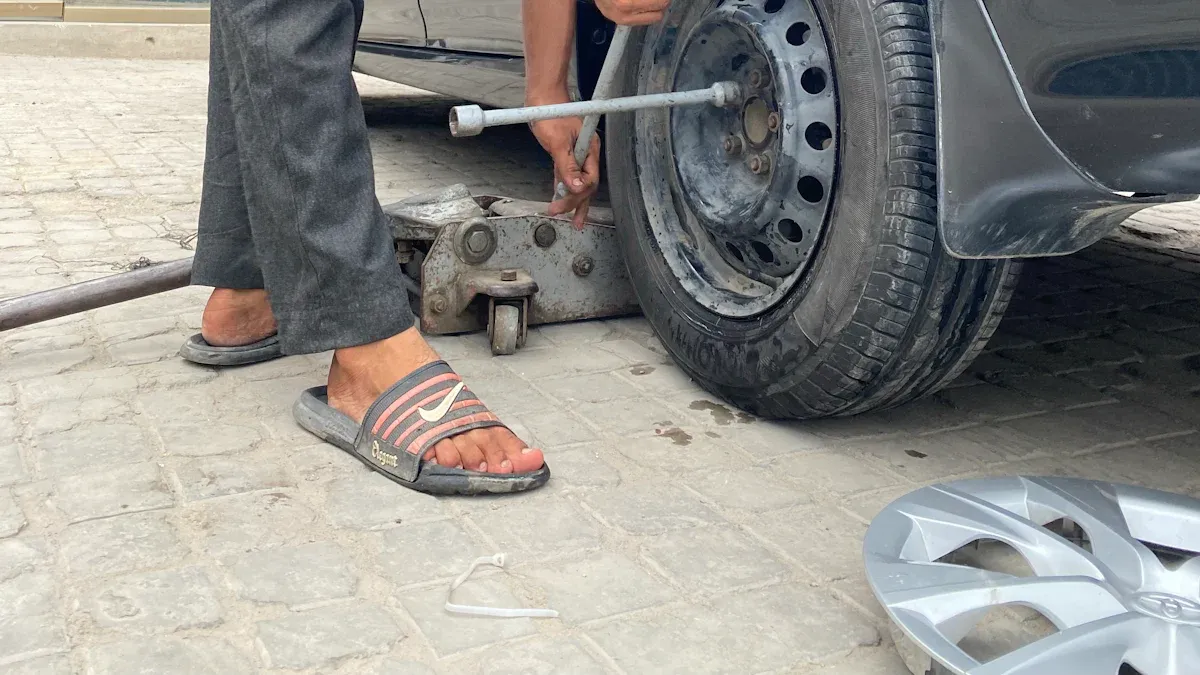
A successful tire repair depends on a precise chemical reaction. The vulcanization process is not accidental; it is a controlled series of steps. Each component, from the patch itself to the application of heat, plays a critical role. Understanding this chemistry reveals how a simple patch can create such a strong and permanent bond. The entire vulcanization process relies on the right ingredients and conditions to work correctly.
The Uncured Rubber Patch Composition
A high-quality vulcanizing rubber patch is an engineered product. It contains more than just a piece of raw rubber. The patch is made from a special compound of uncured natural rubber. This rubber still has the long, separate polyisoprene chains ready for bonding. Manufacturers embed key chemical agents directly into this rubber matrix. These agents remain dormant until activated. This pre-mixed composition ensures all necessary ingredients are present at the repair site for a successful vulcanization. The patch is designed to be a self-contained kit for the chemical reaction.
The Vulcanizing Agent and Accelerators
The magic of vulcanization lies in its chemical agents. Sulfur is the primary vulcanizing agent. It forms the essential cross-links between rubber polymer chains. However, using sulfur alone would require extremely high temperatures and long curing times, making it impractical for repairs. This is where accelerators become vital.
Accelerators are chemical catalysts. They dramatically increase the speed of the vulcanization process. These compounds create a more efficient reaction pathway. This new pathway has a lower activation energy barrier. As a result, the vulcanization of rubber can occur at lower temperatures, often reducing the required heat by at least 30°C, and in much less time.
This efficiency is crucial for practical tire repair. A special chemical vulcanizing cement often accompanies the patch. This cement contains its own blend of accelerators and prepares the tire surface for bonding. Common accelerators used in the modern vulcanization process include:
- Sulfenamides (like CBS and TBBS)
- Thiazoles (like MBT and MBTS)
- Guanidines (like DPG)
- Thiurams and Dithiocarbamates
These chemicals work together to control the vulcanization process, ensuring a strong and reliable bond forms quickly and efficiently.
The Function of Heat and Pressure
Heat and pressure are the final catalysts that initiate and complete the chemical transformation. They are not optional; they are essential functions of the vulcanization process.
Heat provides the activation energy. 🌡️ It gives the sulfur atoms and accelerator molecules the energy they need to start reacting with the rubber’s polymer chains. The vulcanization process will not begin without sufficient heat. Optimal curing temperatures for repair units are often recommended to be 260°F (127°C) or higher. Some industrial tire curing processes even heat the rubber to over 300°F (149°C) to ensure a complete reaction.
Pressure serves two critical functions.
- It ensures perfect, intimate contact between the patch and the tire surface. This eliminates any trapped air bubbles that could create weak spots or potential leak paths.
- It helps the uncured rubber flow and conform precisely to the shape of the injury.
Professional hot vulcanizing machines apply immense force to guarantee this contact. These systems can use hydraulic pressure reaching up to 160 bar (approximately 2,275 psi). Together, heat and pressure drive the vulcanization process to completion, fusing the patch and tire into one seamless, durable piece of rubber.
Why Quality Matters for a Perfect Vulcanized Rubber Bond
The success of a tire repair hinges on the quality of its components. A strong, permanent repair is the result of a precise chemical reaction. Low-quality materials can disrupt this process, leading to a weak patch that fails under pressure. Achieving a perfect vulcanizing bond requires pure ingredients and strict manufacturing controls to ensure the vulcanization process completes correctly.
The Importance of High-Purity Compounds
The vulcanization reaction is highly sensitive to impurities. Pure rubber compounds are essential for creating a strong and reliable piece of vulcanized rubber. Contaminants like metals or organic residues in unpurified rubber can interfere with the chemical bonding. These nonrubber constituents block the sites where sulfur needs to form cross-links. This interference weakens the final structure. Studies show that impurities cause key chemical bonds to decrease or disappear during vulcanization, something that does not happen with purified rubber. Using high-purity compounds ensures the vulcanization reaction proceeds as intended, creating a dense and uniform network of cross-links for a durable repair.
How SUNSOUL Ensures Optimal Vulcanization
Leading manufacturers like SUNSOUL understand that quality control is key to reliable vulcanization. The company implements rigorous standards to produce patches that deliver consistent performance. This commitment ensures every patch can form a strong piece of vulcanized rubber.
- Strict Oversight: SUNSOUL maintains strict supervision and quality management throughout its ISO-certified manufacturing processes.
- Total Inspection: The company performs 100% quality inspections during production and again after production through its QC system.
- Proven Durability: Confidence in their product’s ability to create durable vulcanized rubber is backed by an 18-month warranty.
These measures guarantee that each patch meets international standards, providing a dependable foundation for a safe and lasting repair.
The Critical Role of Quality Vulcanizing Fluid
The vulcanizing fluid, or cement, is an active chemical agent, not just a simple glue. It contains the necessary ingredients to initiate vulcanization at the repair site. A high-quality fluid has a precise balance of components that work together.
| Component | Function |
|---|---|
| Sulfur | The primary cross-linking agent. It forms sulfur atom chains that link the rubber polymers, creating strong vulcanized rubber. |
| Accelerators | Chemical compounds that significantly speed up the vulcanization process, allowing it to occur at lower temperatures and in less time. |
The ratio of these components is critical. It determines the speed of the reaction and the final properties of the bond. Using a quality fluid ensures a fast, complete chemical reaction, creating a seamless and permanent seal.
The Lasting Strength of a Vulcanized Rubber Repair
A vulcanized repair provides strength that lasts for the life of the tire. The chemical fusion creates a bond that withstands the demanding conditions of the road. This process results in a repair with exceptional durability and reliable long-term performance.
Durability Under Stress and Flexing
A tire constantly flexes and endures stress while driving. A repair must handle these forces without failing. The cross-linked structure of vulcanized rubber gives it incredible resilience. The sulfur bridges hold the polymer chains together, allowing the material to stretch and return to its original shape. This molecular memory prevents the patch from cracking or separating under pressure. The final piece of vulcanized rubber moves as one unit with the tire. This ensures the repair maintains its integrity and durability through countless rotations and impacts.
Long-Term Performance vs. Simple Adhesives
The long-term performance of a repair method is critical. Simple adhesive patches stick to the surface, but a vulcanizing patch becomes part of the tire. This fundamental difference defines their reliability over time.
- Vulcanized Patches: These heat-activated patches create a more durable and long-lasting repair. A properly applied vulcanized patch makes the area as strong as new vulcanized rubber.
- Adhesive Patches: These glueless patches offer a convenient fix. However, they may only last a few years before they begin to leak. Their bond can weaken over time.
The superior chemical bond of vulcanized rubber ensures consistent performance for years.
Ensuring a Safe and Reliable Repair
Safety is the most important goal of all tire repairs. A reliable repair gives a driver peace of mind. The permanent bond of vulcanized rubber creates a truly airtight seal that will not fail unexpectedly. This robust connection ensures the tire remains properly inflated and safe to operate. Choosing a vulcanized repair method is an investment in the vehicle’s safety and the repair’s long-term performance. The strength of the vulcanized rubber bond provides a dependable solution that drivers can trust.
A vulcanizing rubber patch creates its bond through a fundamental chemical transformation. The process of vulcanization permanently fuses the patch to the tire by creating covalent sulfur cross-links. This vulcanization results in a seamless, resilient repair with excellent durability. The success of this vulcanization is well-documented.
| Repair Type | Success Rate | Longevity/Application Notes |
|---|---|---|
| Section Repairs | ~95% | Generally last the life of the tire under general use. |
| Spot Repairs | >99% | Tires can resume service in any application. |
| Stripping Repairs | Nearly 100% | Involves applying a new layer of rubber. |
Choosing high-quality components from trusted manufacturers like SUNSOUL is crucial. It ensures this vulcanization reaction proceeds correctly for a safe repair with long-term durability.
FAQ
What is vulcanization?
Vulcanization is a chemical process that strengthens rubber. It uses sulfur to form strong bridges, or cross-links, between long polymer chains. This reaction transforms soft, weak rubber into a durable and elastic material, perfect for tire repairs.
Why is a vulcanized patch better than a glue patch?
A vulcanized patch chemically fuses to the tire, creating a single, unified piece of rubber. A simple glue patch only sticks to the surface and can peel over time. The vulcanized bond is permanent, airtight, and far more durable.
What makes a quality vulcanizing patch?
A quality patch contains high-purity rubber and a precise blend of chemical agents. Top manufacturers like SUNSOUL use strict quality control to ensure every patch can achieve optimal vulcanization. This creates a dependable and safe repair every time.
Do heat and pressure matter for vulcanization?
Yes, both are critical. 🔥
- Heat provides the energy needed to start the chemical reaction.
- Pressure ensures intimate contact between the patch and tire, eliminating weak spots.
Together, they drive the process to create a seamless, permanent bond.