
Rubber plays a critical role in tire repair, but raw rubber alone cannot provide the strength, flexibility, or durability needed for long-lasting performance. The vulcanization process transforms ordinary rubber into a high-performance material capable of withstanding repeated flexing, heat, pressure, and road conditions. For tire patch manufacturers, this process is the foundation of producing reliable repair products that maintain strong adhesion and extend tire service life.
Whether used in passenger vehicles, commercial trucks, agricultural equipment, or off-road machinery, a quality tire patch depends on consistent vulcanization to achieve dependable repair results. Understanding how vulcanization works also helps distributors, repair shops, and fleet operators choose products that deliver better durability and safety.
In this guide, we’ll explain how the vulcanization process works, why it is essential in tire patch manufacturing, and how it contributes to the performance of professional tire repair solutions.
The vulcanization process is a chemical treatment that converts raw rubber into a stronger, more durable, and elastic material by creating cross-links between its polymer chains. This transformation is typically achieved by heating rubber together with sulfur and other curing agents under controlled temperature and pressure.
Before vulcanization, rubber is soft, sticky, and easily deformed. While these properties make it easy to shape during manufacturing, they are unsuitable for demanding applications such as tire repair. After vulcanization, the rubber becomes significantly more resilient, allowing it to resist wear, maintain its shape, and recover after repeated stretching or compression.
The discovery of vulcanization in the 19th century revolutionized the rubber industry by enabling rubber products to perform reliably under a wide range of environmental conditions. Today, nearly every automotive tire, sealing component, industrial rubber product, and tire repair patch relies on this process.
For tire patches, vulcanization is especially important because the repair material must remain flexible while maintaining a secure bond with the tire’s inner liner. The vulcanized rubber layer is designed to work together with vu
Modern tire patch manufacturers carefully control the curing temperature, pressure, and formulation throughout production to ensure consistent product quality and dependable repair performance.

Vulcanized tire patches repair tires by forming strong chemical bonds. The patch adheres tightly to the rubber, forming a strong
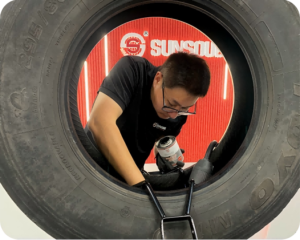
Cold vulcanization bonds and secures rubber without heating. This method uses chemicals to form strong bonds in the rubber at

A vulcanizing bike tire patch works by using a chemical reaction, not glue, to permanently fix a flat. The cement

The main difference between hot and cold patch tire repair lies in the repair method. Hot patching uses heat to

Vulcanizing inner tube patches work by chemically fusing the patch and tube into one piece of rubber. This molecular bond

Hot Vulcanization Tire Repair Technology utilizes thermal energy and specialized materials to provide a robust and long-lasting repair for damaged
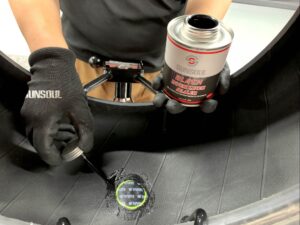
Repairing tires with cold vulcanizing fluid involves just a few key steps. First, remove the tire and inspect its inside and out.

Hot patch tire repairs use heat for a strong bond, while cold patch tire patch methods rely on adhesives for
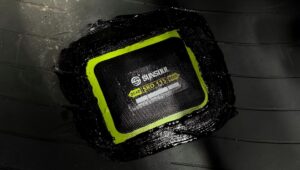
A tire patch must withstand constant flexing, heat, pressure, and road vibration throughout its service life. Without proper vulcanization, the rubber may lose strength, crack, or fail to maintain a secure bond with the tire.
The vulcanization process creates strong cross-links between rubber molecules, giving tire patches the durability and flexibility needed for reliable repairs. This process significantly improves the performance of the finished product by providing:
Consistent vulcanization is equally important during manufacturing. Carefully controlled curing conditions help ensure every tire patch delivers reliable adhesion, uniform quality, and dependable performance.
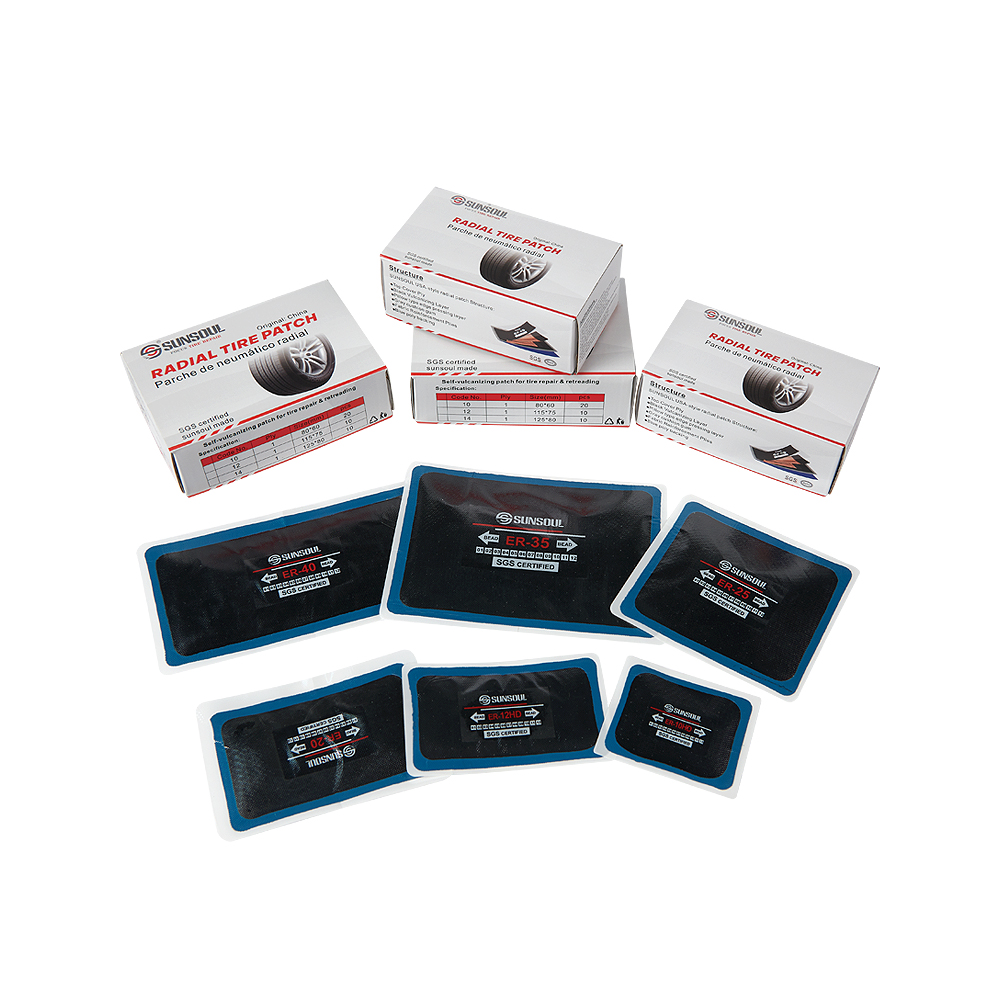
At SUNSOUL, every tire patch is produced under strict quality controls to provide consistent vulcanization and reliable repair performance for professional tire service.
Natural and synthetic rubber are blended with sulfur, accelerators, fillers, and other additives. The compound is formulated to provide the flexibility, strength, and durability required for tire repair.
The rubber compound is thoroughly mixed to achieve a uniform composition before being formed into sheets of consistent thickness. This ensures stable product quality throughout production.
The rubber sheets are cut into different sizes and assembled with the required reinforcement layers or backing materials. Precision at this stage ensures accurate dimensions and reliable installation.
The patches are cured under controlled temperature and pressure, allowing sulfur to create strong cross-links within the rubber. This step gives the tire patch its elasticity, strength, and heat resistance.
After curing, the patches are cooled under controlled conditions to stabilize the rubber structure. Proper cooling helps maintain shape and long-term performance.
Each batch is inspected for appearance, dimensions, and bonding performance before packaging. Only products that meet quality standards proceed to shipment.
Producing a reliable tire patch requires precise control throughout the vulcanization process. From rubber preparation to final inspection, each step helps ensure consistent quality, durability, and repair performance.
Both cold and hot vulcanization are widely used in tire repair, but they differ in application methods and repair requirements.
| Feature | Cold vulcanization | Hot vulcanization |
|---|---|---|
| Heat required | NO | Yes |
| Repair method | Chemical bonding | Heat and pressure |
| Equipment | Simple tools | Vulcanizing machine |
| Repair speed | Faster | Slower |
| Typical use | Daily tire repairs | Heavy-duty or specialized repairs |
Cold vulcanization is commonly used for passenger vehicle tire repairs because it is convenient and efficient. Hot vulcanization is often selected for heavy-duty applications where maximum bond strength and durability are required.
It strengthens rubber by creating cross-links between polymer chains, improving durability, elasticity, and heat resistance.
Sulfur forms chemical bonds within the rubber structure, giving the material greater strength and flexibility.
Yes. Professional tire patches rely on vulcanized rubber to provide the durability and bonding performance required for reliable repairs.
Cold vulcanization uses chemical bonding without external heat, while hot vulcanization uses heat and pressure to create a stronger repair.
Poor curing may reduce flexibility, weaken adhesion, and shorten the service life of the repair.