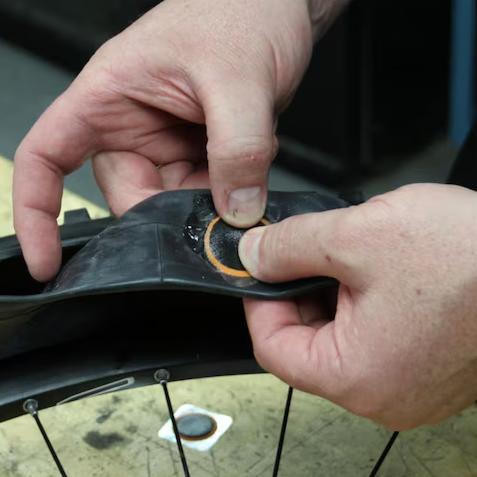

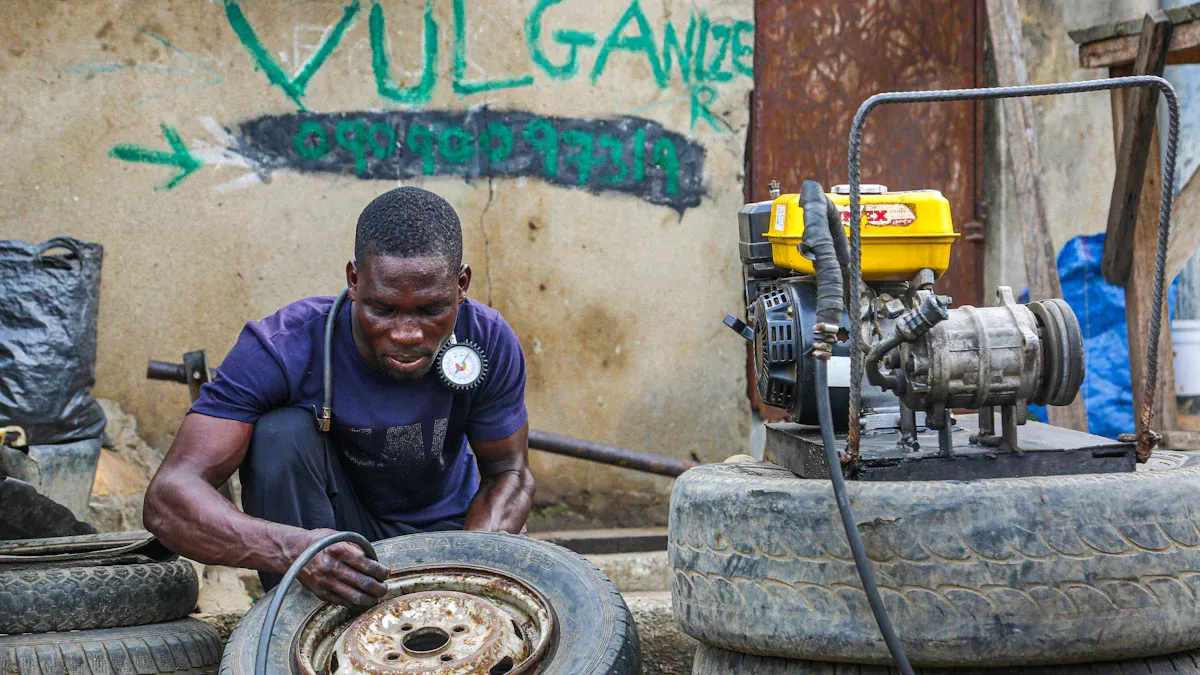
You have a punctured tire. The safest and only permanent repair is a combination tire plug and patch. A professional applies this fix from inside your tire. A simple tire plug, like one from a SUNSOUL emergency kit, offers a temporary tire repair. It helps you reach a service shop safely.
Note: Understanding the difference between each repair method helps you make the safest choice for your vehicle and its tires.
The Temporary Fix: What is a Tire Plug?
A tire plug is a sticky piece of rubber string used for a temporary tubeless tire repair. You find these in roadside emergency kits. Think of a plug as a quick bandage. It stops the immediate air loss so you can drive to a professional repair shop. It is not a permanent solution for your tire.
How an External Plug Works
An external plug works by physically stuffing a hole from the outside. You do not need to remove the tire from your vehicle. The process involves a few simple steps. First, you locate the puncture and remove the object, like a nail. Next, you use a reaming tool to clean and roughen the hole. Finally, you use a special tool to force the sticky rubber plug into the hole, sealing the puncture.
Pros: A Quick Roadside Solution
The main advantage of a tire plug is convenience. You can perform this repair quickly on the side of the road. It requires only a small, portable kit and a little bit of effort. This quick fix can get you out of a dangerous situation, allowing you to move your vehicle to a safer location or directly to a tire shop without waiting for a tow truck.
Cons: Why It’s Not a Permanent Repair
A plug is only a temporary repair because it does not fully seal the tire. The plug fills the path of the puncture, but it doesn’t seal the inner liner, which is what holds the air in. This creates several risks and is why professionals do not consider it a complete fix.
Warning: Risks of Relying on a Tire Plug A plug can fail for several reasons, potentially leading to a sudden loss of air pressure while you are driving.
- Improper Installation: The hole must be perfectly cleaned and prepared. If not, the plug may not seal correctly or could be ejected from the tire.
- Air Migration: A plug can allow air to leak from the inner tire into its structural belts and plies. This can cause the belts to separate and lead to a catastrophic tire failure later.
- Puncture Size and Location: Plugs may not hold if the puncture is too large, at an odd angle, or too close to the tire’s sidewall.
- Plug Aging: Over time, the rubber plug material can dry out and shrink, causing it to lose its seal.
The Internal Seal: What is a Tire Patch?
A tire patch is a piece of rubber applied to the inside of your tire. Unlike an external plug, a patch seals the puncture from within. This method provides a much more reliable and airtight seal for a tubeless tire repair. However, you cannot apply a patch on the side of the road. It requires a professional with special equipment.
How an Internal Patch Works
A technician first removes your tire from the wheel to access its inner liner. They then prepare the area around the puncture. The process involves cleaning and buffing the surface to create a texture for bonding. The technician applies a special rubber cement to the prepared area. This cement starts a chemical reaction called vulcanization. The reaction heats and permanently bonds the tire patch to the tire, creating a seamless and airtight seal that restores the inner liner’s integrity.
Pros: A More Durable Seal
The primary benefit of a tire patch is its durability. When a professional performs the repair correctly, the seal is permanent and secure. A properly installed patch ensures your tire is safe and can last for its remaining lifespan.
How long does a patched tire last? 🚙
- A quality patch, installed correctly, can last for the rest of the tire’s life.
- The tire can perform just like a new one, holding air pressure reliably.
- Its longevity depends on the quality of the patch and the skill of the technician.
Cons: The Need for Professional Tools
The biggest drawback of a patch-only repair is the need for professional service. You cannot perform this fix yourself during a roadside emergency. The process requires:
- A tire machine to remove the tire from the rim.
- Special tools to buff the inner liner.
- The correct vulcanizing cement and patch materials.
- A wheel balancer to rebalance the tire after remounting.
This makes the process more time-consuming and less convenient than an emergency plug.
The Professional Standard: The Combination Tire Plug and Patch
When you need a permanent fix, professionals turn to the combination tire plug and patch. This single-piece unit merges the benefits of a plug and a patch into one superior solution. It is the gold standard for a safe and complete tubeless tire repair.
The Best of Both Worlds
This advanced repair method addresses the puncture from the inside out. It provides a comprehensive seal that a simple plug or patch alone cannot match. A technician installs the one-piece unit from inside the tire, ensuring a complete fix.
Here is how it restores your tire’s integrity:
- The plug portion fills the entire puncture channel. This stops air from getting into the tire’s internal layers and prevents moisture from corroding the steel belts.
- The patch portion bonds securely to the tire’s inner liner. This restores the airtight seal and reinforces the damaged area.
- The combined unit allows the tire to flex naturally without creating stress at the weak spot.
A metal pin on the end of the plug guides it through the hole for a perfect fit. The technician then uses a special tool to stitch the tire patch firmly against the inner liner, pushing out all trapped air for a flawless seal.
Why It’s the Only Industry-Approved Method
Top safety authorities agree on the best way to fix a punctured tire. The combination method is the only process that meets strict industry guidelines for a permanent repair.
The National Highway Traffic Safety Administration (NHTSA) states that the combination technique is the only acceptably safe way to repair a puncture.
Major organizations like the U.S. Tire Manufacturers Association (USTMA) also approve only this method. They do not consider a plug or a patch by itself a complete repair because neither one seals the entire injury. To ensure your safety, professionals follow specific rules for every repair:
- They must remove the tire from the wheel for a full internal inspection.
- The puncture must be in the tread area and no larger than 1/4 inch (6 mm).
- They must fill the puncture hole and apply an internal patch to seal the liner completely.
Comparing Your Options: Plug vs. Patch vs. Combo
You have a flat tire. Now you need to choose the right repair. Understanding the differences in durability, safety, cost, and convenience will help you make the best decision for your vehicle.
Durability and Safety
Safety is the most important factor when you repair a tire. A simple plug is the least durable option. It can dry out, shrink, or be forced out of the hole, leading to sudden air loss. A patch provides a good internal seal, but it does not support the damaged area or stop moisture from reaching the steel belts inside your tire.
The combination tire plug and patch offers the highest level of safety and durability. This method seals the puncture from the inside and fills the puncture channel completely. It is the only repair that properly restores the tire’s structure for long-term use.
Important Safety Note: A Repair Changes Your Tire Even the best professional repair does not return your tire to its original factory condition. The repair process introduces changes that affect its capabilities.
- A combination repair does not restore the tire’s original speed rating.
- The tire’s ability to handle heat at high speeds is reduced.
- After any puncture repair, you should consider the original speed rating invalid and avoid high-speed driving. The tire’s overall performance is permanently altered.
Cost and Convenience
Your choice often involves a trade-off between what is fast and what is best. A DIY plug kit is the winner for convenience. You can use it on the roadside to get moving again in minutes. A professional repair requires you to get your vehicle to a shop, which takes more time and effort. A typical professional repair can take between 30 minutes and one hour to complete.
Cost is another major difference. A DIY plug kit is very affordable. A professional repair costs more because it includes labor and the use of specialized equipment.
| Aspect | DIY Plug Kit | Professional Repair (Patch or Combo) |
|---|---|---|
| Cost | $10–$30 | $20–$60 |
| Time | 10–20 minutes | 30–60 minutes |
While a plug is cheaper and faster, the extra cost of a professional repair buys you safety and peace of mind.
The Verdict on Your Tire
So, what is the final verdict? The right choice depends entirely on the situation and the damage. A plug is an emergency tool, not a permanent solution. The combination method is the only professionally accepted permanent repair for a punctured tire.
Use these criteria to decide on your next step.
| Criteria | Use a Temporary Plug (DIY) | Seek Immediate Professional Repair |
|---|---|---|
| Puncture Location | On the tire tread | On the sidewall or shoulder |
| Puncture Size | ¼ inch in diameter or smaller | Larger than ¼ inch |
| Tire Damage | No other visible damage | Signs of bulging or deep gashes |
| Number of Punctures | A single, isolated puncture | Multiple punctures close together |
| Previous Repairs | No prior repair in the damaged area | The area has already been repaired |
Ultimately, your goal is to ensure your vehicle is safe to drive. A temporary plug can get you out of a jam, but you must follow up with a visit to a professional for a proper inspection and permanent repair.
The DIY Approach: Using a SUNSOUL Plug Kit for Emergencies

A SUNSOUL plug kit is an essential part of your vehicle’s emergency toolkit. You can use it to perform a temporary repair and get yourself out of a difficult situation. However, this method is only safe under very specific conditions.
When to Use a DIY Plug Kit
You should only use a DIY plug kit in a true emergency. This quick fix is appropriate when you have a puncture that meets certain criteria. Automotive safety experts recommend using a plug only for:
- Small punctures that are less than 1/4 inch in diameter.
- Damage located exclusively in the tire tread area.
- Situations where you have removed the foreign object, like a nail or screw.
Critical Safety Warning: Never Plug a Sidewall You must never attempt to plug a puncture in the tire’s sidewall or shoulder. This area flexes too much, and a plug will not hold securely. Any damage to the sidewall makes the tire unsafe, and you will need a full replacement.
Step-by-Step Emergency Plug Guide
Using a SUNSOUL kit is a straightforward process. Always follow the instructions included with your specific kit. Here is a general overview of the steps:
- Locate and Remove: Find the puncture and carefully remove the object.
- Ream the Hole: Insert the reaming tool into the hole. Move it up and down to clean and roughen the puncture channel.
- Prepare the Plug: Thread a sticky plug through the eye of the insertion tool.
- Insert the Plug: Firmly push the insertion tool into the hole until only about half an inch of the plug is showing.
- Remove the Tool: Pull the insertion tool straight out in a quick motion. The plug will remain in the tire.
- Trim and Inflate: Trim any excess plug material and inflate your tire to the correct pressure.
The Critical Next Step: Visiting a Pro
A plug is not a permanent solution. Your next step is always to drive to a professional repair shop. You should limit your driving to a short distance, typically between 8 to 30 miles, to reach a service center safely. While some high-quality plugs have been known to last for thousands of miles, you should not take that risk. A professional must remove the tire from the wheel to inspect the inner liner for hidden damage and perform a permanent repair.
The Professional Repair: What to Expect at the Shop
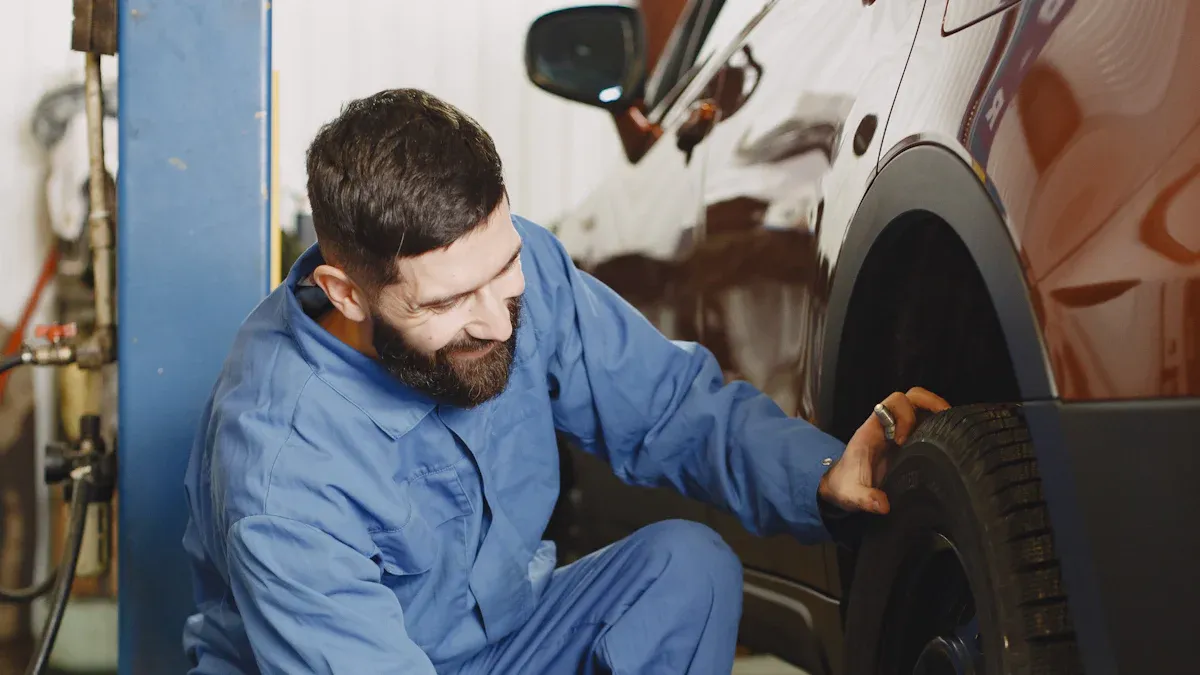
After using a temporary plug, you must visit a professional for a permanent fix. A proper tire repair is a detailed process that ensures your safety on the road. Knowing what happens at the shop helps you understand the value of a professional service.
The Importance of Internal Inspection
A technician cannot judge a tire’s condition from the outside alone. They must remove the tire from the wheel for a complete internal inspection. This step is critical for your safety. A small nail on the outside could have caused serious damage on the inside. A technician will look for:
- Damage to the sidewall that is not visible externally.
- Punctures located outside the center tread area.
- Holes larger than 1/4-inch (6mm) in diameter.
- Multiple punctures that are too close together.
- A tire worn down to its treadwear indicators.
If the technician finds any of these issues, the tire is unsafe for repair and needs replacement.
The Role of Quality Materials like SUNSOUL Patches
The quality of the materials used in a tubeless tire repair directly affects its safety and lifespan. Using a complete system from a trusted source like SUNSOUL ensures every component works together perfectly. A high-quality tire patch creates a strong, permanent bond for a durable and safe fix. Mixing brands can lead to a failed repair.
System Failure: The Risk of Mixing Brands 🧪 Each part of a quality kit has a specific chemical job. When you mix brands, you risk poor adhesion, incomplete curing, or liner damage. A failed repair can lead to a blowout. You must use a matched system for every tire repair to ensure a strong, permanent bond.
Investing in a proper repair with premium materials is the most cost-effective choice. It extends the life of your tire and keeps you safe.
Finding a Reputable Tire Repair Service
Choosing the right shop is just as important as the repair itself. A reputable service center will follow industry standards and use quality materials. To find a trustworthy technician, you can ask a few key questions.
- Are your technicians certified? Look for shops with ASE-certified technicians.
- Do you provide a written estimate and warranty? A professional shop will be transparent about costs and stand by their work.
- What is your experience with my vehicle? Ensure they have the right tools and knowledge for your car.
- Can I see customer reviews? Check online platforms like Google or Yelp for feedback from other customers.
- Do you follow industry-approved repair procedures? Confirm they perform a full internal inspection and use a combination plug-patch.
Critical Safety Rules: When a Tire Cannot Be Repaired
Not every puncture is a candidate for a safe tire repair. Your safety depends on knowing when a tire is too damaged to fix. A professional technician will always recommend a tire replacement if the damage falls into specific categories. Understanding these rules helps you make the safest choice.
Puncture Location: Sidewall and Shoulder
The location of the puncture is the most important factor. You can only repair damage that occurs in the center tread area of the tire. Any puncture on the sidewall or shoulder makes the tire unsafe and requires an immediate tire replacement. A repair in these areas will not hold.
- The shoulder and sidewall of a tire flex constantly while you drive. A patch or plug cannot withstand this movement and will eventually fail.
- The sidewall provides critical structural integrity for the entire tire. Any compromise here greatly increases the risk of a sudden blowout.
- A failed repair in this zone can cause you to lose control of your vehicle, leading to a serious accident.
Puncture Size and Angle
The size of the hole also determines if a repair is possible. A puncture must be small and straight to be a candidate for a safe repair.
The U.S. Tire Manufacturers Association (USTMA) states that the largest repairable puncture is 1/4 inch (6 mm) in diameter. Any hole larger than this makes the tire unserviceable, and you will need a tire replacement.
The angle of the puncture matters, too. A nail that enters at a sharp angle can cause more internal damage than a straight puncture. This can affect the tire’s long-term performance and safety. A technician will assess this damage during the internal inspection.
Previous Repairs and Tire Condition
A tire can only handle a limited number of repairs. You cannot repair a tire if the new puncture is too close to a previous repair. Overlapping repairs create a large weak spot that compromises the tire’s structure. Additionally, the overall health of your tire is a key factor. If the tire is already worn out, a repair is not a wise investment. Good tire maintenance helps you spot issues early. A technician will recommend a tire replacement if the tread is worn down to 2/32 of an inch or if the tire shows signs of aging, like cracking or bulging.
Your tire safety is most important. Remember, a combination tire plug and patch is the only permanent repair for a punctured tire. A SUNSOUL plug kit is a great emergency tool, but it is not a final fix. You must always have a professional inspect your tire from the inside. This step is a key part of good tire maintenance.
Your Safety First 💡 Never risk a failed tire repair. A professional tire plug and patch ensures your vehicle is safe to drive.
FAQ
How far can I drive on a temporary tire plug?
You should drive only a short distance on a temporary plug. Limit your travel to a maximum of 30 miles. Drive slowly and go directly to a professional repair shop. A plug is an emergency fix, not a permanent solution for your tire.
Can you repair run-flat tires?
Some run-flat tires can be repaired, but many manufacturers advise against it. Driving on a deflated run-flat can cause hidden internal damage. You must have a professional inspect the tire to determine if a safe repair is even possible.
How many times can you repair a single tire?
A tire can typically handle a maximum of two repairs. Professionals must place these repairs in different quarters of the tire tread. The U.S. Tire Manufacturers Association (USTMA) sets these guidelines to ensure your safety and the tire’s structural integrity.
Does a repair affect my tire’s speed rating?
Yes, any repair permanently changes your tire. A repaired tire no longer holds its original speed rating. You should avoid high-speed driving after a repair. The fix alters the tire’s ability to handle heat and stress, making safety your top priority.