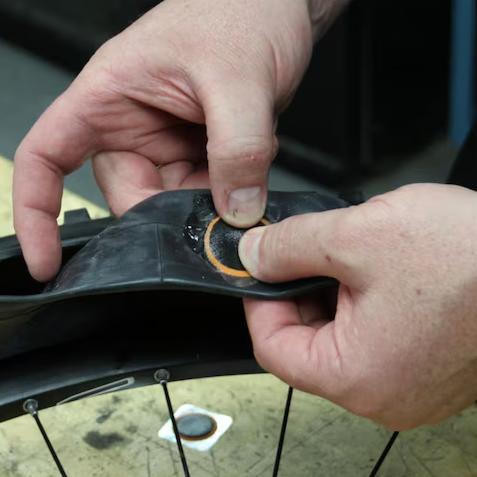


A tire stem patch offers the only industry-approved permanent tire repair for your tire. This method correctly fixes small punctures. It fills the puncture channel and seals the inner liner of the tire. This two-step repair protects your tire’s structure. However, this type of patch is the wrong choice for certain damage. For your safety, you must replace the tire if you find large gashes or punctures on the sidewall.
The U.S. Tire Manufacturers Association (USTMA) has strict rules for safe repairs. These guidelines ensure your safety and the integrity of the tire patch.
- The puncture must not be larger than 1/4 inch.
- Repairs are only allowed in the central tread area of the tire.
- New punctures must be at least 1 inch from previous patches.
A proper patch and repair process for punctures is critical. Many patches exist, but only combination patches are approved.
Identifying Repairable Punctures on Your Tire
Knowing where a puncture is on your tire is the first step to a safe fix. The location of the damage determines if you can use patches for a repair. Not all areas of a tire are created equal, and repairing punctures in the wrong spot is extremely dangerous.
The Safe Zone: The Central Tread Area
You can only perform a tire repair in the central tread area, also known as the crown. This safe zone is the part of your tire that makes the most contact with the road.
- The crown is the center of the tread. It extends about 1 to 1.5 inches from each shoulder of the tire.
- You can also find this area between the first major grooves on both sides of the tire tread.
This part of the tire is strong. It has steel belts for reinforcement. This robust design allows it to hold patches securely, making for reliable repairs. Industry standards approve of patches in this area for small punctures. This is the only location where a repair can be trusted for punctured tires.
The No-Go Zones: Sidewalls and Shoulders
You must never attempt to repair punctures on the tire sidewall or shoulder. These areas are not designed to hold patches. A repair here will fail and put you in danger.
The sidewall of the tire flexes constantly as you drive. This movement prevents patches from bonding correctly and will cause them to peel off. The sidewall also lacks the steel belts found in the tread, so any puncture compromises the tire’s structure. The shoulder of the tire also flexes and builds up heat. Punctures here can damage the internal textile layers and tapering steel belts, weakening the entire tire.
Safety Alert ⚠️ A failed repair on the sidewall or shoulder can lead to a sudden tire blowout. This can cause you to lose control of your vehicle, especially at high speeds. For this reason, professional shops will always refuse to perform these unsafe repairs.
Assessing Damage: Size and Type Matter
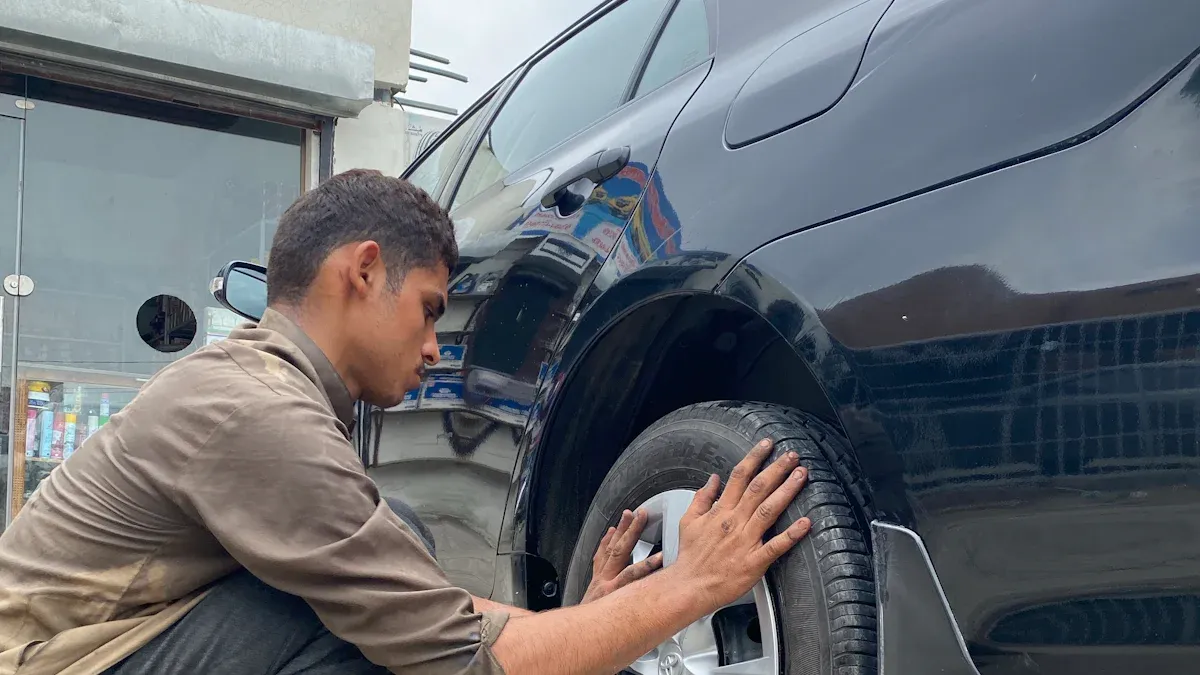
After you confirm the damage is in the safe tread area, you must assess the size and type of the injury. The shape and diameter of the hole are critical factors. They determine if a tire stem patch can create a safe and lasting seal. Not all punctures are small enough for a simple fix, and certain types of damage make a tire completely unrepairable.
The Quarter-Inch Rule for Punctures
Industry safety standards have a clear rule for tire repair. You can only repair a puncture if its diameter is 1/4 inch (6mm) or smaller. This rule applies to punctures from straight objects like a nail or a screw. A hole larger than this size damages too many steel belts inside the tire. Using patches on such a large puncture is unsafe because the tire’s internal structure is already compromised.
The angle of the puncture also matters. Even if a puncture is smaller than 1/4 inch, a sharp angle can make the repair more complex. A puncture that enters the tire at an angle greater than 35 degrees requires a special two-piece repair. This shows that both size and entry angle are vital for a safe fix. Professionals use specific tools to get an accurate measurement.
- Tire Injury Measure Tool: This simple tool helps a technician quickly check the size of the injury.
- Color-Coded Injury Measure Tool: Technicians use this high-quality device to measure the puncture precisely, ensuring they select the correct size patches for the job.
Pro Tip 💡 You can use the top of a standard #2 pencil as a quick reference. If the puncture is wider than the pencil’s metal ferrule (the part holding the eraser), it is likely too large to repair. However, always have a professional measure the damage for an accurate assessment.
Why Cuts and Gashes Can’t Be Patched
You cannot use patches to fix cuts, tears, or gashes in a tire. These types of damage are very different from a simple, round puncture. A cut slices through the rubber and the internal steel and fabric cords. This severs the structural supports that give the tire its strength. A patch cannot restore this structural integrity. Attempting a repair on a cut tire is extremely dangerous and will likely fail.
This kind of damage often results from hitting road debris, curbs, or even from deliberate acts of vandalism. For example, service advisors report seeing tires with single, small cuts that appear intentional. In some cases, vandals target a single tire on a vehicle, leaving a deliberate puncture in the sidewall or a slice in the tread. These actions create damage that patches cannot safely fix. A tire with a cut or gash has lost its ability to carry the vehicle’s load safely, and you must replace it immediately.
Understanding the Tire Stem Patch Repair Process
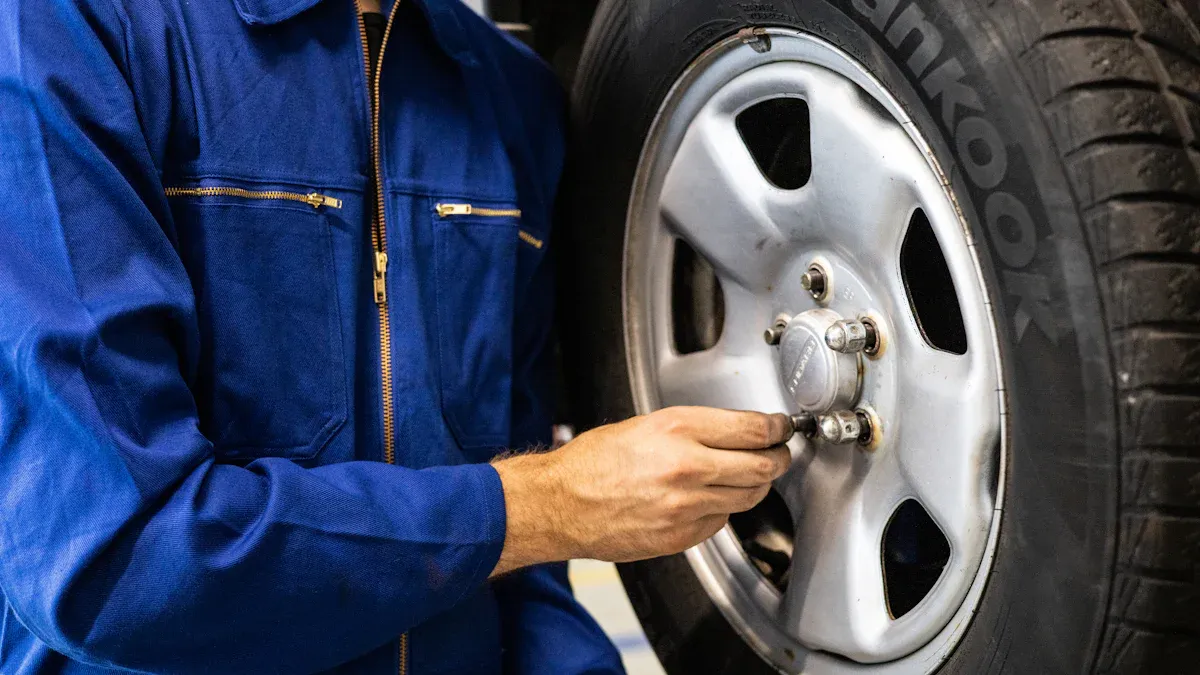
A proper tire repair restores the tire’s air-tight seal and structural integrity. The industry-approved method uses a tire stem patch, a combination unit that provides a complete, two-in-one solution for effective tire patching. These special patches, also known as mushroom patches, are the gold standard for safe repairs.
The Two-in-One Solution: How It Works
A tire stem patch works by addressing both parts of the puncture. The “stem” is a rubber plug that fills the puncture channel from the inside out. This plug stops moisture and debris from entering the tire’s steel belts. The “patch” part is a flat piece of rubber that is chemically bonded to the tire’s inner liner.
This bond is created using a special vulcanizing cement.
How Vulcanization Works 🧪 Vulcanizing cement starts a chemical reaction. It softens the surfaces of the patch and the tire, fusing them into a single, durable piece of rubber. This creates a permanent, air-tight seal that prevents leaks and strengthens the repair area. The application of this cement is a critical step.
Comparing Types of Tire Patches
You will find several types of tire patches and repair kits on the market. However, not all repairs are created equal. The U.S. Tire Manufacturers Association (USTMA) only approves one method for a permanent fix. Understanding the different types of tire patches is key to knowing how to choose the right tire patch. The main types of tire patches are plugs, patches, and combination mushroom patches. The following table compares these types of tire patches.
| Feature | Tire Plug | Tire Patch | Combination Patch-Plug |
|---|---|---|---|
| Effectiveness | Temporary fix; a simple plug seals small holes. | Permanent seal on the inner liner. | Most effective; a plug and patch in one. |
| How It Works | A sticky plug is inserted from the outside. | A flat patch is glued to the inside. | A plug fills the hole; a patch seals the liner. |
| Safety | Not a permanent repair; can leak or fail. | Better, but doesn’t fill the puncture channel. | The only USTMA-approved permanent repair. |
As you can see, a simple tire plug is only a temporary solution. A patch alone is better, but the best of all types of tire patches is the combination unit. These mushroom patches offer the most reliable and safest of all types of tire patches.
A Step-by-Step Guide to Applying a Tire Patch
A professional tire patching application is a detailed process. This step-by-step guide to applying a tire patch shows why you need a trained technician for the job.
- Preparation: The technician removes the tire from the wheel. They clean the puncture channel with a reamer and buff the inner liner to create a rough surface for the patch.
- Application: They apply vulcanizing cement to the channel and buffed area.
- Installation: The technician pulls the plug through the hole from inside the tire. The patch is then pressed firmly against the inner liner.
- Finalizing: They stitch the patch to remove air bubbles and ensure a perfect seal. Finally, the technician remounts and balances the tire.
This repair requires specific tools like a tire scuffer, pulling wires, and professional-grade cement to ensure the tire is safe for the road.
When a Tire Stem Patch Is the Wrong Choice
While a tire stem patch is the best solution for a simple puncture, certain conditions make a tire unrepairable. A professional technician will always inspect for these issues before attempting any repair. Understanding these deal-breakers helps you know when a replacement is your only safe option. Ignoring these warnings puts your safety at risk.
Punctures Are Too Close Together
You might think two small punctures are no big deal, but their location relative to each other is critical. A tire’s strength comes from a network of steel belts inside the tread. A single puncture creates a small weak spot. Multiple punctures close together create a much larger, compromised area.
- Multiple punctures can severely weaken the tire’s internal structure.
- Each repair requires buffing the inner liner, and overlapping these buffed areas for multiple patches is not safe.
- Technicians cannot apply new patches over old patches.
A tire with several punctures in a small area is unsafe to drive on. Reputable shops will always recommend a replacement for this type of damage. Attempting multiple repairs in one zone is one of the most critical common mistakes to avoid for your safety. These types of repairs will fail.
The Tire Was Driven While Flat
Driving on a flat or severely underinflated tire, even for a short distance, can cause irreversible internal damage. The weight of your vehicle crushes the tire. This action grinds the tire’s inner structure against the wheel rim.
Inside the Damaged Tire 🔍 A technician will look for telltale signs of run-flat damage. You might see a fine black powder, which is rubber shredded from the inner liner. Sometimes, the rubber forms into little beads or balls inside the tire. These signs mean the tire’s structure is compromised and unsafe for repair.
This flexing destroys the sidewall, which is not designed to support the vehicle’s load. The damage is not always visible from the outside.
- The sidewalls get pinched, scraped, and compressed.
- This leads to permanent damage to the tire’s internal belts and fabric layers.
- Even if the original puncture is repairable, the secondary damage from driving flat makes the entire tire unsafe.
The general rule is to drive the shortest distance possible. If you must move your car, keep your speed under 20 mph and go no more than a mile or two to get to a safe location. Any further distance makes a safe repair highly unlikely.
Previous Improper Repairs
You cannot perform a proper tire repair on a tire that already has an improper repair, like an external plug. Tire plugs are only temporary fixes. They are pushed in from the outside and do not offer a permanent seal. These types of repairs create significant risks.
A plug can allow air and moisture to seep into the tire’s steel belts. This leads to corrosion and rust, which weakens the tire from the inside out. An improperly installed plug can also become dislodged, causing a sudden blowout and loss of vehicle control. Because of these dangers, you cannot simply remove the old plug and apply a new patch. The initial damage from the plug makes a new, secure bond for a proper patch impossible. Manufacturers do not support a tire’s speed rating after it has been plugged. The tire is considered compromised.
If a technician finds a previous plug, they will recommend a replacement. Attempting to apply new patches over these old repairs is dangerous. The only correct action is to replace the tire to ensure your vehicle is safe. These previous repairs make a new patch impossible. The old repairs weaken the tire too much for new patches. Do not trust these old repairs, as new patches cannot fix the damage.
Use this final checklist to determine if a tire stem patch is the right fix for your tire. A proper tire patch ensures your safety.
- Is the puncture in the central tread area of the tire?
- Is the damage 1/4 inch or smaller from a straight object?
- Was the tire not driven on while flat?
A mechanic has a legal “duty of care” to follow these rules. Shops refuse unsafe patches to protect your safety and avoid liability for faulty repairs. These patches are the only correct patches.
If you answered “no” to any question, the tire is not repairable. The existing damage makes new patches unsafe. You should replace the tire. This is the only way to apply safe patches.
FAQ
How long does a proper tire patch last?
A professionally installed tire stem patch is a permanent repair. It fuses with the tire to restore its air-tight seal. This high-quality fix should last for the remaining life of your tire, ensuring long-term safety and reliability on the road.
Can I use a DIY plug kit instead?
You should not rely on a DIY plug kit for a permanent fix. These kits offer only a temporary solution. They do not seal the inner liner, which can lead to tire failure. A professional must install a combination patch for a safe repair.
Why do shops refuse to patch a tire?
Professional shops follow strict safety standards from the U.S. Tire Manufacturers Association (USTMA). They will refuse a repair if the damage is on the sidewall, larger than 1/4 inch, or if you drove on the tire while it was flat. This policy protects your safety.
What makes a good quality tire patch?
A quality patch provides excellent adhesion and a strong seal. Top manufacturers produce millions of patches monthly, ensuring reliability. Their patches use vulcanizing gum to create a permanent, leak-proof bond that works on any tire model, keeping you safe on your journey.