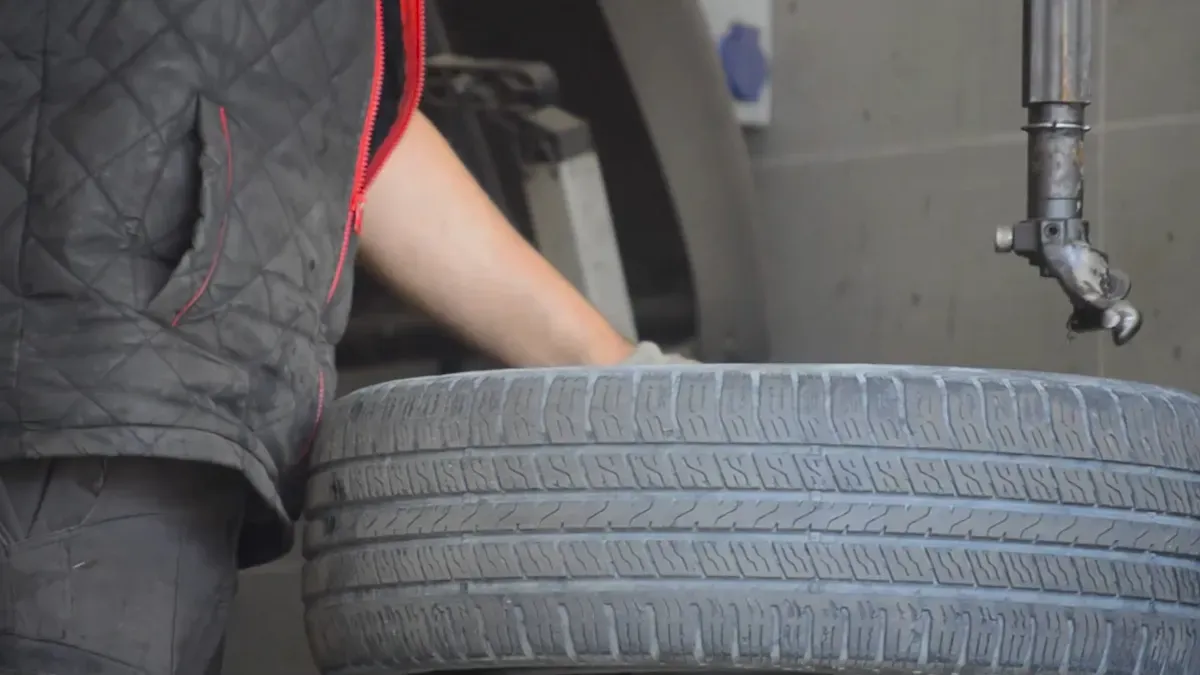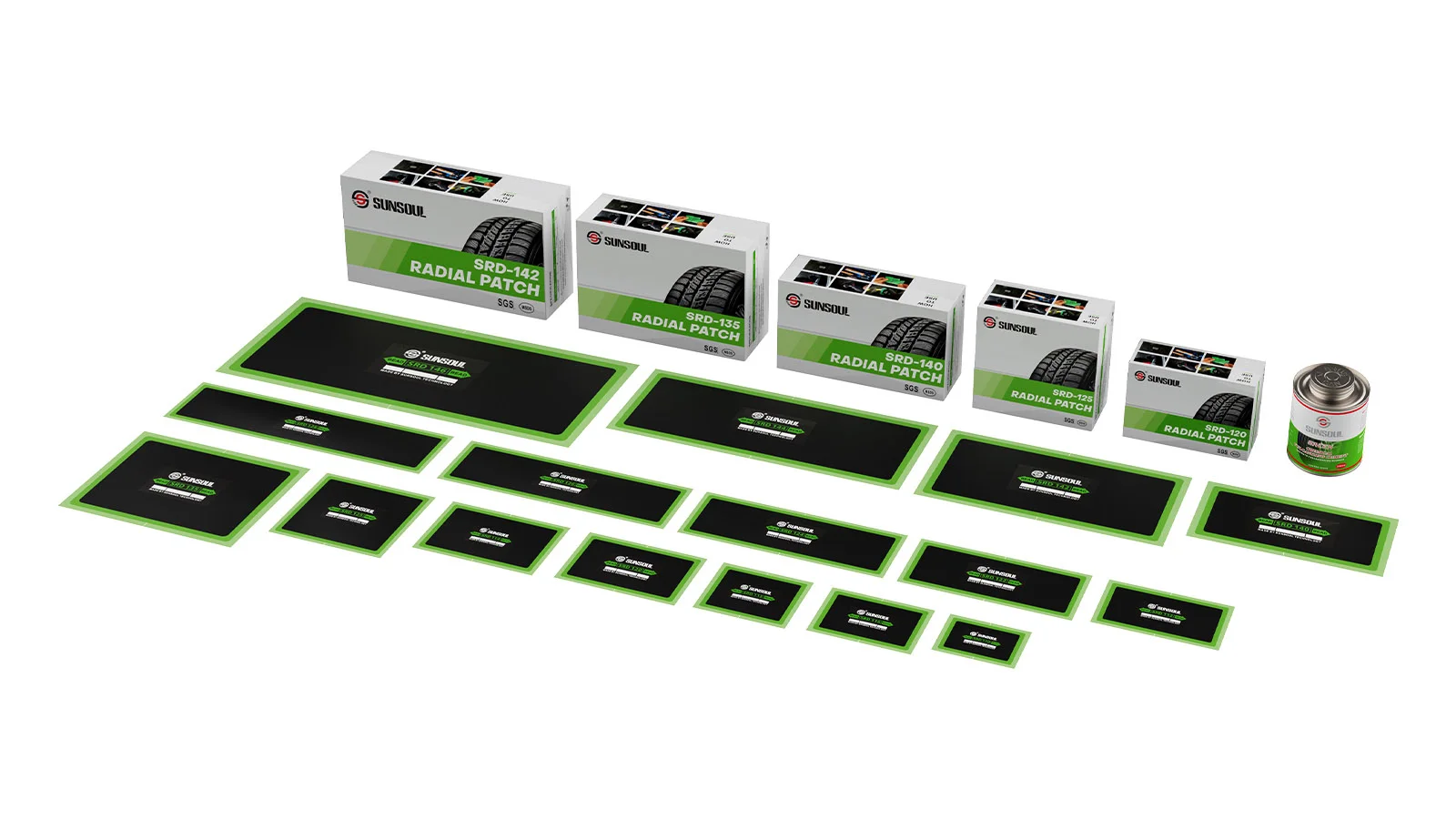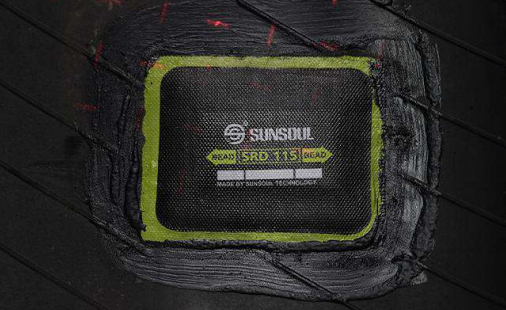

Yes, a tire repaired with a vulcanizing tire patch is safe when three conditions are met: the injury is in the crown area, the hole is 6 mm or smaller, and the patch is installed with proper chemical vulcanization. Under those conditions, a vulcanized repair restores approximately 98% of the liner’s original bond strength and is classified as a permanent repair, not a temporary fix.
Safety is not a property of the patch alone. It is a property of the patch, the injury, and the installation process together. A high-quality patch applied to a sidewall injury is unsafe. A patch applied without letting the vulcanizing fluid cure is unsafe. The material does not compensate for a violation of the repair boundary.
Key Takeaways
- A vulcanizing tire patch is a permanent repair when the injury is in the crown area and 6 mm or smaller.
- Sidewall, shoulder, and bead damage cannot be repaired with a vulcanizing patch, regardless of size.
- Run-flat damage, exposed cords, or liner discoloration disqualify the casing even if the hole is small.
- Correct installation requires roughening the liner, applying vulcanizing fluid, letting it dry, and pressing the patch firmly.
- Plug-only repairs are temporary. A plug fills the channel; only an inner patch seals the liner.
- Match patch size and ply rating to the injury and the tire’s load category.
When a Vulcanizing Tire Patch Is Safe to Use
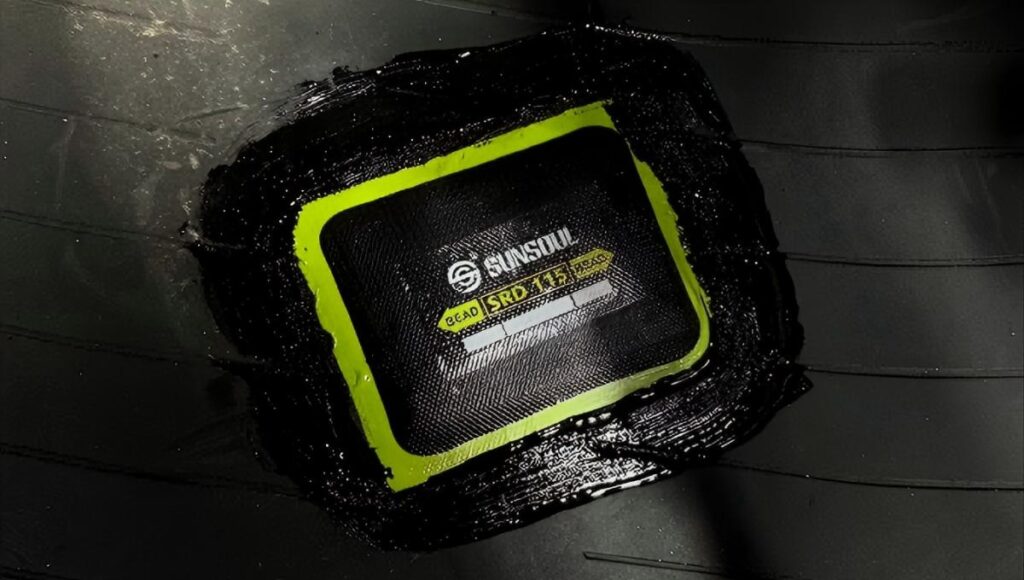
Safe Zone: Crown-Area Punctures Up to 6 mm
The crown area is the tread zone from the centerline out to about one inch from each shoulder. A straight or slightly angled puncture in this zone, measuring 6 mm (about 1/4 inch) or less after preparation, falls within the standard repair envelope for a vulcanizing patch.
This is the zone where tubeless tire patch units are designed to perform. The patch seals the inner liner, the vulcanizing fluid creates a chemical cross-link with the butyl rubber, and the repair becomes part of the tire rather than an adhesive layer sitting on top of it.
Safe Application: Correct Patch and Chemical Cure Process
Safety depends on the installation sequence as much as the material. The liner must be buffed to remove the mold-release layer, cleaned of dust, and coated with a thin, even layer of vulcanizing fluid. The fluid must dry until it looks dull, typically three to five minutes, before the patch is pressed into place.
SUNSOUL’s rubber tire patch range is built for this cold vulcanizing process. The patches use natural rubber with textile reinforcement, which allows them to flex with the tire without cracking at the edges. When installed correctly, the bond restores roughly 98% of the original liner strength and passes high-speed durability testing.
When a Vulcanizing Tire Patch Is Not Safe
Sidewall, Shoulder, and Bead Damage
The sidewall, shoulder, and bead carry far higher stress than the crown. These zones flex continuously under load, and a patch bonded to them cannot restore structural integrity. Any injury in these areas requires tire replacement, even if the hole is smaller than 6 mm.
This boundary is often confused with inner tube repair. An inner tube patch solves a puncture in a tube, which is a sealed rubber component with no structural role. A sidewall injury in a tubeless tire is a structural failure of the casing itself. The two situations are not comparable, and a patch that works on a tube cannot be transferred to a tire sidewall.
Run-Flat Damage and Exposed Cords
A tire driven while underinflated may show sidewall rippling, liner discoloration, or exposed cords. These are signs that the casing has already lost structural integrity. A vulcanizing patch can seal the liner, but it cannot rebuild damaged belts or restore a compromised sidewall.
Exposed cords are an absolute disqualifier. If the steel or fabric reinforcement is visible and cannot be fully encased in rubber during preparation, the tire is no longer repairable.
Unsafe Practices: Plug-Only Repairs and Uncured Patches
Two installation errors cause most unsafe vulcanized repairs. The first is using a plug without an inner patch. A rubber tire plug fills the injury channel and keeps moisture out temporarily, but it does not seal the liner. Plug-only repairs are emergency measures, not permanent repairs.
The second error is inflating the tire before the vulcanizing fluid has fully cured. The chemical bond needs time to develop. Driving immediately after installation, or within the first few hours, can shift the patch before the bond sets.
Safety Limits by Tire Type and Patch Selection
Passenger, Truck, and Heavy-Duty Applications
The repair boundary shifts with tire type. Passenger tires have the narrowest tolerance for repaired injuries, and some manufacturers restrict repaired tires to non-highway use. Truck and heavy-duty casings have more defined repair standards, but they also carry higher loads and require stronger repair units.
SUNSOUL’s truck tire patch range is specified for commercial vehicle casings, where the repair unit must handle higher inflation pressure and sustained load.
Matching Vulcanizing Tire Patch Size and Ply Rating
Patch selection is a safety decision. The repair unit should extend at least 1/2 inch beyond the injury on all sides, and the ply rating should match the tire’s load category. A 1-ply patch suits light passenger applications; 3-ply and 4-ply units are required for heavy commercial and OTR casings.
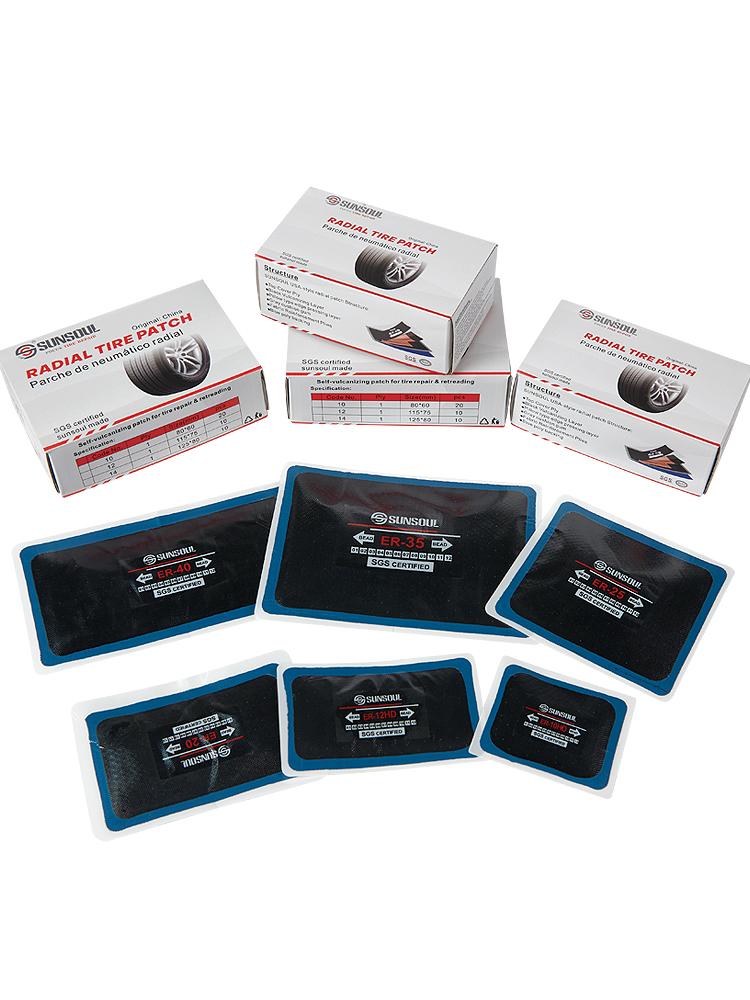
SUNSOUL’s heavy-duty tire patches cover this ply range. For radial tires, radial tire patch units add the directional reinforcement needed to handle the belt geometry of a radial casing.
FAQs About Vulcanizing Tire Patch Safety
Is a vulcanized tire repair permanent?
Yes, when the injury is in the crown area, 6 mm or smaller, and the patch is installed with proper chemical vulcanization. Under those conditions, the repair is classified as permanent. A plug-only repair is not.
Can a sidewall puncture be repaired with a vulcanizing patch?
No. Sidewall, shoulder, and bead injuries are outside the repair boundary regardless of size. The casing must be replaced.
How long should you wait to drive after a vulcanizing tire patch repair?
Allow the vulcanizing fluid to cure fully before inflation, and avoid high-speed or heavy-load driving for the first 24 hours. This gives the chemical bond time to reach full strength.
Does SUNSOUL supply vulcanizing tire patches with safety documentation?
Yes. SUNSOUL is a wholesale vulcanizing tire patch manufacturer and supplier, providing MSDS sheets, batch test reports, and compliance documentation for target markets. For a full comparison of repair methods and safety criteria, see the complete puncture repair guide.