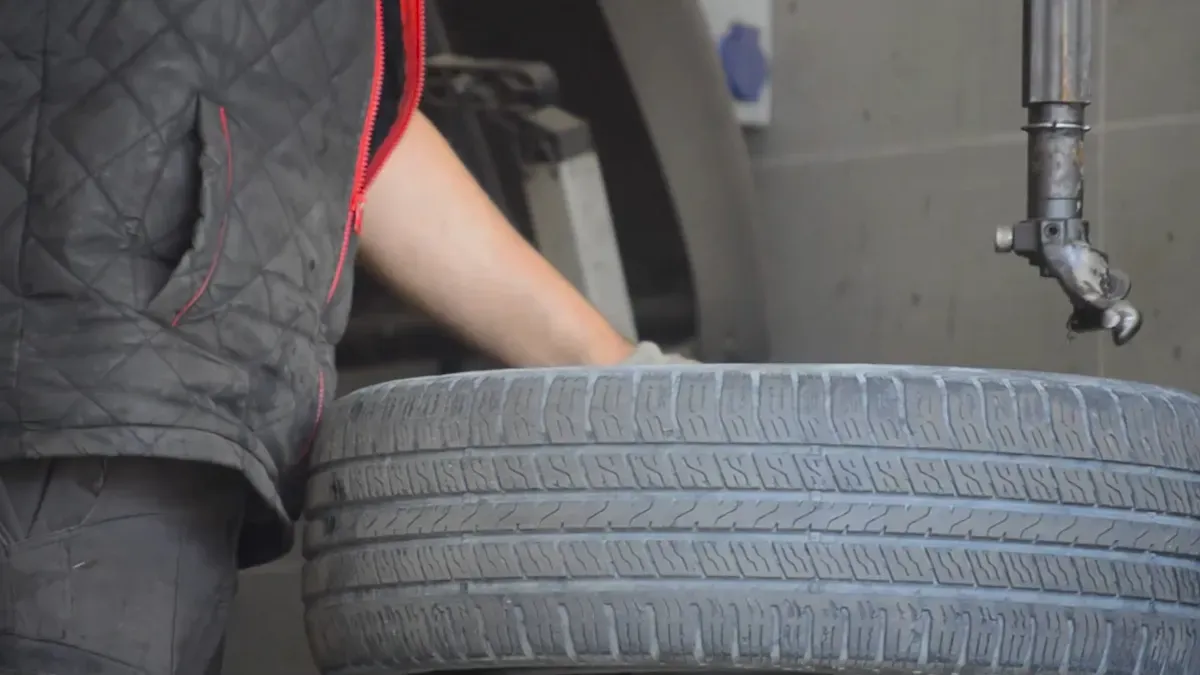

A radial truck tire can typically be plugged up to 3/8 inch (10 mm), but a permanent repair requires a rubber tire patch applied from the inside. This limit applies to a straight nail hole in the crown area. Anything larger, or any injury extending into the shoulder or sidewall, falls outside the scope of a standard plug-and-patch repair and requires a section repair or replacement.
Key Takeaways
- The maximum repairable hole size for a radial truck tire is 3/8 inch (10 mm).
- A plug alone is temporary. A permanent repair requires a plug plus an inner patch.
- The injury must be in the crown area. Sidewall and shoulder damage are not plug-and-patch candidates.
- Patch size should extend at least 1/2 inch beyond the injury, and ply rating must match the tire’s load category.
- Run-flat damage, exposed cords, or an injury angle beyond 25 degrees disqualify the casing even if the hole is small.
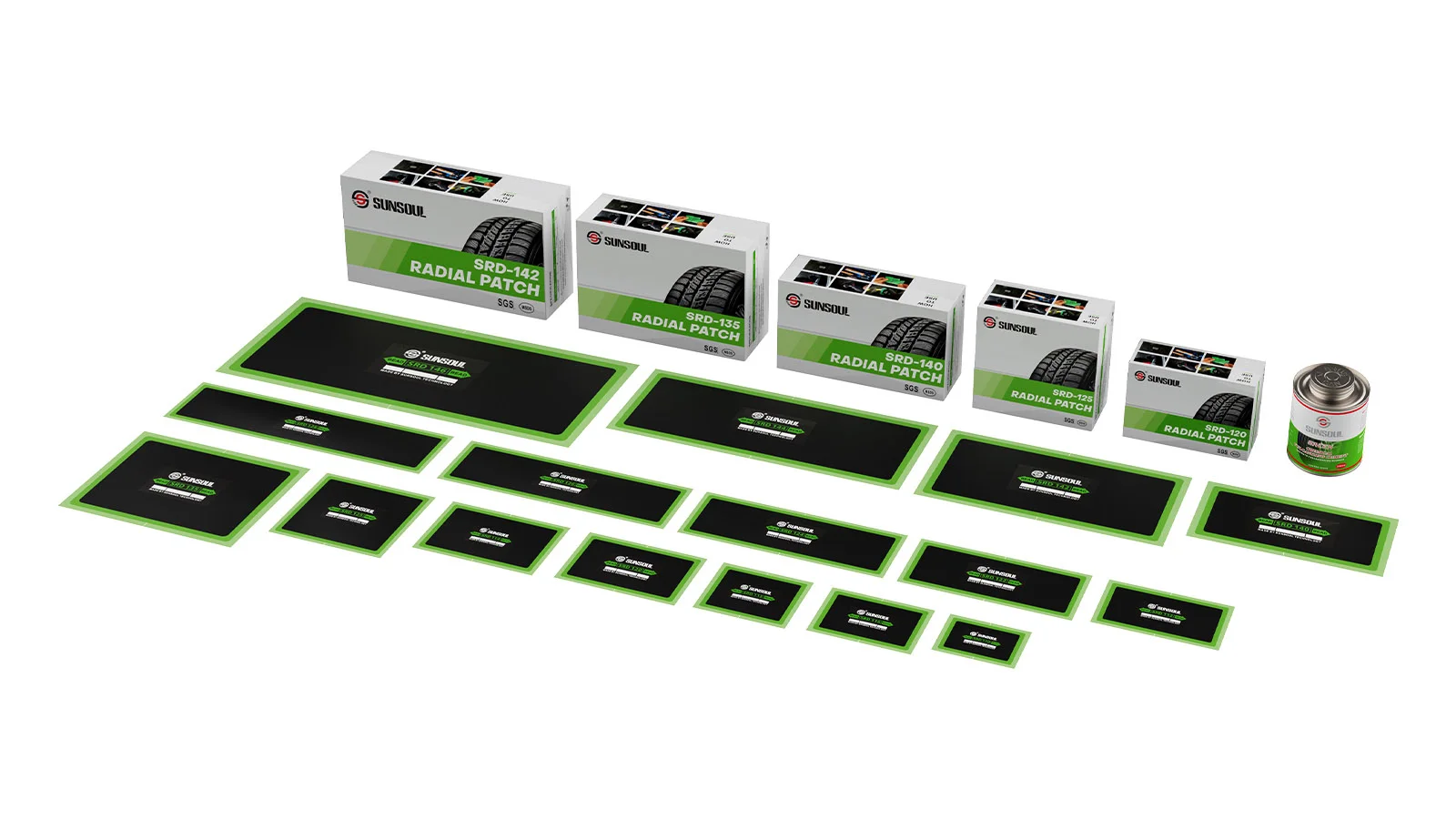
- SUNSOUL supplies radial, heavy-duty, and vulcanizing patches for truck tire repair, with sizes covering 10 mm injuries.
That number is simple. The decisions around it are not. Repair technicians and fleet managers have to separate a temporary plug from a permanent repair, match patch size to injury size, and recognize the damage conditions that disqualify a tire even when the hole looks small enough.
Truck Tire Patch vs. Plug: Why the Repair Method Matters
What a Tire Plug Can Do and What It Cannot
A tire plug, or seal string, fills the injury channel from the outside. It keeps moisture and road debris away from the steel belts long enough for the vehicle to reach a service bay. What a plug cannot do is seal the inner liner. A plug-only repair is not considered safe or permanent by major tire manufacturers and industry associations.
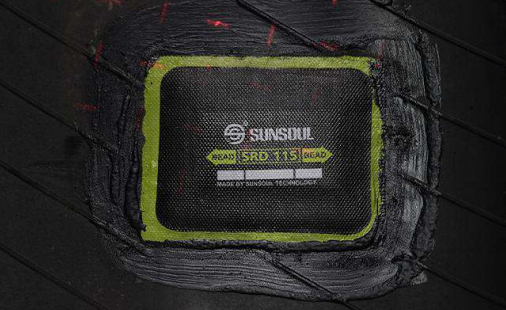
For a proper repair, the plug must be paired with an inner patch that seals the liner. Products like SUNSOUL rubber tire plugs are designed as part of this system, not as a stand-alone fix. The plug fills the channel; the patch seals the inside. Both are required.
The Industry Rule: 3/8-Inch Maximum for Radial Truck Tires
The 3/8-inch (10 mm) limit is consistent across major industry sources. Michelin’s truck tire service manual lists a maximum diameter of 10 mm (0.4 in) for nail hole repairs. Firestone’s commercial tire guidelines cite 10 mm (3/8″) for the tread area. REMA TIP TOP’s technical data sheet for medium truck tires also states a maximum injury size of 3/8 inch (10 mm).
This is not a recommendation. It is a repair boundary. If the hole exceeds 3/8 inch after the damaged cables and debris are removed, the tire is no longer a candidate for a standard nail hole repair.
How Injury Size Determines the Correct Truck Tire Patch Size
The 3:1 Patch-to-Hole Rule for Safe Coverage
A patch that is barely larger than the hole will lift at the edges and leak. The practical rule in tire repair is that the repair unit must provide substantial coverage beyond the injury boundary. A common industry guideline is to select a patch that extends at least 1/2 inch (about 12 mm) beyond the injury on all sides. For a 10 mm hole, that means a patch with a footprint of at least 34 mm across the center of the injury.
SUNSOUL’s truck tire patch range starts at SRD-110, a 55 × 75 mm radial repair unit, and extends to larger sizes for heavier injuries. That starting size already exceeds the minimum coverage for a 10 mm hole, which is why size selection should begin with the injury measurement, not with the smallest patch on the shelf.
Matching Ply Rating and Patch Size to Truck Tire Load
Truck tires are not a single category. A light truck tire and a heavy-haul commercial tire carry different loads and require different repair unit strengths. Patch ply rating is the variable that matches the repair to the casing. A 1-ply patch suits lighter passenger and pickup applications. A 3-ply or 4-ply patch is required for heavy-duty truck and OTR casings.
SUNSOUL’s heavy-duty tire patches are built around this ply-based selection logic. The SRD series moves from 1-ply units for passenger and light truck work up to 4-ply units for the largest truck and heavy-equipment tires. A repair technician who ignores ply rating and chooses only by patch dimensions can create a repair that holds air but does not match the structural demand of the casing.
When a Hole Is Too Big for a Truck Tire Patch, Even Before 3/8 Inch
Crown Area Only: Sidewall and Shoulder Damage
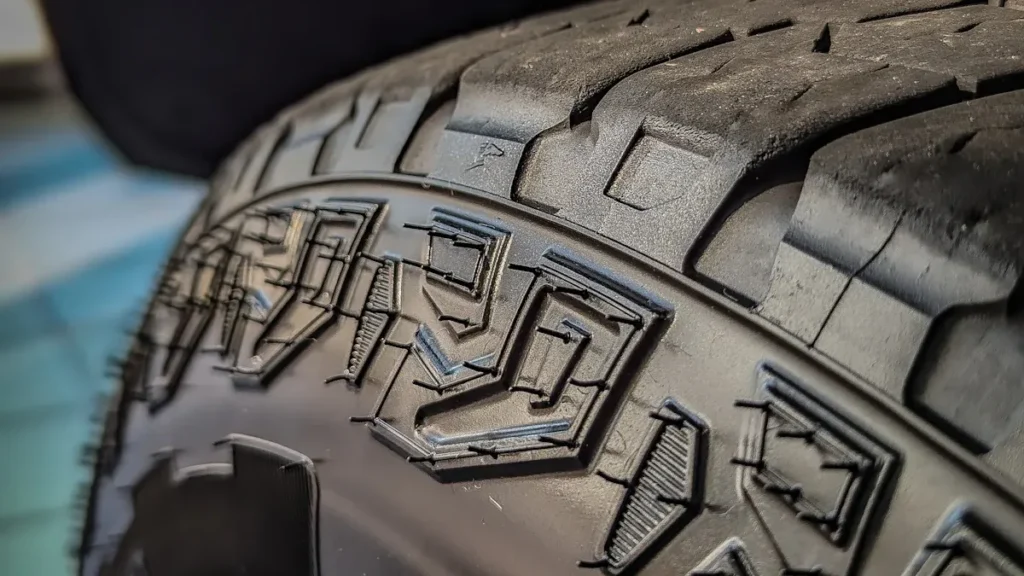
Size is necessary but not sufficient. The injury must be in the crown area, defined as the tread zone from the centerline out to one inch from each shoulder. Injuries in the shoulder or sidewall are outside the nail hole repair category, regardless of how small they are.
SUNSOUL radial tire patches are designed for crown-area repairs. Using a radial patch on a sidewall injury would be a misapplication, not a repair.
Angled Injuries and the 25-Degree Limit
A puncture that enters straight or at a slight angle can be repaired with a one-piece unit. Once the injury angle exceeds roughly 25 degrees, the repair channel becomes too long and irregular for a standard patch-and-plug combination. A sharply angled injury is not a simple nail hole, and the repair method has to change.
Run-Flat Damage and Exposed Cords
A tire that was driven while underinflated may show sidewall rippling, liner discoloration, or exposed cords. These are signs of structural damage that no patch can correct. Even if the original puncture measured less than 3/8 inch, run-flat damage disqualifies the casing.
This is where vulcanizing tire patches reach their limit. A vulcanizing patch creates a strong chemical bond with the inner liner, but it cannot restore a casing that has lost its structural integrity. The patch is only as reliable as the tire it is bonded to. For tires that still use an inner tube, inner tube patches follow a similar size-and-surface-preparation logic, though the repair environment differs from a tubeless truck casing.
FAQs About Truck Tire Hole Size and Patching
What is the maximum hole size for a truck tire plug?
3/8 inch (10 mm) for a radial medium truck tire. The injury must be in the crown area and accessible for proper inspection and preparation.
Can I plug a hole larger than 3/8 inch with two plugs?
No. Using multiple plugs in one injury channel does not restore the belt structure and increases the risk of moisture intrusion and belt separation. A hole larger than 3/8 inch requires a section repair or replacement.
Does SUNSOUL supply patches for holes up to 10 mm?
Yes. SUNSOUL’s radial repair unit range begins with sizes that cover 10 mm injuries, and the catalog extends through 2-, 3-, and 4-ply options for heavier truck and OTR casings. Repair shops can source tubeless tire patch units matched to the injury and the casing ply rating. For a broader overview of repair methods, the complete puncture repair guide covers patch selection, preparation, and installation.
What should repair shops confirm before patching a truck tire?
Confirm three things before opening a patch: the injury is in the crown area, the prepared hole does not exceed 3/8 inch, and the tire shows no run-flat damage or exposed cords. Then match the patch ply rating to the tire’s load category. A 10 mm hole in a light truck tire and a 10 mm hole in a heavy commercial tire do not call for the same repair unit.