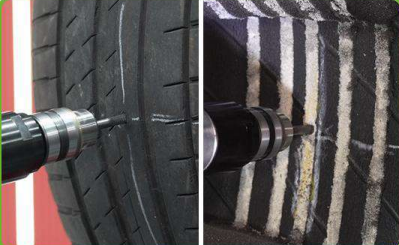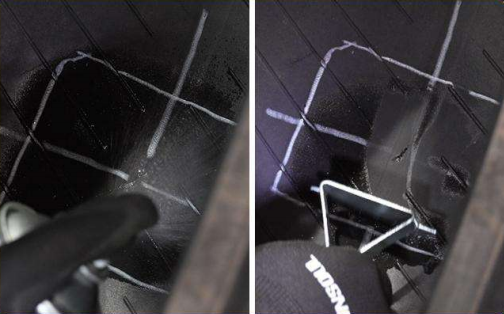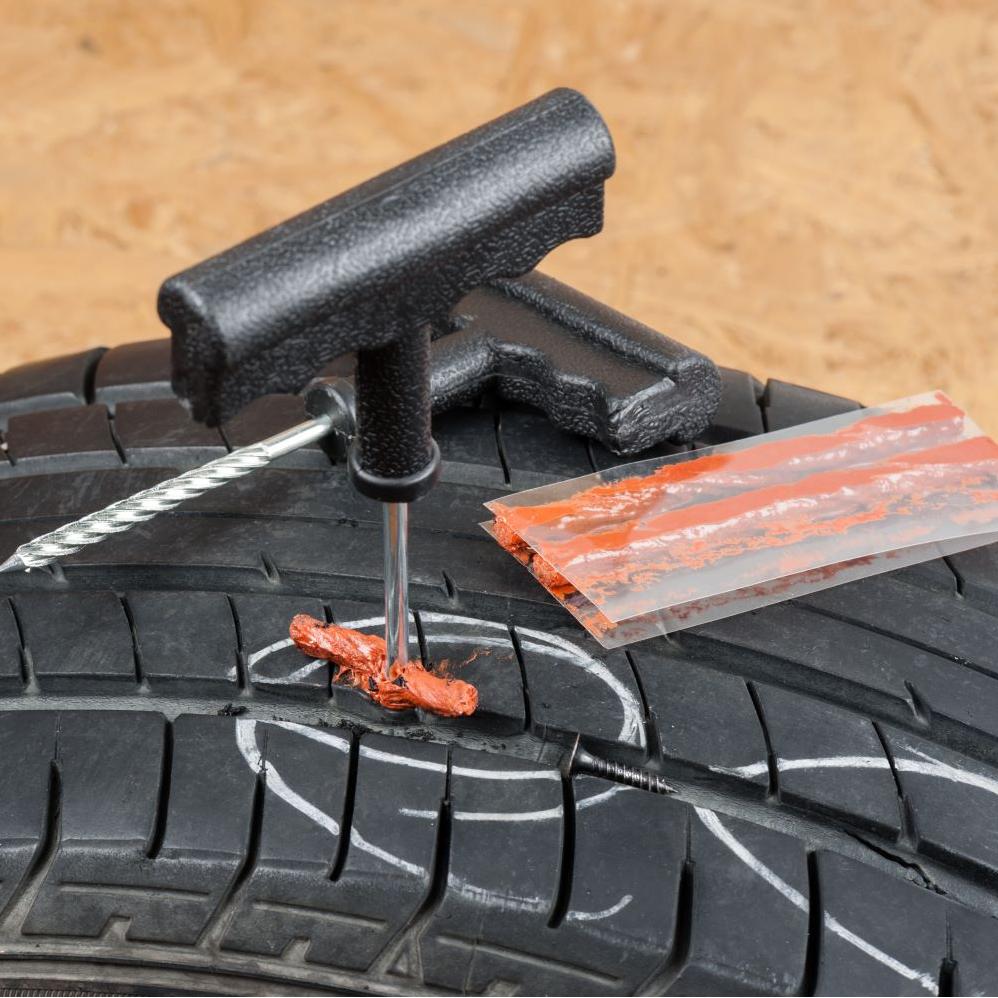

Using a radial tire patch on a bias-ply tire is not a safe substitution once the injury exceeds a nail hole. The two patch types are built around different cord geometries, and the repair unit must match the casing it is bonded to. For injuries beyond 3/8 inch, industry guidance is direct: radial section repair units for radial tires, bias section repair units for bias tires, no exceptions.
Key Takeaways
- A radial tire patch is designed for radial cord geometry. A bias casing flexes in different directions.
- For injuries over 3/8 inch (10 mm), radial and bias section repair units are not interchangeable.
- A radial patch lacks the multi-directional reinforcement a bias casing needs, which can lead to edge lifting and separation.
- Small tread punctures sometimes allow cross-compatible chemical patches, but this is a limited exception, not a rule.
- Match the patch to the casing, not to the injury size alone. The wrong patch can pass a leak test and still fail in service.
Radial Tire Patch on a Bias-Ply Tire: The Short Answer and Structural Difference
Bias and Radial Casings Flex in Different Directions
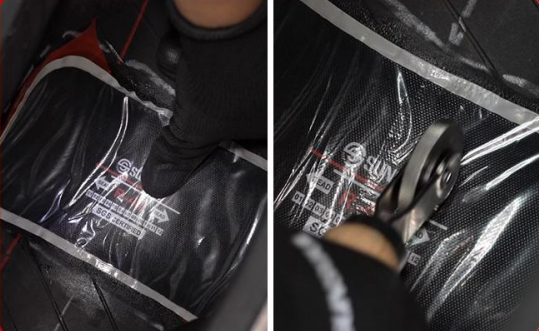
A radial tire’s body cords run at roughly 90 degrees to the direction of travel, so the casing flexes primarily in the sidewall and tread area with a specific deformation pattern. A bias-ply tire’s cords are laid diagonally, typically at 30 to 45 degrees, with each successive ply running in the opposite direction. That crossed-ply construction makes the bias casing stiffer and spreads stress over a larger area.
A repair patch has to move with the casing. If the patch’s reinforcement does not align with the way the casing flexes, the bond at the patch edge becomes a stress concentration point.
Why a Radial Patch Lacks the Multi-Directional Strength a Bias Casing Needs
A radial repair unit is built for flexibility. It is designed to move with a radial casing without restricting the tread and sidewall deformation that radial construction allows. A bias casing does not flex in the same way, and a bias repair unit is typically thicker and more robust because the casing is stiffer and less prone to high-flex separation.
Putting a radial patch on a bias casing creates a mismatch. The patch is optimized for a deformation pattern the bias casing does not produce. The result is localized stress at the patch boundary rather than a uniform bond across the repair area.
What Happens When the Wrong Radial Tire Patch Is Used on a Bias-Ply Tire
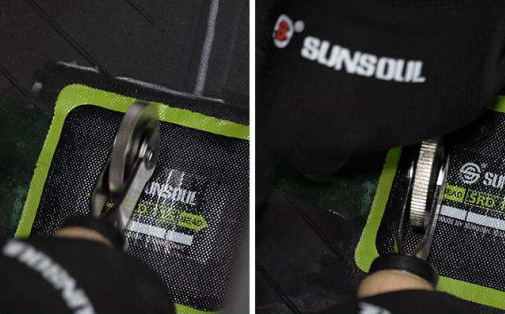
Stress Concentration at the Patch Edge
The patch edge is where the repair meets the original casing. In a correctly matched repair, the patch reinforcement and the casing cords share load gradually across that boundary. In a mismatched repair, the two structures do not deform together. The edge of the patch becomes a hinge point, and the adhesive or vulcanized bond is loaded in peel rather than in shear.
This is the mechanism behind edge lifting. The patch may appear bonded after installation and still hold air in a static test. Under rolling load, the mismatch at the edge grows until the bond separates.
Heat Buildup and Premature Separation
A mismatched patch also changes how heat moves through the repair area. The bias casing is designed to distribute stress across a larger footprint, but the radial patch concentrates the repair load into a smaller, more flexible zone. That localized flexing generates heat at the patch edge. Over time, heat and cyclic stress accelerate separation, and the repair can fail before the tread is worn out.
The failure is not always visible from the outside. Internal separation can progress until the patch lifts or the casing loses integrity, which is why a repair that “looked fine” can become a safety issue on the road.
When a Radial Tire Patch Can Cross Over and How to Match Patch to Casing
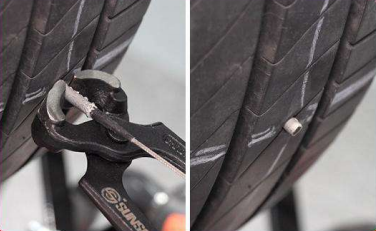
Small Crown Punctures vs. Section Repairs
There is a narrow exception at the small-puncture end. Some chemical or self-adhesive patches are labeled for both radial and bias applications, but that labeling generally applies to small crown punctures, not to section repairs or larger injuries. A nail hole within the tread area, below the section-repair threshold, may be repairable with a cross-compatible chemical patch if the manufacturer explicitly approves it.
The 3/8-inch threshold is the dividing line. Once an injury exceeds 3/8 inch, the repair moves from a nail-hole repair into a section repair, and the patch must match the casing type. This is where a rubber tire patch labeled “universal” stops being acceptable and a casing-specific repair unit becomes mandatory.
Radial Tire Patch Selection for Radial Casings
For radial casings, the patch reinforcement should align with the radial cord direction. A radial repair unit is designed to flex with the casing without restricting tread deformation. SUNSOUL’s radial tire patch range includes units for passenger, truck, and heavy-duty applications, with steel-belt-reinforced options for commercial casings where load and heat demand a stronger repair.
The selection logic starts with the casing type, then the injury size, then the operating condition. A heavy-load highway tire and a passenger tire may both be radial, but they do not use the same repair unit.
Bias Tire Patch Selection for Bias-Ply Casings
For bias casings, the patch must accommodate the crossed-ply geometry. A bias repair unit is built to handle the stiffer casing and the broader stress distribution. SUNSOUL’s vulcanizing tire patch range includes bias-compatible repair units designed for chemical bonding with the casing, so the patch and the casing cure into a single repair structure rather than an adhesive layer sitting on top.
A vulcanizing patch is not automatically casing-specific. The distinction between radial and bias reinforcement remains, even when the bonding method is chemical vulcanization.
SUNSOUL Patch Range and Sizing for Both Tire Types
SUNSOUL manufactures separate radial and bias repair units, along with vulcanizing patches, rubber patches, and patch-plug combinations for different casing types and injury sizes. The catalog is organized by tire construction and application, which allows a distributor or repair shop to stock the correct unit for each casing rather than relying on a single “universal” patch.
FAQ
Can a radial patch be used on a bias-ply tire?
For small crown punctures within the nail-hole limit, a cross-compatible chemical patch may be acceptable if the manufacturer approves it. For section repairs and injuries over 3/8 inch, a radial patch should not be used on a bias casing. The repair unit must match the casing type.
Can a bias patch be used on a radial tire?
The same principle applies in reverse. A bias repair unit on a radial casing creates a stress mismatch, because the radial casing flexes in a way the bias patch was not designed to accommodate. Radial casings require radial repair units for section repairs.
Are universal patches safe for both radial and bias tires?
“Universal” labeling usually refers to small tread punctures, not section repairs. A universal chemical patch may work on a nail hole in either casing type, but it is not a substitute for a casing-specific section repair unit. The manufacturer’s application limits should be checked before use.
Does SUNSOUL supply separate radial and bias tire patch lines?
Yes. SUNSOUL offers radial tire patches, vulcanizing patches, rubber patches, and bias-compatible repair units for different casing constructions and injury sizes. The catalog distinguishes between radial and bias applications so buyers can match the repair unit to the tire, not to a generic size chart.