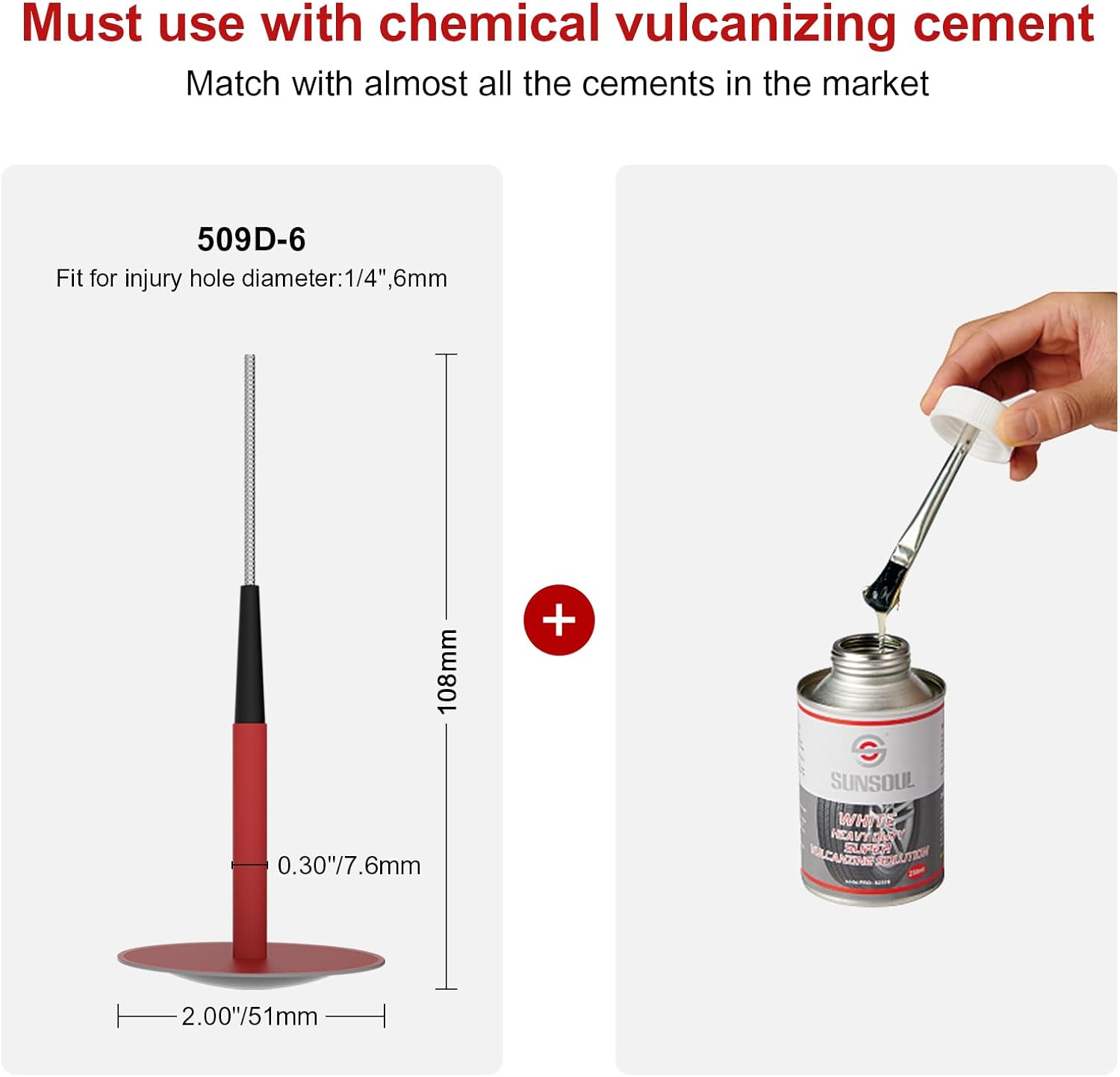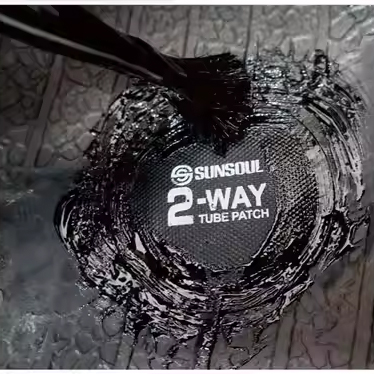

A standard rubber tire patch requires cold vulcanizing fluid to dry for 3 to 5 minutes at room temperature (around 20°C or 68°F) before application. You must wait until the fluid transitions from a wet liquid to a dull, tacky, and opaque film. Applying a patch while the fluid is still wet traps solvents underneath, preventing the chemical bond and causing the patch to peel off under driving pressure.
Key Takeaways
- Standard Wait Time: 3 to 5 minutes in normal, room-temperature conditions.
- Visual Test: The fluid must look completely dull and dry, not glossy or wet.
- Temperature Impact: Cold weather (below 18°C / 65°F) can double the drying time to 10 minutes or more.
- Fatal Error: Applying a patch to wet fluid traps gas, leading to immediate repair failure and potential tire blowouts.
The Science Behind Vulcanizing Fluid and Tire Patch Adhesion
To understand why drying time is so critical, it helps to understand what vulcanizing fluid actually does. It is not a traditional adhesive or “glue.” Traditional glues work by drying and mechanically sticking two surfaces together. Vulcanizing fluid, however, is a chemical activator.
How Chemical Cross-Linking Works
The fluid contains special polymers and solvents that soften the top layer of the tire’s inner liner. When the patch is pressed onto the dried fluid, the two rubber compounds cross-link at a molecular level. This creates a permanent, airtight seal that is essentially as strong as the original tire liner. If the solvent hasn’t evaporated, this cross-linking cannot take place.
Why Solvent Evaporation is Critical
If you press the patch onto wet fluid, the solvents have nowhere to go. They become trapped between the patch and the tire. Over time, or when the tire heats up during driving, these trapped solvents turn into a gas. This gas expands and creates a bubble behind the patch, pushing it away from the liner and causing a slow leak or a complete patch failure.
How to Tell When Vulcanizing Fluid Is Ready
Relying solely on a timer is risky because environmental factors change drying times. Professional tire technicians use a combination of visual and tactile cues to know exactly when the fluid is ready.
The Visual Test (Dull vs. Glossy)
When you first apply the fluid, it looks wet and shiny. As the solvents evaporate, the surface begins to look dull and matte. If you see any shiny spots, it needs more time. The entire area you applied the fluid to must be uniformly dull.
The Finger Touch Test
If you are unsure, gently touch the fluid with a clean, dry finger. It should feel highly tacky and sticky, like tape. However, absolutely no liquid should transfer to your skin. If it feels slippery or wet, wait another minute.
Adjusting Drying Time for Environmental Conditions
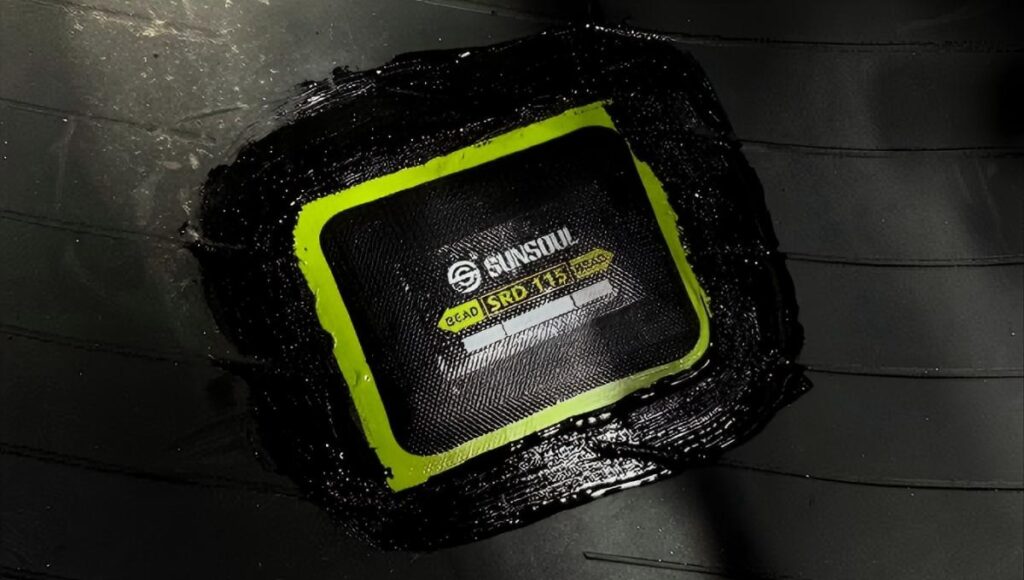
Standard guidelines of 3 to 5 minutes assume an ideal workshop environment. In the real world, especially in fleet maintenance or roadside repairs, conditions vary wildly.
Cold Weather and Low Temperatures
In temperatures below 18°C (65°F), the chemical solvents evaporate much slower. Drying could take 10 minutes, 15 minutes, or even longer. If you are repairing a heavy-duty truck tire patch in a cold workshop, you must extend your wait time or use a gentle heat source to warm the tire’s inner liner to room temperature first. Never apply a patch to a freezing surface.
High Humidity and Poor Ventilation
High humidity introduces moisture into the air, which can interfere with the curing process. Ensure the repair area is well-ventilated. Airflow helps carry the solvent vapors away, speeding up the drying process naturally without the need for direct heat.
Adjusting Vulcanizing Fluid Drying Time for Environmental Conditions
Even experienced technicians occasionally rush the process. Here are the most common errors that lead to failed repairs.
Applying Too Much Fluid
A common misconception is that “more glue equals a stronger bond.” The opposite is true. If you apply a thick, heavy layer of fluid, the top surface will dry, but the layer underneath will remain wet. A thin, even coat is all that is required for a strong chemical bond.
Skipping the Buffing Step
The fluid cannot penetrate a smooth or dirty surface. If you do not buff the inner liner with a wire brush to create a textured, clean surface, the fluid will not activate the rubber properly. It will dry, but it won’t bond, and the patch will peel off.
FAQ
What happens if I apply the patch too early?
The repair will fail. The trapped solvents will vaporize under the heat of driving, causing the patch edges to lift and eventually resulting in a blowout.
Can I use a heat gun or hairdryer to speed up drying?
It can be done, but you must use extreme caution. Keep the heat source moving and use a low setting. Overheating the rubber can bake the surface, preventing the fluid from bonding and potentially damaging the tire’s structural integrity.
Does the brand of vulcanizing fluid matter?
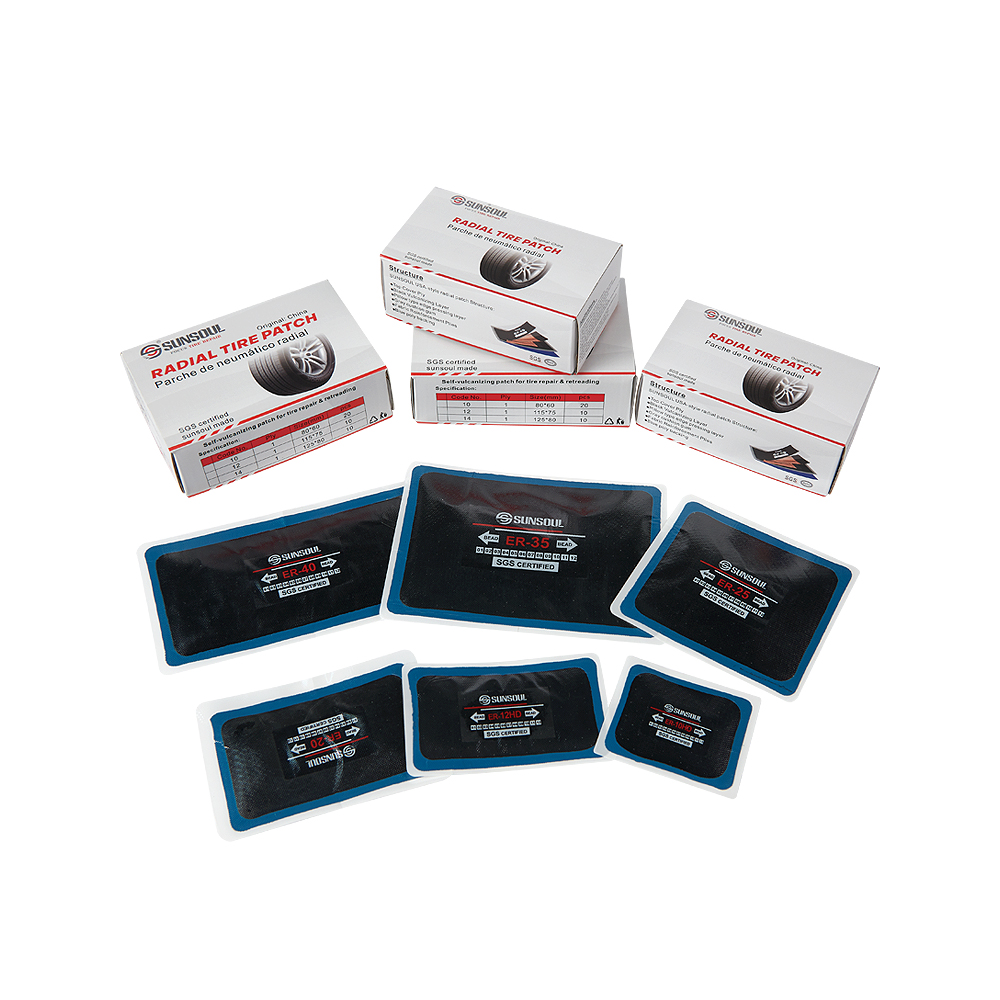
Yes. High-quality fluids have optimized solvent blends that evaporate at the right rate and contain the correct concentration of bonding polymers. Inferior fluids may dry too fast, too slow, or fail to create a permanent chemical bond. To ensure the best results, always pair high-grade fluid with a premium vulcanizing tire patch.