
When drivers get a flat tire out on the road, they need a reliable, fast emergency fix. Rubber cement is a safe option to lubricate punctures during tire repairs. This high-performance liquid helps slide tire plugs straight into the hole without snagging. The extra rubber from the plug creates a tough, airtight seal. On the contrary, any type of oil will damage a tire plug and ruin the repair.
Key Takeaways
- Always use rubber cement or vulcanizing fluid to safely wet a tire plug while fixing it.
- Do not use motor oil or WD-40 since these bad liquids ruin rubber and lead to risky flat tires.
- Keep in mind that tire plugs provide a short-term repair for tiny holes less than a quarter-inch across.
Safe Lubricants to Insert a Tire Plug
Rubber Cement vs. Specialized Needle Lube
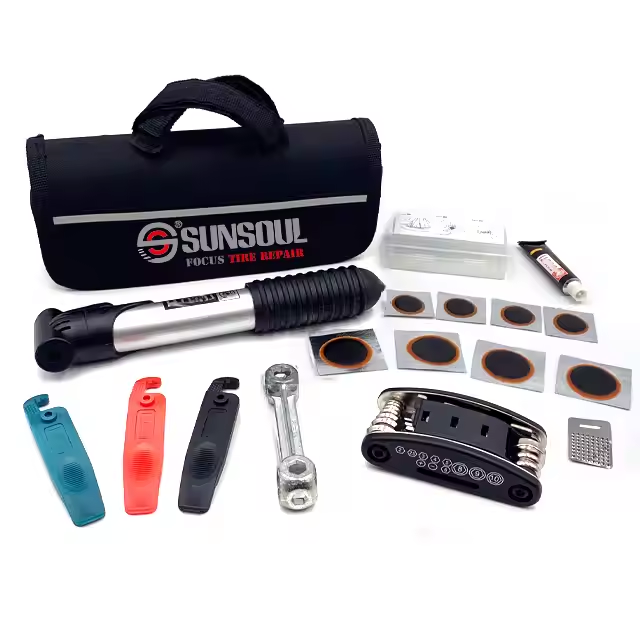
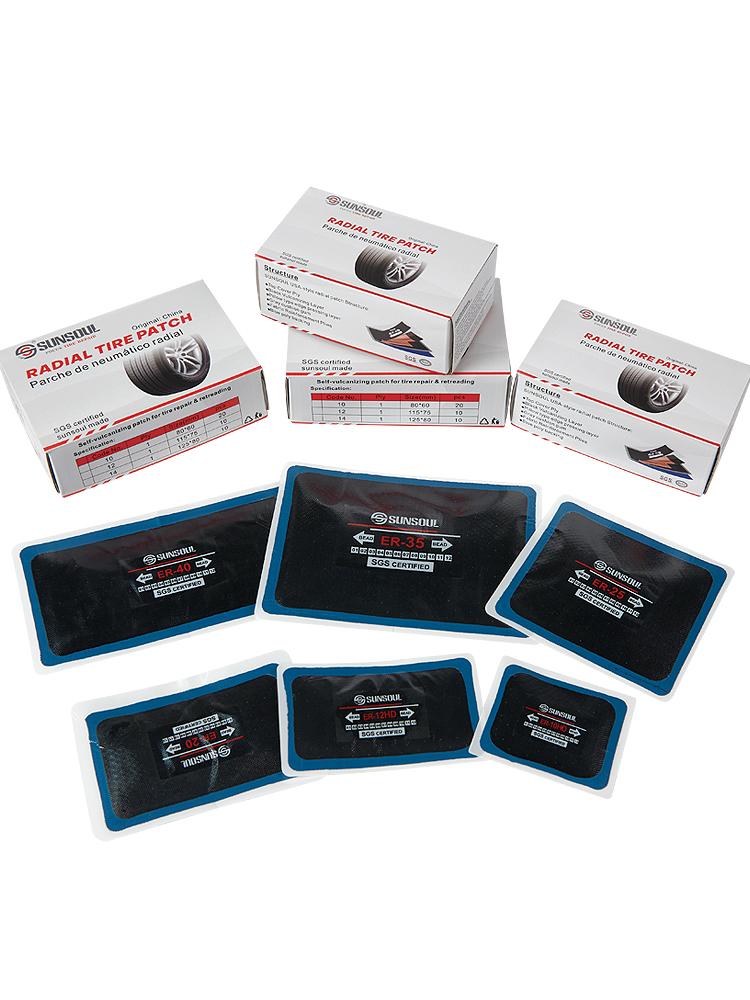
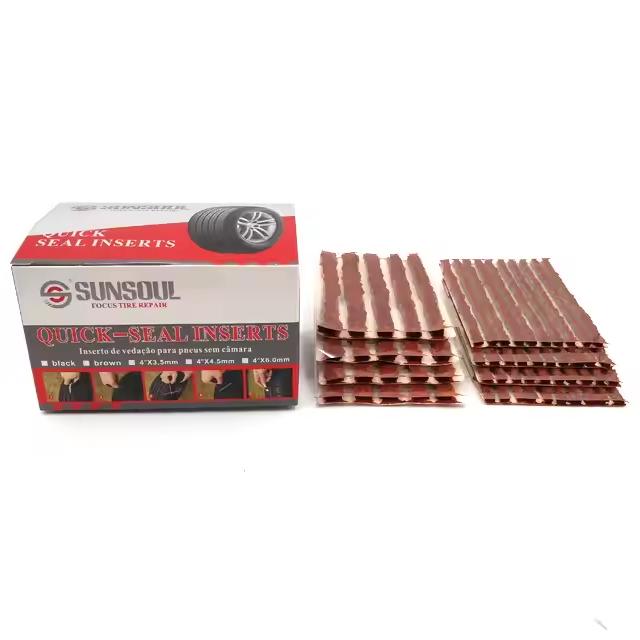
Picking the right lubricant is critical for safe roadside tire work. Suitable fluids let repair tools slide smoothly through tight puncture openings. Professional technicians usually rely on chemical vulcanizing fluid or probe lube to prep damaged holes. Reputable manufacturers such as SUNSOUL supply heavy-duty rubber cement and tire mounting paste, ideal for bulk repair shop orders. Coat the rubber strip from your plug kit with this fluid. It lets the plug slide into narrow punctures without tearing surrounding tire cords.
Chemical vulcanization creates a durable bond between the tire rubber and plug material. Special needle lube eases passage for insertion tools on a temporary basis. Vulcanizing cement, however, dries quickly to lock the repair in place. Experienced techs always keep a complete tire plug kit handy to properly mend simple tread punctures.
Safe Soap Solutions vs. Harmful Oils
Avoid all oil-based lubricants when installing tire plugs. Motor oil, diesel fuel, grease and WD-40 trigger harmful chemical reactions. These substances break down tire rubber over time and weaken internal reinforcing cords. This hidden damage lowers driving safety and raises the risk of sudden blowouts.
| Product | Chemical property | Effect on rubber |
|---|---|---|
| ATF / power steering fluid | Vegetable-based fluid | Does not damage rubber fibers |
| Neutral water | Natural rubber fluid | Lubricates without sealing puncture |
| Engine oil / diesel fuel | Mineral oil fuel | Softens rubber and breaks inner bonds |
Soapy water works as a makeshift lubricant during roadside emergencies. Even so, only vulcanizing glue can fully seal a plug inside the puncture hole. Choosing compatible materials preserves tire structural integrity throughout repairs. Proper lubricants maintain rubber adhesion for long-distance driving.
Steps to Lubricate and Plug the Tire
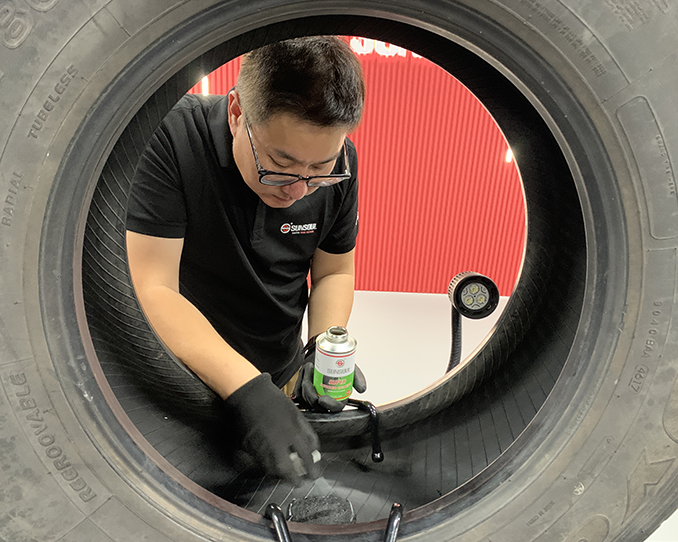
Flat tires often strike unexpectedly while driving. Follow the correct workflow to stay safe and properly restore the damaged tread.
Prepare and Ream the Puncture Hole
- Mechanics examine the damaged rubber tread to check the hole. The damage must sit in the crown area and measure under 1/4 inch across.
- The worker pulls out the sharp object from the tread with strong pliers.
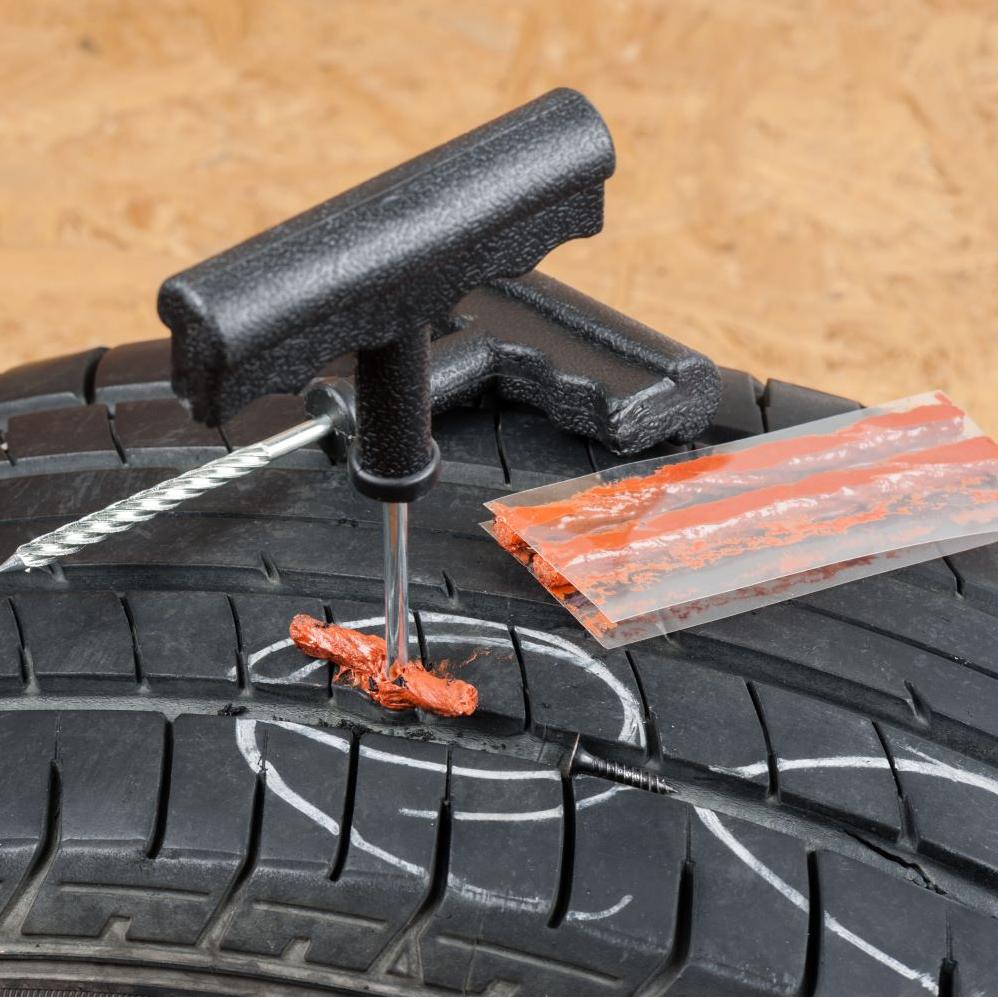
- The technician pushes a T-handle reamer straight into the damaged pathway to prep the hole. Sliding the metal tool up and down cleans away loose dirt. Turning the rough tool makes a smooth surface along the channel walls. Good roughness helps the inner rubber stick tightly against the new plug material. Clean sidewalls prevent sudden air leaks later.
How to Lubricate a Tire Repair Plug
Use tools included in your tire repair kit and follow proper procedures to avoid harming the inner tire structure.
- Thread the rubber repair strip through the eye of the split insertion needle. Make sure equal lengths of the sticky strip extend out from both sides of the needle tip.
- Spread rubber cement evenly along the middle section of the flexible strip. This fluid acts as lubricant while forming a strong chemical seal. The slippery coating prevents binding when pushing plugs into tight punctures.
- Push the prepared needle firmly into the cleaned hole. Leave roughly one inch of plug material sticking out above the tread surface. The soft rubber fills the puncture completely to stop air leakage.
- Pull the insertion tool straight out in one swift motion. Do not twist the needle, as this can shift the plug inside the tire. A quick pull locks the thick rubber strip securely inside the hole.
The flexible rubber instantly forms a mechanical seal against channel walls. Internal tire pressure pushes the sticky plug tight against the puncture opening.
This proven method lets drivers complete emergency tread repairs quickly. Proper plug installation eliminates hidden leaks and brings back tire strength. The pliable rubber expands to fill every tiny gap inside the puncture.
Removing the tool rapidly stops the lubricated plug from sliding back out with the needle.
This practical solution seals air leaks fast and gets drivers back on the road safely. Vehicle owners should regularly check tire pressure after any roadside plug repair.
Why Proper Lubrication Matters for Tire Plug Repairs
Trim Excess Material After Repair
Chemical vulcanization fuses separate rubber components together. Vulcanizing cement breaks polymer chains and welds the plug into the host tire rubber. This chemical process merges the new plug and surrounding tread into a single unit. Over time, the repair material becomes an integrated part of the tire. Standard rubber adhesives only stick to outer surfaces; vulcanizing fluid creates a permanent bonded joint.
Once the vulcanization process begins, technicians trim away excess protruding rubber. Cutting off exposed material leaves a flat, smooth tread surface. Clean trimming stops the rubber plug from catching on rough pavement.
Use a sharp knife to cut the plug flush with the outer tread. A level surface prevents the rubber strip from being pulled loose or abrading the tread.
Verify the Seal to Fix Air Leaks
Always test for micro air leaks before reinstalling the tire on the vehicle. Soapy water reveals hidden bubbles wherever air escapes through gaps. Safety best practices require four key steps after plug installation:
- Mount the tire back onto the wheel rim.
- Inflate the tire to the manufacturer’s recommended pressure.
- Re-balance the full wheel assembly.
- Check the repair point for air leaks before fitting the wheel back on the vehicle.
This simple test confirms the puncture is fully sealed. A solid repair prevents slow leaks and avoids recurring issues at the patched spot. Comprehensive testing protects drivers on every mile. Qualified technicians complete every step to maximize repair service life.
Drivers rely on vulcanizing cement to lubricate punctures and create a secure seal during roadside emergencies. Tire plugs deliver an effective temporary fix for minor tread punctures. Keep in mind that plug repairs are not permanent. Technicians must inspect each puncture site, check plug condition, and carry out an internal patch repair for long-term reliability.
FAQ
Can drivers use motor oil to lubricate a tire plug?
No. Engine oil ruins rubber parts very fast. Drivers need to use rubber cement to coat a tire plug during roadside fixes.
How large of a puncture can a plug handle?
Plugs fix small tread holes up to 1/4 inch wide. Mechanics should check bigger spots to keep your vehicle safe.
Is a plug a permanent solution for a flat tire?
No. The strip is just a fast fix. A worker needs to check the damaged tire to guarantee long-term safety.