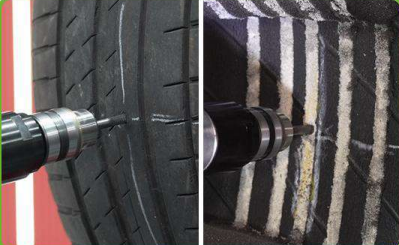

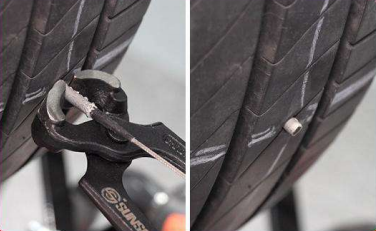
A rubber tire patch alone is not considered a permanent repair by industry standards, and a patch-plug combination is significantly more durable. The U.S. Tire Manufacturers Association (USTMA) and the Tire Industry Association (TIA) both specify that a permanent repair must fill the puncture channel and seal the inner liner. A patch alone seals the liner but leaves the channel open to moisture and oxidation. A plug-patch unit does both, which is why it is the only repair method recognized as permanent for modern radial tires.
Key Takeaways
- A patch alone is not a permanent repair. It seals the inner liner but leaves the puncture channel exposed to water and oxygen.
- A plug alone is also not permanent. It fills the channel but does not seal the liner, and it prevents internal inspection of the casing.
- The patch-plug combination is the only USTMA- and TIA-recognized permanent repair. It restores both the air barrier and the structural channel.
- The durability gap is not marginal. A correctly installed patch-plug can last the remaining life of the tire; a patch-only repair may pass a static leak test but fail under rolling load.
- One-piece mushroom patch plugs typically cover injuries from 3 mm to 12 mm, matching the unit size to the puncture diameter.
Why a Patch Alone Lacks the Durability of a Tire Patch Plug
The Patch Seals the Inner Liner but Leaves the Channel Open
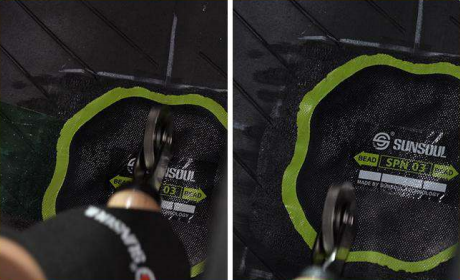
A patch is the air-retention component. It bonds to the inner liner and restores the airtight barrier that the puncture broke. That part of the repair is essential. The problem is what the patch does not do: it does not fill the puncture channel.
The open channel remains a direct path for water, road salt, and debris to reach the steel belts from the tread side. Over time, moisture initiates corrosion at the belt edges, and that corrosion can lead to belt separation even if the inner liner is still sealed. This is why a patch-only repair can pass a leak test in the shop and still fail months later in service.
Why a Patch-Only Repair Can Pass a Leak Test and Still Fail
A static leak test measures air pressure. It does not measure the condition of the belt package or the integrity of the puncture channel. A patch that holds air is doing its job. But the channel is still open, and the belts are still exposed. The failure mode is slow and invisible until it becomes a structural problem.
The industry’s position on this is clear: a patch alone is not the standard permanent repair for modern radial passenger tires. If you only insert rubber tire plugs without the patch head, you still have a temporary fix that leaves the liner unsealed. It is a partial repair, not a complete one.
How a Tire Patch Plug Seals Both the Channel and the Liner
Sealing Both Zones in One Unit
A tire patch plug is a one-piece repair unit with two functional zones. The “stem” or “plug” fills the puncture channel, blocking moisture from reaching the belts. The “patch” head bonds to the inner liner, restoring the air barrier. Both seals are created in a single installation.
This is the repair that USTMA describes: “A rubber stem, or plug, must be applied to fill the puncture injury and a patch must be applied to seal the inner liner.” The same guidance adds that a common repair unit is a one-piece combination unit, which is exactly what a mushroom-style patch plug is. When applied with a vulcanizing tire patch system, the patch head forms a chemical cross-link with the rubber liner rather than relying on simple adhesion.
Why the Combination Outlasts a Patch-Only Repair
The durability advantage comes from addressing both failure paths. A patch-only repair leaves the channel open; a tire patch plug closes it. The plug also provides a physical backer for the patch head, so the patch sits flat against the liner instead of spanning an open void.
The practical result is that a correctly installed patch-plug can last for the remaining life of the tire, while a patch-only repair is a partial fix that leaves the casing exposed to the environment. That is the definition of a durability gap.
When a Patch Alone May Still Be Used Instead of a Tire Patch Plug

The Limited Role of a Patch in Small, Temporary Repairs
There are situations where a patch alone is used: small nail holes in low-speed or off-road applications where the channel is minimal, or temporary repairs where a full patch-plug installation is not practical. But these are exceptions, not the standard.
For any repair intended to be permanent, the combination is the correct specification. The patch is not obsolete; it is incomplete without the plug.
Matching the Tire Patch Plug to the Injury and the Casing
A tire patch plug is not a universal size. The unit must match the injury diameter and the casing type. For passenger and light truck tires, a smaller mushroom plug is appropriate. For commercial applications, a dedicated truck tire patch or heavy-duty tire patches with higher ply ratings are required to handle the increased load and pressure.
Standard one-piece mushroom patch plugs cover injury sizes from 3 mm to 12 mm, with the patch head and stem sized together for a single installation. For a step-by-step comparison of plug-only, patch-only, and combination methods, the complete puncture repair guide covers both one-piece and two-piece installation sequences.
FAQs About Tire Patch Plug Durability
Is a tire patch plug more durable than a patch alone?
Yes. A patch alone leaves the puncture channel open to moisture and belt corrosion. A tire patch plug seals both the channel and the inner liner, which is the only method recognized as a permanent repair by USTMA and TIA. A patch plug can last the remaining life of the tire; a patch-only repair is a partial fix.
Is a plug alone just as durable?
No. A plug alone does not seal the inner liner and does not allow internal inspection of the casing. USTMA explicitly lists a plug alone as an unacceptable repair. It is a temporary measure, not a permanent solution.
Who supplies high-quality one-piece tire patch plugs?
SUNSOUL supplies one-piece mushroom patch plug units covering 3 mm to 12 mm injuries. They also offer separate truck tire patches and heavy-duty tire patches for commercial and OTR casings where a two-piece repair or a higher ply rating is preferred.