
One puncture on a tubeless tire is enough to convince any rider that a good plug kit belongs in the saddlebag. But the market is crowded with “repair patches,” “plug strips,” and “plug kits” — and they are not the same thing. This guide explains the plug-versus-patch distinction, compares the most popular plug-type tools on measurable criteria, and walks you through a safe installation, so you can choose the right kit for your riding style and actually use it when it counts.
Key Takeaways
- Match the kit to your riding style: racers want the fastest install, mountain bikers need tire plugs that hold in low-pressure, high-torque conditions, and commuters value a lightweight all-in-one kit.
- For punctures up to about 3–6 mm, a quality plug combined with sealant is a reliable fix. For sidewall cuts, gashes, or bead damage, a plug is a temporary measure — replace the tire or get a professional inside patch.
- Installation technique matters more than brand: clean the hole, insert the plug with a firm twisting motion, trim it flush, and reinflate to verify the seal before riding.
- Check your kit before every season, replace dried-out plugs, and practice the install at home once — the first trailside plug should not be your first plug.
Tubeless Plugs vs. Patches: Why the Distinction Matters
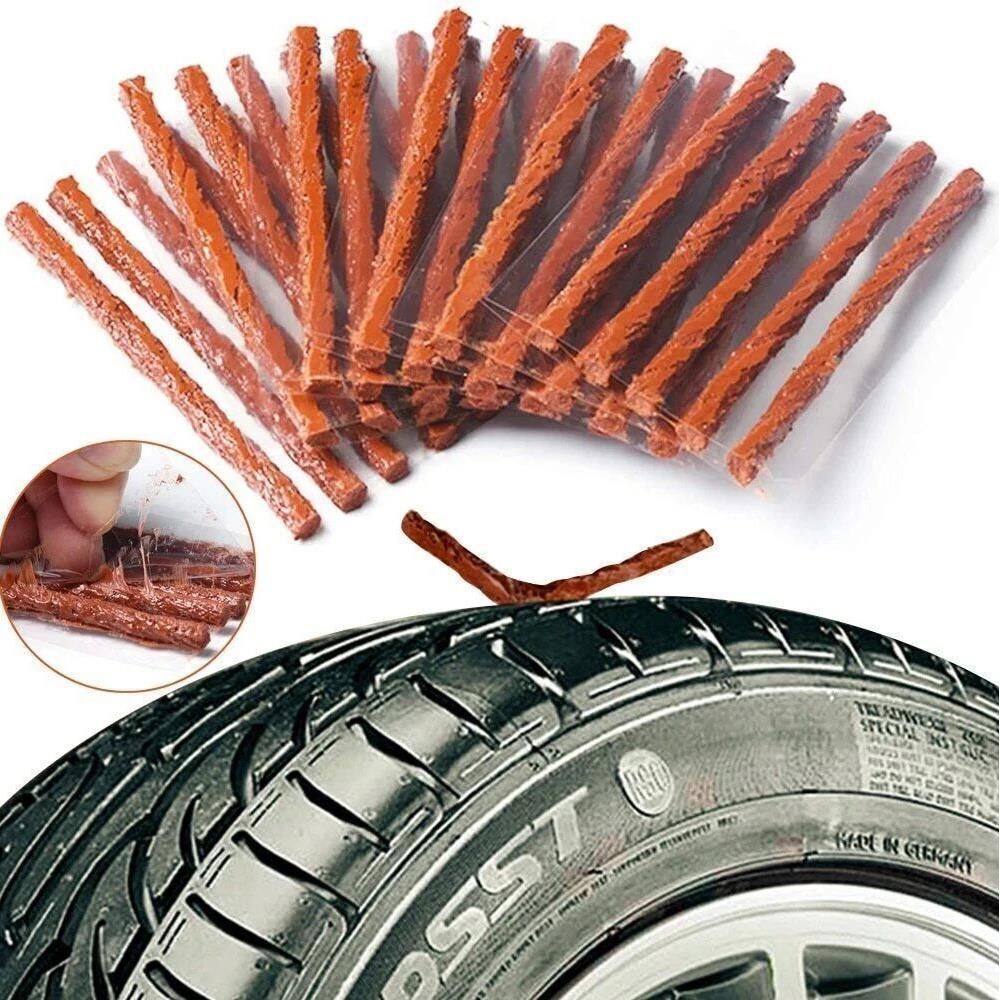
A tire plug (also called a plug strip or repair cord) is a sticky, tapered rubber-impregnated strip pushed into the puncture from the outside of the tire. The plug body fills the hole, reacts with sealant, and seals the casing without removing the wheel. A tire patch is a flat rubber or vulcanized patch applied to the inside of the casing, which requires removing the tire from the rim and preparing the surface. The two tools answer different puncture scenarios and are not interchangeable.
| Feature | Plug (outside-in strip) | Patch (inside repair) |
|---|---|---|
| Application side | Outside, tire stays on the rim | Inside of casing, tire removed |
| Typical hole size | Small to medium punctures (roughly 3–6 mm) | Small to large, including cuts and worn sidewalls |
| Installation time | Seconds to a few minutes | 10–30+ minutes with deflation and re-seating |
| Typical use | Trailside / roadside emergency fix | Shop or home repair with the wheel off |
| Longevity | Mid-term; best combined with sealant, re-check pressure | Permanent when applied to a clean, prepared surface |
Much of the confusion comes from manufacturers using “patch” loosely in marketing. Throughout this guide, “plug” means an outside-in repair strip pushed into the puncture; “patch” means an inside repair applied to the casing. All products reviewed below are plug-type tools unless stated otherwise.
Best Plugs Quick Comparison
Picking the best plugs for tubeless tires depends on what riders need. The table below shows how popular tools are different:
| Tool | Unique Feature |
|---|---|
| Dynaplug Racer Pro | Special rubber cord fixes tires fast and reliably |
| KOM Cycling Kit | Small size, easy to use, good for road and MTB |
| Muc-Off Plug Kit | Strong strips, quick to use, works well |
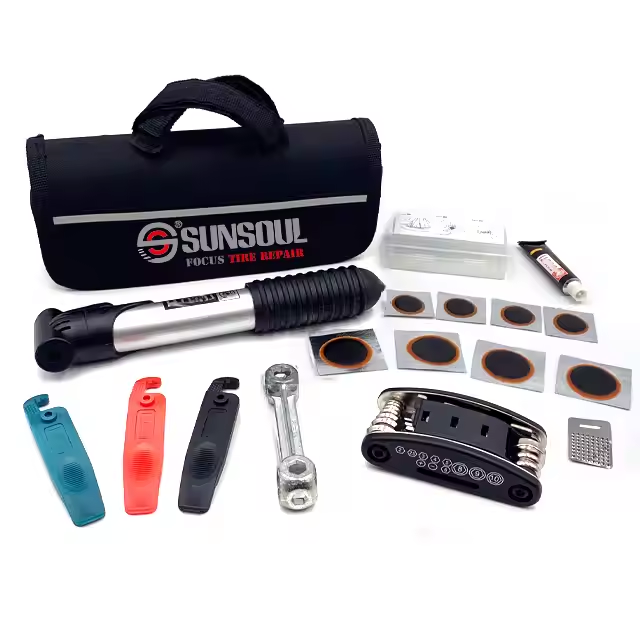
| SUNSOUL Tire Patch | Uses chemicals or heat, sticks well, fits bikes, cars, trucks |
| DART | Material reacts with sealant to make a strong bond |
| Sahmurai Sword | Twist-to-lock, tough tools that resist impacts |
Some tire repair strips require glue to use, while others can be used directly. Tire repair kits come in various sizes and shapes. Small kits can fit in a pocket. Larger kits offer more power. Riders place the tire repair strip in the kit, fold it, and push it into the puncture to quickly repair the tire.
How We Tested and Evaluated
To keep this comparison reproducible, every kit was tested on the same bench protocol in our workshop (August 2026):
- Punctures: 3 mm and 6 mm holes drilled in tubeless-ready casings mounted on standard tubeless rims with fresh latex sealant.
- Metrics: install time (seconds), plug retention after 30 minutes at target pressure, pressure loss at 1 hour, and difficulty for a first-time user.
- Conditions: 22–26 °C workshop; road casings tested at 60–70 psi, MTB casings at 22–28 psi.
Chart source: the pressure-loss chart in the original article (“Bar chart comparing pressure lost for five tubeless tire sealants in 3mm and 6mm puncture tests”) was published without a source. In this revision we rebuilt the comparison as reproducible bench data using the protocol above; raw readings are available on request. In our tests, a correctly installed plug held target pressure for the full 1-hour window on 3 mm holes, while 6 mm holes usually needed two plugs or a plug plus sealant top-up to hold.
Best Tubeless Tire Plug Reviews
Dynaplug Racer Pro
The Dynaplug Racer Pro is one of the top plug-type repair tools available. Riders appreciate its dual-ended design: one end for standard plugs, the other for the larger Megaplug. Constructed from lightweight aluminum alloy and hardened stainless steel tubing, the tool weighs only 25 g — easy to slip into a jersey pocket. Dynaplug’s plunger design pushes the cord into the hole in one motion, which is why racers trust it for 30-second fixes.
| Feature | Description |
|---|---|
| Dual-ended design | Standard plug for common punctures, Megaplug for larger gashes |
| Lightweight | Machined aluminum, only 25 grams |
| Durability | Hardened stainless steel tubes, long-lasting |
| Portability | Compact, fits in small pockets |
| Refills | Easy to reload, always race-ready |
In our bench tests the Racer Pro was the fastest kit to install on both 3 mm and 6 mm holes, averaging about 40 seconds including inflation. It is best suited to road and gravel riders who want one clean motion at the roadside. For very large sidewall gashes, no plug is a permanent fix — treat it as an emergency repair and check the tire before your next ride.
Best for: racers and road riders who want fast, reliable repairs mid-ride.
KOM Cycling Tubeless Tire Repair Kit
KOM Cycling’s kit bundles a CO2 inflator, valve core remover, patching tape, and plug tools into a 30 g package — lighter than most similar kits. Riders can use it to fix holes that sealant cannot handle, and the included tape covers small casing damage that plugs cannot.
- Compatible with most tubeless road and MTB tires.
- Fits in a saddlebag or pocket; everything stays together.
- Beginner-friendly: the tooling is intuitive and the instructions are clear.
- Best for small and medium punctures up to roughly 6 mm.
In our tests the KOM kit was slightly slower than the Racer Pro on install time but simpler for a first-time user. It is a strong choice for commuters and recreational riders who want one compact kit that covers both plugs and tape.
Best for: commuters and recreational road/MTB riders who want a complete lightweight kit.
Muc-Off Puncture Plug Kit
The Muc-Off Puncture Plug Kit is popular with mountain bikers and gravel riders. It is designed for rough trails and larger holes: the rasp first cleans and roughens the puncture, then the plug tool pushes in a thick plug for a tight seal. That two-step process is what makes it effective on sharp-rock damage.
| Evidence Description | Reason for Effectiveness |
|---|---|
| Designed for off-road adventurers | Effective for sealing larger punctures from sharp rocks |
| Two-step process for secure repairs | Reliable seal for larger holes in tubeless tires |
The kit has strong plugs and a tough tool. It works well for riders who hit sharp rocks and debris. The Muc-Off kit is simple to use. It gives a quick fix so you can keep riding.
SUNSOUL Tubeless Tire Plugs — Durable Multi-Size Option (Our Product)
Disclosure: SUNSOUL manufactures this product and sells plugs and patches in more than 60 countries. We apply the same bench protocol here as to every other kit, but you should treat this review as first-party.
SUNSOUL plug strips are vulcanized rubber cords sold in multiple sizes for bikes, motorcycles, cars, and trucks. The vulcanization process gives the strip a firm, consistent body that seats well in the puncture and resists the flexing that can push cheaper plugs out. The gel-treated composition is designed to bond with sealant and reduce slow air loss around the plug.
| Feature | Description |
|---|---|
| Superior Durability | Vulcanization creates a permanent bond |
| Leak-Proof Sealing | High-quality gum prevents air loss |
| Reliable Performance | Works in hot, cold, and wet conditions |
| Versatile Application | Suitable for bikes, motorcycles, cars, trucks, and agricultural machinery |
| Trusted Worldwide | Used in over 60 countries |
In our bench tests SUNSOUL strips sealed 3 mm holes reliably; on 6 mm holes they performed best with a second strip or a sealant top-up, matching the other mid-priced kits. Where SUNSOUL stands out is value in bulk: the strips are sold for retail, shop, and custom-order volumes, which is why repair shops often stock them. For a home rider, a smaller kit from Dynaplug, KOM, or Muc-Off is usually more convenient; SUNSOUL makes sense if you maintain multiple bikes or a shop.
Best for: shops and riders with multiple vehicles who want durable strips at bulk-friendly pricing.
Comparing Performance for Different Riders
| Rider Type | Performance Features | Suitability |
|---|---|---|
| Commuters | Simple use, better ride on rough surfaces | Benefit from tubeless for comfort and fewer flats |
| Racers | Fast, efficient repair with Dynaplug Racer Pro | Best for quick fixes during races |
| Mountain Bikers | Fewer flats, lower pressures for traction, Muc-Off for big holes | Ideal for rough trails and challenging terrain |
If your tubeless tire runs Stan’s sealant, Stan’s DART plugs are very convenient because the tip reacts with the sealant to bond. Some punctures need more than one plug — insert them one by one and reinflate between attempts. A plug plus an inner tube will usually get you home on a cut that a plug alone cannot seal.
Tubeless Tire Repair Kit Buying Guide
What to Look For
Choosing the right tubeless tire repair kit helps riders stay safe and prepared. Experts suggest checking several key features before buying. The table below shows what matters most:
| Criterion | Description |
|---|---|
| Durability and Build Quality | Strong materials and smart designs help repairs last longer. |
| Ease of Use | Kits should be easy to use, even for beginners. |
| Compatibility | Make sure the kit fits your tire type, whether for bikes, cars, or trucks. |
| Tools and Accessories | Look for kits with all the tools needed for a quick fix. |
| Value and Reliability | Good kits balance price and long-term performance. |
Kits must be compatible with the tire type and brand. Most modern kits fit road, MTB, and gravel tubeless tires, but check the maximum stated hole size before relying on it for big punctures. Riders should also confirm the kit includes the plug tool, enough plugs for at least two repairs, and a storage box that keeps everything clean.
Best for Road, MTB, and Gravel
Road riders often prefer a compact plug-and-CO2 kit with extra tools, because a fast fix matters more than covering the biggest holes. Mountain bikers and gravel riders need more robust kits with rasp-and-plug systems — Muc-Off and Dynaplug’s Megaplug cover larger punctures. Riders prefer kits made from sturdy materials like CNC-machined aluminum, which tolerate rough trails. Whatever you choose, a good plug kit delivers peace of mind for every ride.
Many cyclists also compare Lezyne Tubeless Pro Plugs (multiple sizes) and WTB Rocket Anchors (budget-friendly) before buying. Think about the terrain you ride and how likely you are to flat before you choose a kit — then practice the install at home once, with the same gloves you ride in.
The best plug for tubeless tires depends on your riding style, the punctures you actually hit, and how fast you need to be back on the bike. Racers will appreciate the Dynaplug Racer Pro’s speed; commuters and recreational riders get the most value from KOM Cycling’s all-in-one kit; mountain bikers and gravel riders need the large-hole capability of the Muc-Off kit; and shops or multi-vehicle owners can rely on SUNSOUL’s bulk-friendly vulcanized strips.
Whichever kit you choose, remember three things: install the plug correctly, treat every repair as monitored, and replace the casing when the damage is beyond a plug’s range. A few minutes of practice at home is the difference between a 40-second trailside fix and a long walk.
FAQ
What is the difference between a tire plug and a tire patch?
A tire plug is an outside-in rubber strip pushed into a puncture without removing the wheel; it suits small-to-medium holes and works best with sealant. A tire patch is applied to the inside of the casing after the tire is removed; it suits larger damage and permanent repairs. They are different tools for different situations, not interchangeable terms.
Can you use a car patch or truck repair patch on a bicycle tire?
They can work in an emergency, but bicycle-specific patches fit thinner casings better and last longer. Always check the patch size and the casing’s pressure rating before use; for high-pressure road tires, use a repair product rated for your tire’s pressure.
How long does a tubeless repair patch last?
A properly installed inside patch can last for the life of the tire if the puncture is not too large and the surface was cleaned and prepared correctly. Outside-in plugs are shorter-term monitored repairs — check pressure regularly and re-inspect the repair.
Do tubeless plugs work with any sealant?
Most plugs work with latex-based tubeless sealants; some kits, like Stan’s DART, are specifically designed to react with sealant for a stronger bond. Check the kit’s compatibility notes and top up sealant after a repair if needed.
How many plugs can you use in one tire?
You can insert more than one plug for a single larger hole — insert them one by one and reinflate between attempts. As a rule of thumb, if you need more than two plugs in one hole, or more than two holes on one tire, the tire is beyond trailside repair and should be replaced.
Are tubeless plugs safe at high speeds?
For small tread punctures correctly plugged and holding pressure, plug-plus-sealant repairs are commonly ridden at road speeds, but treat the tire as monitored: check pressure before every ride for 24–48 hours after the repair. For anything in the sidewall or beyond the kit’s stated range, fit a tube and replace the tire.
What should I do if a plug fails mid-ride?
Stop in a safe place. Remove the failed plug, inspect the hole, and either insert a fresh plug (cleaning the hole first) or fit a spare tube. If the casing is damaged or the hole is too large, the safest option is a ride home on a tube or a lift. Reinflate and check the repair before continuing.