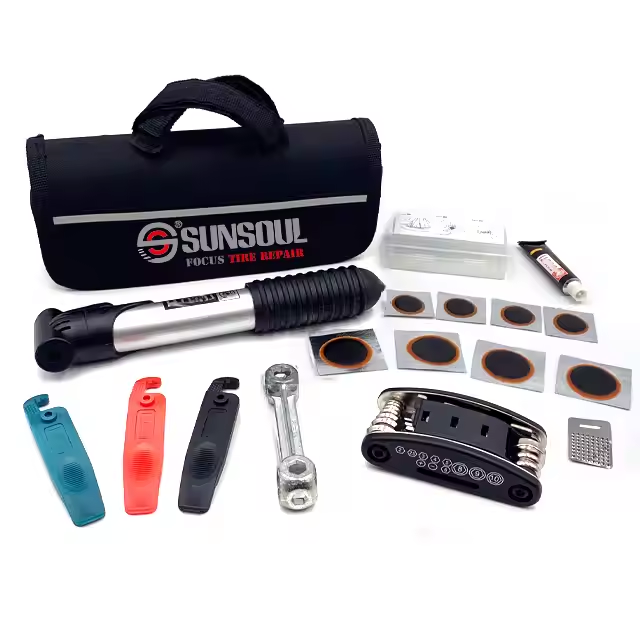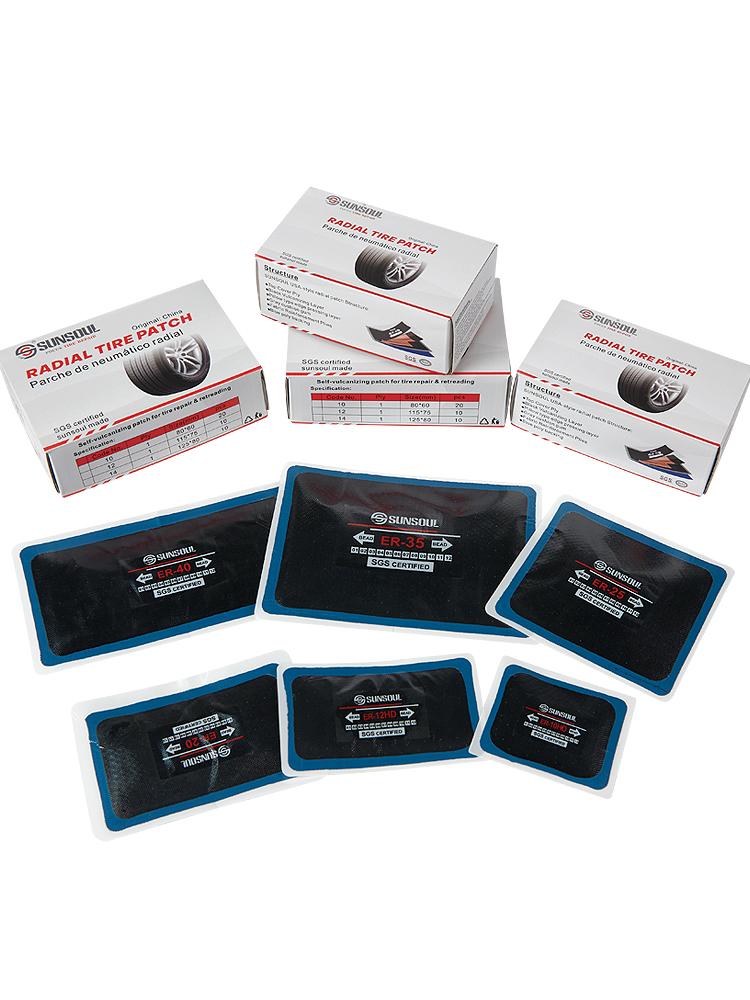

A vulcanizing patch is a rubber repair patch that forms a chemical bond with a tire’s inner liner through the vulcanization process. Unlike standard adhesive patches that rely on a sticky layer, a vulcanizing patch creates cross-linked molecular bonds, resulting in a stronger, more durable repair. This article explains how it works, the different types, how to apply one correctly, and when it is appropriate to use.
Key Takeaways
- A vulcanizing patch bonds chemically to the tire, creating a permanent repair.
- Surface preparation and proper drying of the cement are critical for success.
- Use vulcanizing patches only on tread-area punctures up to 10 mm; never on sidewalls or shoulders.
- Cold vulcanizing works for small punctures; hot vulcanizing is for larger, high-stress repairs.
What Is a Vulcanizing Patch and How Does It Work?
Definition and Bonding Mechanism
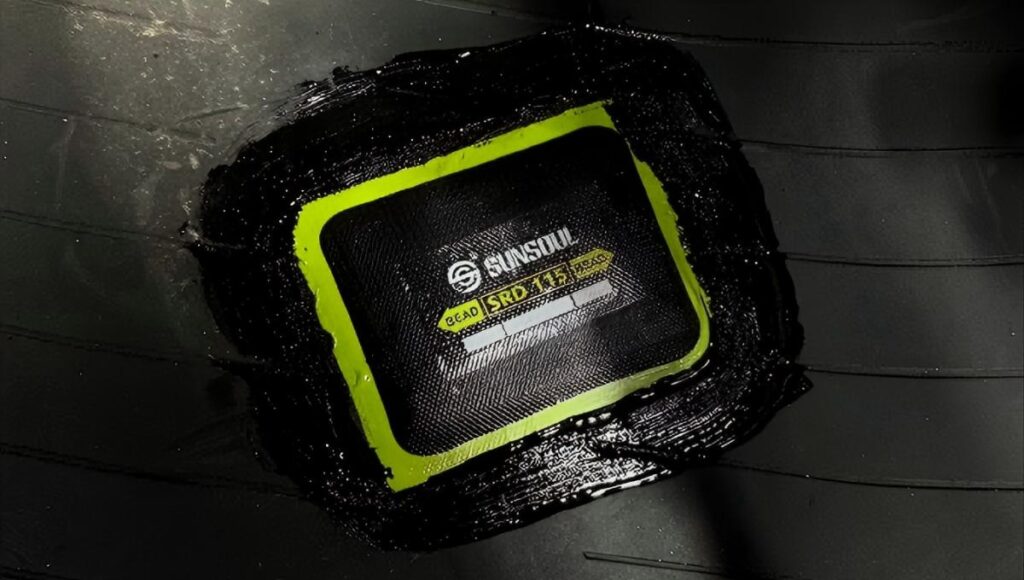
A vulcanizing patch works through a chemical process that hardens rubber. Sulfur atoms act as cross-linking agents, forming covalent bridges between polymer chains. These cross-links spread across the edge between the patch and the tire, eliminating the original boundary. The result is a single, continuous three-dimensional network.
During vulcanization, sulfur triggers a chemical reaction that softens the touching materials. The patch and the tire or tube fuse together. Rubber cement can act as a vulcanizing agent, creating a seal between the rubber and the patch. Heat acts as a catalyst, giving sulfur atoms energy to form chemical bridges. Initially, long polysulfidic bonds form; heat then shortens and rearranges them into a stronger network. A high cross-link density restores tire strength and stops leaks.
This chemical bond is superior to the mechanical seal of a simple plug. Cross-linking creates a net-like structure that remains flexible and stable. SUNSOUL’s Chemical Cure Tire Patch and Dual Cure Tire Patch feature a vulcanizing gum backing, ensuring strong adhesion.
Cold vs. Hot Vulcanizing
Cold vulcanization uses chemical adhesives and cures at room temperature. It is suitable for small punctures (less than 6.35 mm) and ideal for quick repairs. It requires only simple hand tools and costs $20–$50.
Hot vulcanization requires heat and pressure, using a vulcanizer or heat press. It provides a permanent repair that lasts for years and suits large tears and severe damage. It restores tire strength, enhances durability, and extends service life. Costs range from $15–$30. Heat-curing materials must be applied under direct heat and pressure to achieve proper bonding. This method is best for high-stress applications such as conveyor belt splicing and large rubber components.
Types of Vulcanizing Patches and How to Apply Them
Inner Tube and Tubeless Patches
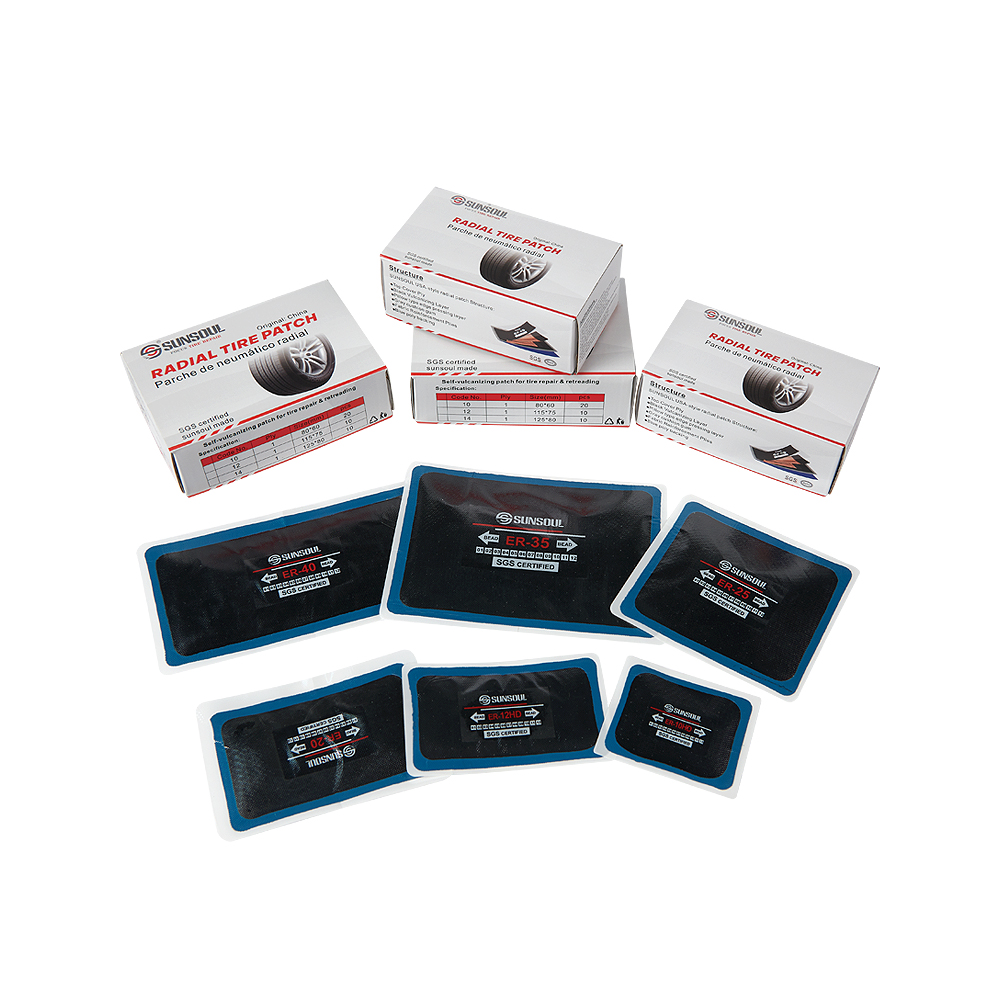
Vulcanizing patches are available for both inner tubes and tubeless tires. For inner tubes, inflate slightly and mark the damage with chalk. Buff the area around the damage—larger than the patch—until rough. Apply an even layer of rubber cement and let it air-dry until no longer glossy. Press the patch firmly and peel off the protective film. The self-vulcanizing rubber initiates chemical bonding; skipping the drying step is the most common cause of failure.
SUNSOUL’s chemical-cure and dual-cure patches have a vulcanizing rubber backing for a strong, leak-proof seal. The circular design prevents edges from lifting. The 1.5-inch diameter patch repairs punctures up to 6 mm. They are compatible with both tube-type and tubeless tires and come in bulk packaging.
For tubeless tires, stick-on patches alone are not enough—use a plug tool for external repairs, or an internal patch for permanent fixes.
Application Steps
- Locate and prepare – Find the puncture, mark it, and buff the area.
- Apply cement – Spread an even layer of vulcanizing fluid or rubber cement.
- Wait – Let it dry until tacky, not glossy.
- Press – Firmly press the patch into place, working from center outward.
- Cure – Allow proper curing time before inflating.
When to Use (and When Not To)
Only tread-area damage may be repaired. The puncture must not exceed 10 mm (3/8 inch). Larger damage requires a sectional repair. Never repair sidewalls, beads, or shoulders—these are load-bearing zones where repairs can fail. Do not overlap repairs. Tires with improper prior repairs must be scrapped.
Store patches in original packaging away from heat and sunlight. Recommended storage: 15°C–25°C, humidity below 60%, in a cool, shaded place.
FAQs About Vulcanizing Patches
Is a vulcanizing patch a permanent repair?
Yes, when applied correctly, a vulcanizing patch forms a chemical bond that can last for the life of the tire. Hot vulcanization provides the most durable repair, while cold vulcanization is suitable for smaller punctures and temporary fixes.
Can a vulcanizing patch be used on sidewalls?
No. Sidewalls, beads, and shoulders are structural zones that flex constantly. Repairs in these areas are unsafe and can lead to tire failure. Only tread-area punctures up to 10 mm should be repaired.
How long does a vulcanizing patch last?
A properly applied hot vulcanizing patch can last for years, often matching the remaining tread life. Cold vulcanizing patches are less durable but still provide a reliable repair for small punctures when applied correctly.