

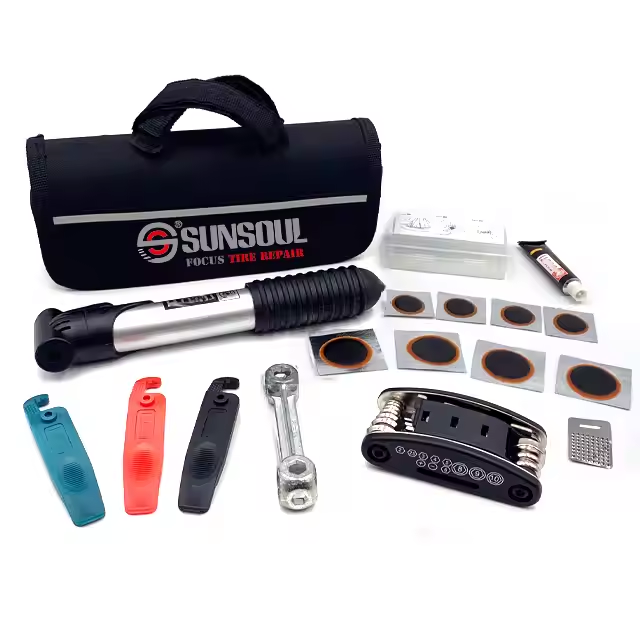
A tubeless tire repair kit is only as good as the components inside it. For tire repair professionals and fleet operators, knowing what a proper kit contains — and why each piece matters — determines whether a roadside repair holds or fails. Unlike a tire patch applied from the inside, a tubeless repair kit is designed for fast, external repairs that get a vehicle moving again. This guide breaks down the core components, the supporting items that complete a professional-grade kit, and what to look for when sourcing tubeless tire repair components for your shop or fleet.
Key Takeaways
- The three core components of any tubeless repair kit are tire plugs, an insertion tool with reamer, and an inflation source.
- Tire plugs seal the puncture externally; they are temporary repairs designed to reach a service center.
- A reamer cleans and enlarges the puncture channel before plug insertion, ensuring proper adhesion.
- Valve core removers and spare valve cores address one of the most common causes of slow leaks.
- Trimming blades and vulcanizing fluid complete the kit and improve repair reliability.
- When sourcing components, prioritize material quality, size range, and supplier consistency over unit price.
Core Components of a Tubeless Tire Repair Kit
Every functional tubeless repair kit contains three essential items. Without any one of them, the repair cannot be completed.
Tire Plugs (Seal Strings)
Tire plugs, also called seal strings, are the primary repair material. They are coated cords of rubber compound that are inserted into the puncture to create an airtight seal. Plugs are available in different diameters and lengths to match passenger, motorcycle, and truck tire punctures. Most are coated with a tacky compound that bonds to the tire’s inner surface under heat and pressure. For a quick roadside fix, plugs work on punctures in the tread area up to about 6 mm. However, plugs are temporary repairs. For a permanent fix, an internal patch with vulcanizing fluid is the correct method. Repair shops should stock plugs as a complement to their patch inventory, not as a replacement.
Insertion Tool and Reamer
The insertion tool is a needle-like instrument that holds the plug and pushes it through the puncture. Most kits pair the insertion tool with a reamer — a tapered, textured probe that cleans the puncture channel before plug insertion. The reamer removes debris, rust, and old sealant from inside the hole, and slightly enlarges the channel so the plug fits snugly. Skipping the reaming step is one of the most common reasons a plug fails. A good insertion tool has an ergonomic handle for grip and a locking mechanism that holds the plug securely during insertion.
Inflation Source: CO₂ Inflator or Mini Pump
After the plug is inserted, the tire needs to be reinflated. A CO₂ inflator is the fastest option for roadside repairs. A single 16-gram cartridge adds roughly 10–15 PSI to a passenger tire, so most kits include two or three cartridges. A mini pump is slower but reusable and does not run out of cartridges. For shops and fleets, a portable air compressor or a shop air line is the practical choice. The inflation source matters because a plug alone does not restore pressure — without proper inflation, the repair cannot be verified.
Additional Items That Complete the Kit
Beyond the three core components, a professional kit includes several supporting items that improve repair quality and address common complications.
Valve Core Remover and Spare Valve Cores
The valve core is one of the most frequent causes of slow leaks. A valve core remover lets you extract the core to deflate the tire quickly, check for corrosion, or replace it. Most kits include one or two spare cores. Replacing a corroded or leaking valve core is a two-minute job that solves a problem many drivers mistake for a tire puncture.
Trimming Knife or Blade
After inserting a plug, the excess material protrudes from the tread. A trimming knife or blade cuts the plug flush with the tire surface. If the plug is left too long, it can catch on road debris, pull out, or cause a vibration. A sharp blade is essential for a clean, professional finish. Some kits include a dedicated plug-trimming tool; others include a standard utility blade.
Rubber Cement or Vulcanizing Fluid
Some tubeless kits include a small tube of rubber cement or vulcanizing fluid. This is applied to the plug or the puncture channel before insertion to improve adhesion. Not all plugs require cement — many are pre-coated — but having vulcanizing fluid on hand improves reliability, especially in cold or wet conditions. For permanent repairs using internal patches, vulcanizing fluid is mandatory, not optional.
FAQs About Tubeless Tire Repair Kits
What is the most important tool in a tubeless repair kit?
The insertion tool paired with the reamer. Without proper reaming, the plug cannot seat correctly, and without the insertion tool, the plug cannot be placed. The plugs themselves matter, but the tools determine whether the plug works.
Can I use a tubeless repair kit without removing the tire?
Yes. That is the primary advantage of a tubeless repair kit. The plug is inserted through the puncture from the outside, without removing the tire from the rim. This makes it ideal for roadside repairs. However, if the puncture is on the sidewall, larger than 6 mm, or the tire has lost significant pressure, removing the tire for an internal inspection is the safer approach.
Does SUNSOUL supply individual tubeless repair components?
Yes. SUNSOUL supplies Quick Insert Seal Strings in multiple sizes for passenger, motorcycle, truck, and OTR tires, along with vulcanizing tire patches, tire valves, and related repair components. These are available to distributors and repair shops rather than as retail consumer kits.
What should repair shops look for when sourcing tubeless repair components?
Focus on three things: material quality, size range, and supplier consistency. Plugs should be made from natural rubber compounds with a tacky coating that bonds reliably. The size range should cover the vehicle types your shop services — passenger, commercial, and OTR tires have different puncture dimensions. Supplier consistency matters because a repair is only as reliable as the components used. Look for a supplier with an established track record in cold vulcanizing systems and a broad catalog that reduces the number of vendors you need to manage. Vulcanizing tire patches and plugs from the same source ensure compatibility and consistent quality.