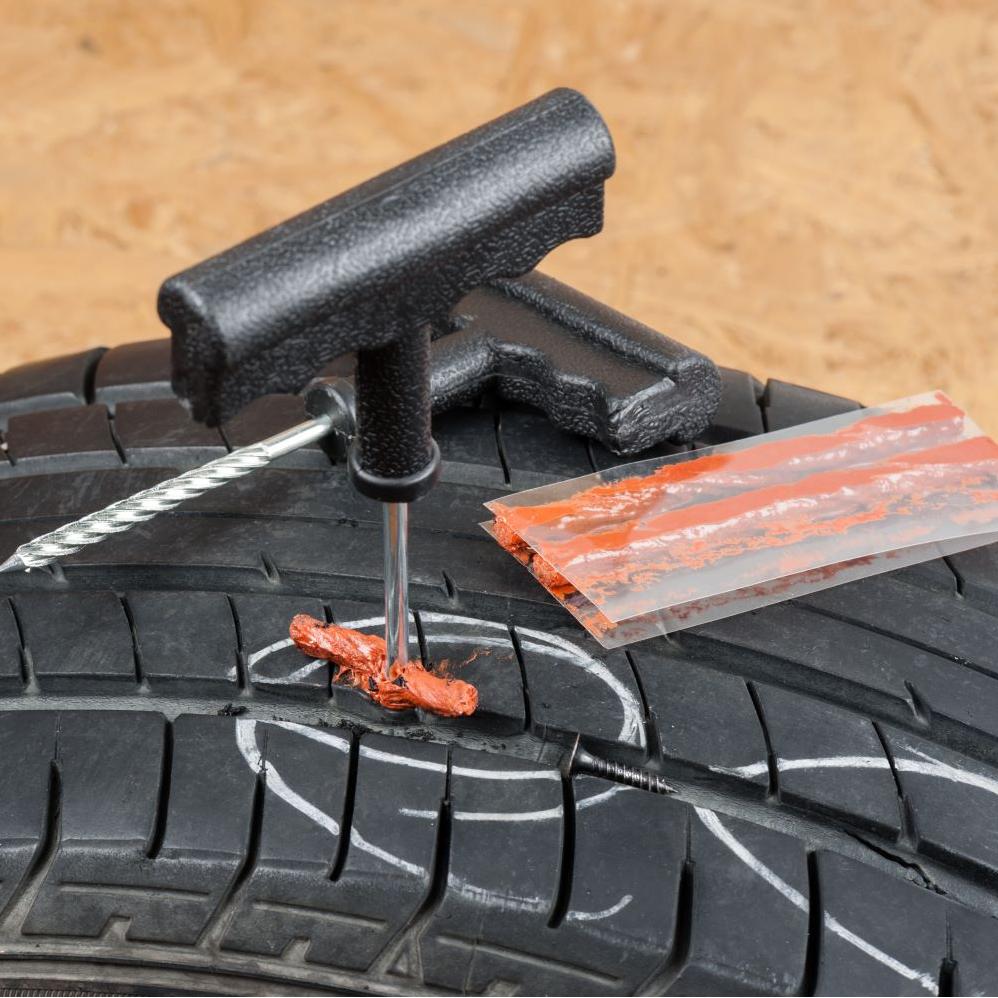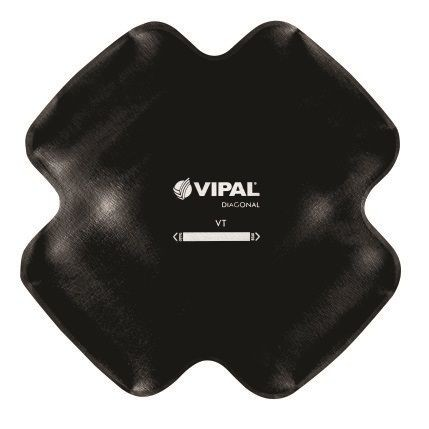

A tire repair needs both a rubber tire patch and a rubber tire plug because each component seals a different failure point. The plug fills the puncture channel and blocks moisture from reaching the belts. The patch seals the inner liner and restores the air-tight barrier. Industry standard practice, reflected in USTMA guidance and Michelin’s repair policy, requires both functions: a plug alone is considered unacceptable, and a patch alone leaves the channel open. The combination is not a preference. It is the repair method that addresses the full injury.
Key Takeaways
- A plug seals the puncture channel. A patch seals the inner liner. Neither does both alone.
- USTMA states that a plug must fill the injury and a patch must seal the inner liner; a plug alone is an unacceptable repair.
- A patch-only repair leaves the channel open to moisture and contaminants.
- A one-piece combination unit, such as a mushroom patch, performs both functions in a single installation.
- SUNSOUL supplies rubber tire patch units and rubber tire plugs that can be paired, as well as truck tire patch formats for commercial casings.
- The correct combination depends on injury size, casing type, and whether the repair is two-piece or one-piece.
What a Patch Does and What a Plug Does
The Patch Seals the Inner Liner
The patch is the air-retention component. It bonds to the inner liner and restores the airtight barrier that the puncture broke. A patch alone can hold air, but it does not fill the channel. The open channel remains a path for moisture and contaminants to reach the belt package from the outside.
This is the limitation of a patch-only repair. The tire may hold pressure in the short term, but the injury channel is still exposed. Over time, water intrusion can degrade the belts, and the patch may lift at the edges if the channel is not stabilized.
The Plug Fills the Injury Channel and Blocks Moisture
The plug occupies the puncture channel. Its job is to prevent water, road salt, and debris from entering the injury and reaching the steel belts. If the channel is left open, moisture can initiate corrosion at the belt edges, and that corrosion can lead to belt separation even if the inner liner is sealed.
A plug also provides a physical backer for the patch. When the repair unit is installed, the plug fills the void so the patch head can sit flat against the liner without spanning an open hole. This is why combination repairs use both components rather than treating them as alternatives.
Why Plug-Only and Patch-Only Repairs Fail
Plug-Only: No Liner Seal, Hidden Damage Undetected
A plug-only repair leaves the inner liner unsealed. Moisture can still reach the belts, and the casing is not internally inspected. Michelin and USTMA both classify a plug-only repair as unacceptable because the liner seal is incomplete and hidden damage may go unnoticed.
Patch-Only: Channel Left Open, Moisture Reaches the Belts
A patch-only repair restores the liner seal but leaves the injury channel open. Water and contaminants can enter the channel from the tread side and degrade the belt package. The patch may also lift at the edges if the channel is not stabilized.
The Patch-Plug Combination Repair Unit
How One-Piece Units Seal Both Zones Simultaneously
A one-piece combination unit, such as a mushroom patch, integrates the stem and the patch head into a single repair body. The stem fills the channel, and the head bonds to the liner. Both seals are created in one installation.
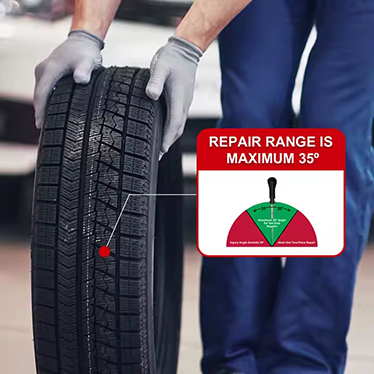
For repairs where the injury angle is greater than 25 degrees, industry guidance recommends two-piece stem-and-patch components rather than a one-piece unit, because the angled channel is better filled by a separate stem.
Sizing and Selection for Passenger, Truck, and Heavy-Duty Tires
The repair unit should match the injury and the casing. For passenger and light truck tires, a tubeless tire patch or a mushroom patch plug in the appropriate size covers the common range. For truck and heavy-duty casings, heavy-duty tire patches and truck tire patch formats provide the ply and coverage needed for higher inflation pressures.
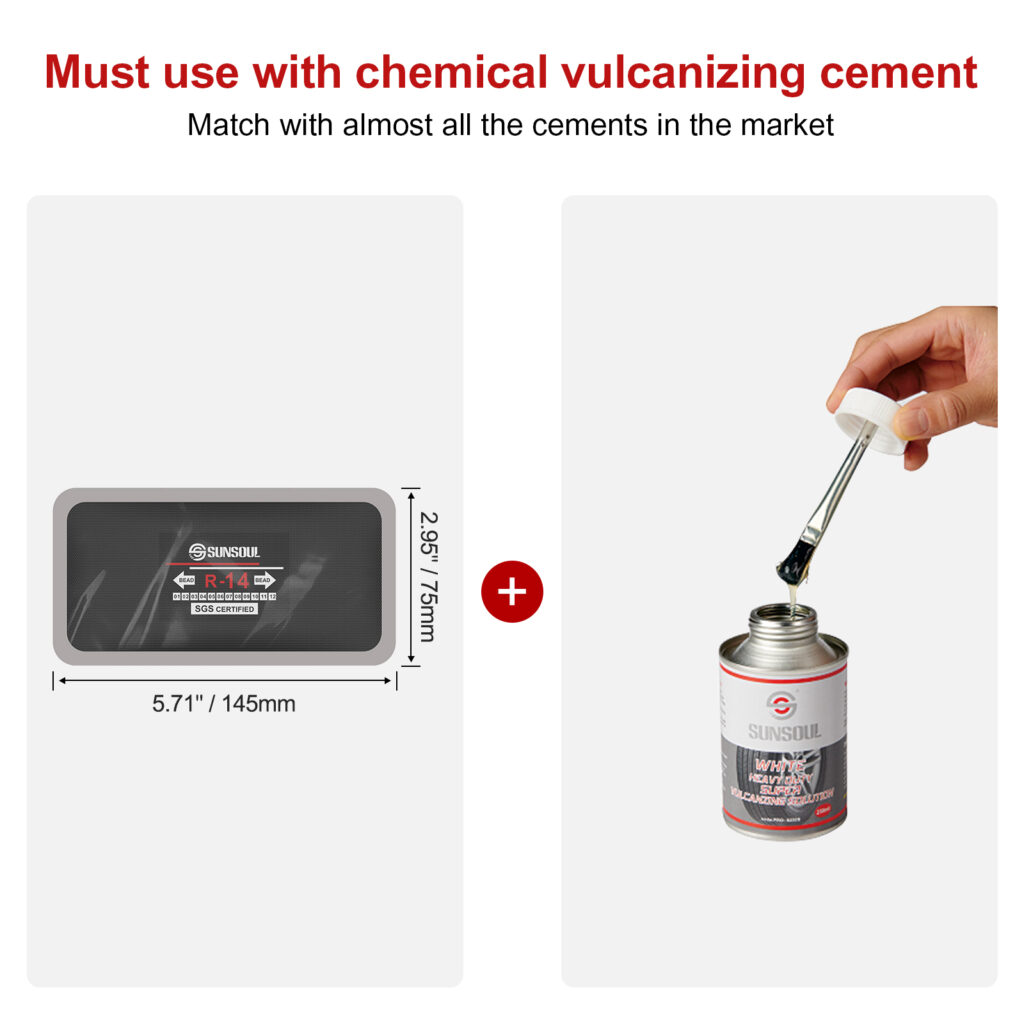
SUNSOUL’s vulcanizing tire patch range is built for the chemical bonding step that makes the patch-to-liner seal permanent. The radial tire patch formats are configured for radial casing geometry, where the patch must flex with the belt package without lifting at the edges.
For a step-by-step comparison of plug-only, patch-only, and combination methods, the complete puncture repair guide covers the preparation sequence for each.
FAQ
Can I use only a plug for a permanent repair?
No. USTMA and Michelin do not accept a plug-only repair as permanent because the inner liner is not sealed and the casing is not internally inspected.
Is a patch alone enough to seal a puncture?
A patch restores the liner seal, but it leaves the injury channel open. Moisture and contaminants can still reach the belts. The combination repair addresses both points.
Does SUNSOUL supply patch-plug combination units?
Yes. SUNSOUL supplies mushroom patch plug units covering 3 mm to 12 mm injuries, as well as separate rubber tire patch and rubber tire plugs for two-piece repairs. For truck and heavy-duty applications, the truck tire patch range provides the corresponding coverage and ply options.